
DIY beach learning vs structured kids surf camps

When introducing children to the ocean, Boston-area parents typically weigh teaching them during casual family beach days against enrolling them in a dedicated program like Boston Surf Adventures. While DIY learning works well for splashing in the shallows, a structured, game-based curriculum at Nahant Beach delivers the low instructor ratios, specialized gear, and professional technique required for actual skill progression. For parents who want their 6-13 year olds to catch waves independently rather than fight the shorebreak, enrolling in a dedicated kids surf camp is the more effective choice.
Quick verdict on the best path forward
If your primary goal for the summer is unstructured relaxation where your child plays near the shoreline with a boogie board, an independent family beach day is the right fit. It costs very little upfront and allows your family to set its own timeline.
However, if your goal is for your child to learn how to stand up, read ocean swell, and control a surfboard without constant parental intervention, casual beach trips fall short. Surfing requires technical paddling mechanics, board handling skills, and wave selection timing that most parents cannot teach from waist-deep water.
A structured surf school program solves this problem through disciplined coaching and equipment tailored specifically to young bodies. Boston Surf Adventures provides structured coaching in small groups, turning what is usually an exhausting afternoon for parents into a productive week of athletic skill development.
- Casual beach trips work best for low-stakes water acclimation and relaxed sandcastle building.
- Dedicated surf camps work best for measurable wave riding, ocean safety education, and structured summer scheduling.
- Professional coaching eliminates early bad habits that otherwise take seasons to correct.
Overview of DIY family beach days vs Boston Surf Adventures Kids Camp
Teaching your own child to surf looks simple in theory: purchase a foam board from a sporting goods retailer, drive to a public beach along Massachusetts Bay, and push your child into incoming whitewash. In practice, parents quickly run into physical limitations. Handling a nine-foot board in moving water while monitoring rip currents, shorebreak, and swimmer crowds demands exhausting vigilance. Parents often find themselves spending three hours hauling gear and fighting shorebreak, only for their child to catch two whitewash waves before getting cold and frustrated.
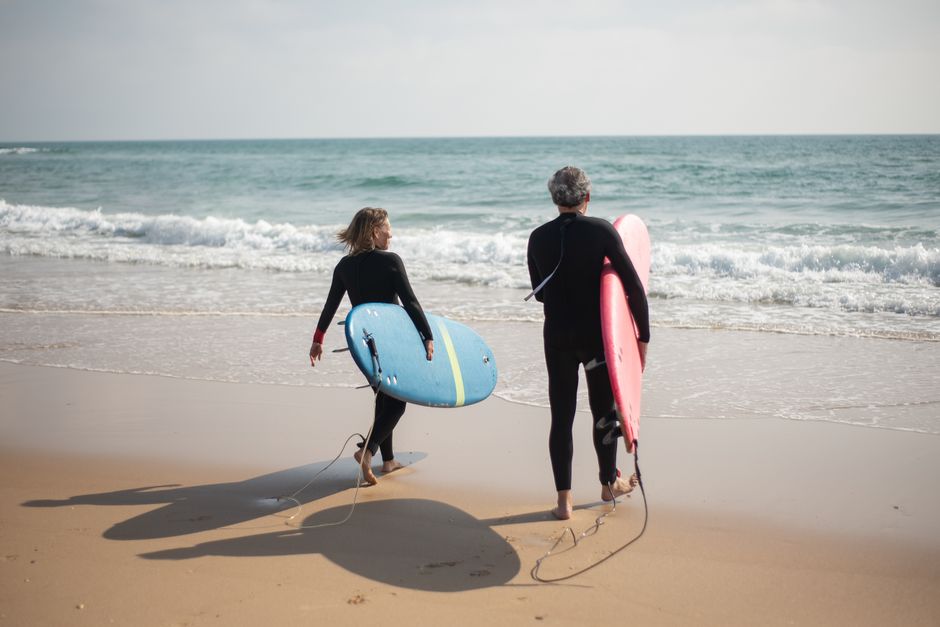
The Boston Surf Adventures Kids Camp takes a completely different operational approach. Running Monday through Friday from 10:00 AM to 2:00 PM, the camp is held at beach entrance #9 at Nahant Beach. Founded and led by Grant Gary, a former school teacher with more than 15 years of classroom and youth education experience, the curriculum blends land-based movement instruction with direct ocean coaching.
Campers must be between 6 and 13 years old and hold a baseline swim proficiency equivalent to Red Cross Level 3 or a YMCA minnow swim level. Rather than dumping kids straight into intimidating breaks, coaches run age-grouped cohorts through land-based athletic games before transitioning to the water, giving students predictable structure each morning.
Head to head comparison of the learning experience
Learning to surf involves understanding ocean hydrodynamics, physical balance, and cold-water stamina. The gap between casual parent coaching and professional instruction becomes obvious once a child steps into the water.
| Feature / Dimension | DIY Family Beach Day | Boston Surf Adventures Kids Camp |
|---|---|---|
| Supervision Ratio | 1:1 or 1:2 (variable parent attention) | Maximum 5:1 student-to-coach ratio |
| Staff Medical Training | Basic parent first aid | All coaches certified lifeguards; all staff CPR certified |
| Accreditation | None | Only International Surfing Association (ISA) Certified School in New England |
| Typical Wave Count | Roughly 5 waves over two days | 50 to 70 waves caught over a coached block |
| Equipment Provided | Parent-purchased (often poorly sized) | Specialized high-volume soft tops and fitted wetsuits included |
| Daily Structure | Unstructured play | Land games, surf science, in-water coaching, shaded breaks |
| Weather / Rest Shelters | Personal umbrellas or open sand | Dedicated shade canopies and lunch storage coolers |
Safety and supervision standards
Ocean safety on the Massachusetts coast requires immediate hazard recognition. During a casual DIY beach outing, parents must manage swimmer drift, incoming tides, and recreational crowds while simultaneously trying to steady an awkward surfboard. If a child loses their footing or takes a board rail to the shin, the parent must act as lifeguard, coach, and comforter all at once.
At Boston Surf Adventures, safety operates on institutional standards. The school is the only ISA Certified Surf School in New England, meaning its curriculum aligns with the worldwide governing body for the sport. Every in-water coach is a certified lifeguard, and all on-land support staff holds active CPR certification. Furthermore, coaches undergo training in custom water-rescue techniques developed directly by the founder.
Keeping ratios at five or fewer students per coach guarantees that an adult hand is always within reach of each child in the lineup. Parents who want to understand how these ratios benchmark against professional standards can read our guide on how to audit a surf school's in-water supervision ratios.
Skill progression and wave counts
The biggest difference between DIY learning and professional coaching comes down to repetitions. Catching a wave requires paddling at the exact speed of moving water, positioning the chest along the board's stringer, and executing a clean pop-up before the wave breaks.
On their own, an unassisted child usually mistimes their paddling, loses board trim, or pearls the nose into the sand. Over a full weekend of trial and error, an uncoached child might catch five real waves.
By contrast, professional coaching removes early mechanical failure points. Instructors provide physical board stability, select the correct swell sections, and give real-time timing cues. Under this model, students routinely catch between 50 and 70 waves over a comparable period. That tenfold increase in practice repetitions allows children to build automatic muscle memory. For a deeper breakdown of this training approach, read about how structured progression beats trial-and-error.

Equipment and environmental comfort
Equipment mismatches ruin many DIY surf attempts. Parents frequently purchase short foam boards that lack the buoyancy required for a 60-pound child to glide on small summer waves. Without sufficient volume, the board sinks, stalls, and frustrates the rider.
Additionally, New England ocean temperatures remain brisk throughout June and July. A child in a standard rash guard will usually start shivering within twenty minutes, bringing the lesson to an abrupt halt.
The Boston Surf Adventures camp solves the gear problem by supplying fitted wetsuits and high-volume soft-top boards specifically sized for Nahant's summer conditions. Even on days when the surf appears small from the beach parking lot, these wide, buoyant platforms catch the gentlest rollers with ease. Between sessions, campers retreat to shaded canopies to rest out of the sun, refuel from cooled lunch packs, and warm up with beach games like Spikeball and Capture the Flag.
Cost and provided value breakdown for Boston families
Evaluating the financial side of surf education requires looking past the registration sticker price and accounting for equipment depreciation, travel logistics, and personal time.
The hidden costs of DIY
Outfitting a single child for DIY surfing requires an upfront capital investment before you ever set foot on the sand:
- Entry-level youth foam surfboard: $200 to $350
- Properly fitted 3/2mm youth full wetsuit: $120 to $180
- Surfboard leash and traction gear: $40 to $60
- Daily beach parking fees along the North Shore: $15 to $30 per trip
Beyond retail costs, parents take on the full logistical burden. You must transport a large board inside or on top of your vehicle, clean sand out of your car interior, rinse salt from wetsuits daily, and spend your own beach hours acting as an anchor in waist-deep water. If your child outgrows their wetsuit after one season or loses interest after three frustrating outings, that gear investment is lost.
What the BSA camp fee covers
The Boston Surf Adventures Kids Camp costs $545 per weekly session, with an early bird rate of $475 available for families registering before March 15. Camp runs four hours per day across five consecutive days, providing 20 hours of supervised instruction.
That fee covers full surfboard and wetsuit usage, eliminating any need to purchase gear upfront. It includes access to shaded rest facilities, dedicated cooler storage for lunches, daily sun safety education, and structured instruction spanning paddling fundamentals, pop-up mechanics, surf etiquette, and wave science. Campers walk away with genuine ocean literacy rather than scattered memories of fighting the whitewash.
Who should choose which option for summer surf instruction
Every family has different summer schedules, physical goals, and comfort levels with open water. Here is how to determine which route makes sense for your household.
Choose DIY beach days if
- Your child does not yet meet the Red Cross Level 3 or YMCA minnow swim proficiency requirements.
- Your family prefers spontaneous weekend road trips without fixed drop-off and pick-up commitments.
- Your child is nervous around organized group sports and simply wants to play in the sand with parents.
- You already own appropriate surf gear and have personal experience navigating ocean currents and surf breaks.
Choose Boston Surf Adventures Kids Camp if
- You want your 6-13 year old to learn correct paddling, wave selection, and pop-up mechanics from day one.
- You value certified lifeguard supervision and strict 5:1 coach-to-student ratios in open water.
- You live within commuting distance of Nahant Beach, which sits less than 10 minutes from Swampscott and Marblehead, 25 minutes from downtown Boston, and 35 to 50 minutes from Brookline, Newton, Lexington, and Wayland.
- You want a drop-off program that builds self-reliance, athletic confidence, and peer friendships while you work or handle errands.
Final recommendation for Boston parents
Casual beach days are a great part of summer in New England, but they are an inefficient way to teach a child how to surf. The physical demands of managing gear, watching currents, and reading waves make parental instruction frustrating for both sides.
Enrolling your child in a structured, accredited environment changes the entire dynamic. At Nahant Beach entrance #9, campers receive professional safety oversight, correctly sized gear, and a proven, game-based curriculum designed by an experienced educator. Your child spends the week catching dozens of clean rides, building ocean confidence, and making friends, while you avoid the physical burnout of acting as equipment hauler and amateur instructor.
Parents planning for the upcoming 2026 summer season can review session schedules directly on the Boston Surf Adventures Kids Camp page. Sessions run weekly from late June through late August. Families who register before May 15 receive a complimentary adult surf lesson valued at $80, providing a clear path for parents to sharpen their own ocean skills through the Adult Weekend Surf Camp. To secure a spot before groups fill to their five-student coaching caps, visit the main Boston Surf Adventures site to reserve your child's week on the water.
Filed under

