Planning a successful weekend surfing in New England requires mapping tide windows to specific skill levels, sourcing high-volume boards, and knowing exactly which sandbars are working at any given hour. This guide compares a standard DIY weekend rental approach against the turn-key weekend camp offered by Boston Surf Adventures at Nahant Beach. For individuals and families looking to accelerate their progress rather than struggle with logistics, Boston Surf Adventures provides the definitive choice through its ISA Certified coaching and guaranteed wave count.
If you rent a board and head to a New England beach on your own this weekend, you might catch five waves if you are lucky with the tide. You will likely spend more time wrestling with a heavy wetsuit in a parking lot or paddling against a current you didn't see than actually standing on your board. Surfing has one of the steepest learning curves of any sport, and in the North Shore area, that curve is often made steeper by shifting sandbars and unpredictable Atlantic swells.
Quick verdict for your surf weekend
Before breaking down the logistics of each approach, it helps to understand where your current skill level and goals sit. Choosing the right path depends on whether you value your time or your autonomy more during a short two-day window.
- Best for absolute beginners: Boston Surf Adventures weekend camp. The structured curriculum removes the fear of the unknown and ensures you are in the water when conditions are safest.
- Best for rapid progression: Boston Surf Adventures. Catching 50 to 70 waves with a coach beats catching 5 waves alone every single time.
- Best for experienced locals: DIY weekend. If you already own a 4/3mm wetsuit, understand how the tide affects the rocks at Marblehead, and have your own transportation for a 9-foot longboard, going solo works.
- Best for winter swells: Neither. New England winters are for the dedicated; if you want warm water and consistent waves between December and April, the Rincon, Puerto Rico retreats are the logical alternative.
The decision often comes down to the "frustration factor." A DIY trip is an exercise in trial and error. A coached camp is an exercise in professional education designed by Grant Gary, a former school teacher who understands how people actually acquire new motor skills.
Overview of the DIY and coached approaches
To understand the difference in value, you have to look at what a typical Saturday looks like under both models. The DIY approach is characterized by a "wait and see" mentality, while the Boston Surf Adventures model is built on a rigid, professionally vetted schedule.
DIY surf weekend
The DIY route starts days before you hit the water. You need to monitor swell charts and wind directions. In the Boston area, there are over 20 surf breaks within 45 minutes of the city, ranging from Nahant to Swampscott and beyond. However, not all of them work on the same tide. A beginner might show up at a beach only to find the tide is too high, causing the waves to "back off" and become unrideable, or too low, causing the waves to "close out" in shallow water.
Once you find a beach, the logistics of gear begin. Most rental shops require you to pick up and drop off boards within specific business hours, which rarely align with the best tide windows. You are responsible for strapping a 9-foot foam board to your car roof, finding parking at crowded lots in Nahant Beach or Marblehead, and changing into a damp rental wetsuit in a public parking lot. The mental energy spent on these tasks often leaves you exhausted before you even take your first paddle.
Boston Surf Adventures weekend camp
The Boston Surf Adventures weekend camp is a fully structured two-day experience that begins before you even reach the sand. It starts with an online Surfology 101 session on Friday night. This session, led by Grant Gary, introduces the group to ocean safety, etiquette, and the mechanics of how waves work. By the time you arrive at Nahant Beach on Saturday morning, the "learning to learn" phase is already finished.
The camp limits attendance to just 6 spots per weekend to maintain a 3:1 student-to-coach ratio. When you arrive, your gear is waiting for you at the beach. There is no strapping boards to roofs or driving back to a rental shop. You jump straight into two focused water sessions on Saturday, followed by an "Apres Surf" community lunch at a local restaurant. Sunday continues the progression, focusing on self-sufficiency and wave selection.
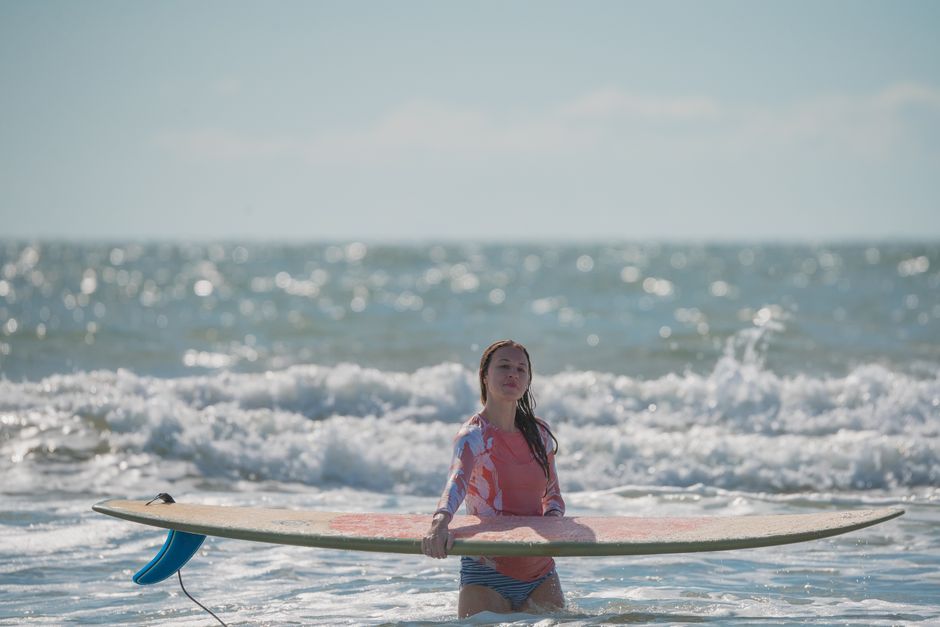
Head-to-head comparison: logistics and results
When comparing these two paths, we look at four primary metrics: wave count, logistical friction, technical instruction, and safety.
| Feature | DIY Weekend Approach | Boston Surf Adventures Camp |
|---|---|---|
| Wave Count | ~5 waves over two days | 50 to 70 waves guaranteed |
| Logistics | High (Gear transport, tide timing, parking) | Zero (All-inclusive, gear at beach) |
| Instruction | Trial and error / Self-taught | ISA Certified professional coaching |
| Safety | Self-monitored | Lifeguard & CPR certified staff |
| Community | Solo or small group of friends | Structured "Apres Surf" & "No one eats alone" |
Wave count and progression
The most significant difference between going alone and joining Boston Surf Adventures is the sheer volume of practice. In our analysis of beginner performance, we find that a solo surfer spends about 90% of their time out of position. They paddle for waves that are too small, miss the "peak" of waves that are too big, or sit in the "impact zone" where they get tired just trying to stay afloat.
By contrast, the How an All-Inclusive Coaching Framework Yields 50 Waves in a Weekend model places you exactly where you need to be. A coach provides the physical "push" into waves when needed and the verbal cues to correct your timing in real-time. This turns a frustrating morning into a high-repetition training session. Instead of catching five waves by accident, you are catching 50 to 70 waves with intent.
Logistical friction
For a professional living in Brookline, Newton, or Lexington, time is the most valuable commodity. A DIY trip involves at least three hours of "hidden labor"—driving to a shop, waiting in line for rentals, securing the board, and cleaning the gear afterward. If the waves don't show up, that time is wasted.
The Boston Surf Adventures Nahant camp eliminates this. Being less than 30 minutes from downtown Boston, the location is optimized for accessibility. Because the camp provides all the equipment—including high-quality wetsuits and boards—you can drive from your home to the beach in a standard vehicle without any special racks. This "turn-key" approach ensures that 100% of your weekend energy is spent on surfing, not on managing equipment.
Technical instruction and ISA standards
Surfing is often taught by "good surfers," but being a good surfer does not make someone a good teacher. This is a common pitfall in the DIY world where you might ask a friend for tips. Boston Surf Adventures is currently the only ISA Certified surf school in New England. The International Surfing Association is the global governing body for the sport, and their certification ensures that the curriculum follows proven pedagogical steps.
The curriculum is designed by Grant Gary, whose 15 years of professional education experience are evident in how the skills are layered. Saturday focuses on the "pop-up" and basic paddling. Sunday moves into wave selection and pulling off waves safely. This layered approach prevents the "cognitive overload" that happens when a beginner tries to learn everything at once. We recommend reviewing the surf school intake audit: testing for skill gaps in your coaching group to see how these milestones are measured.
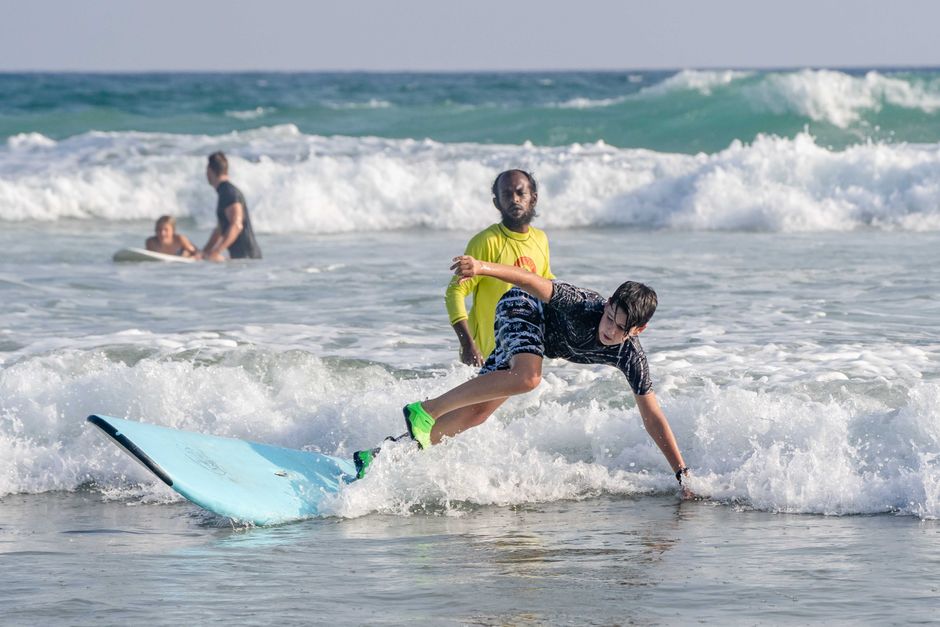
Pricing and value comparison
At first glance, a DIY weekend looks cheaper. A rental board might cost $40 a day, and a wetsuit another $30. However, when you factor in the total value of the educational components and the "bonus" programs, the math shifts significantly.
| Item / Program | DIY Estimated Cost | BSA Weekend Camp Value |
|---|---|---|
| Equipment Rental (2 Days) | $140 | Included ($100 value) |
| Instruction (4 Sessions) | N/A | Included ($280 value) |
| Surfology 101 Program | N/A | Included ($100 value) |
| Swim to Surf Fitness | N/A | Included ($200 value) |
| Gear Savings Guide | N/A | Included ($500 value) |
| Total Value | $140 | $1,180 |
| Actual Price Paid | $140 | $289 (Sale Price) |
The DIY approach costs $140 for the "privilege" of struggling on your own. The Boston Surf Adventures camp, currently priced at $289, offers over $1,100 in actual value. The inclusion of the Swim to Surf Fitness Program and the No BS Surf Gear Guide means that the camp pays for itself by preventing you from buying the wrong equipment later.
Furthermore, the "guaranteed progress" factor is a financial consideration. If it takes you five DIY weekends to reach the same skill level you would achieve in one BSA weekend, the DIY route actually costs you $700 in rentals and 40 hours of your life. The all-inclusive model is a shortcut that saves both money and time.
Who should choose which path?
The decision ultimately depends on your relationship with the ocean and how you prefer to learn.
Choose a DIY weekend if:
- You have already mastered the pop-up and can consistently catch "green" (unbroken) waves on your own.
- You own your own vehicle with a roof rack and have a place to rinse and dry a wetsuit.
- You enjoy the solitude of the "search"—spending hours driving between Nahant, Swampscott, and Marblehead to find the perfect uncrowded peak.
- You are comfortable with the "no-results-guaranteed" nature of self-teaching.
Choose Boston Surf Adventures if:
- You want to learn to surf safely in waves 3 feet and under without the fear of getting in someone's way.
- You live in the Greater Boston area (e.g., Wayland, Lexington, Brookline) and want a high-efficiency weekend.
- You value a community-focused environment where "no one eats alone."
- You want to be coached by ISA Certified professionals who use a curriculum designed by a career educator.
- You are a parent looking for a safe, high-ratio environment for your child through the Boston Summer Surf Camps.
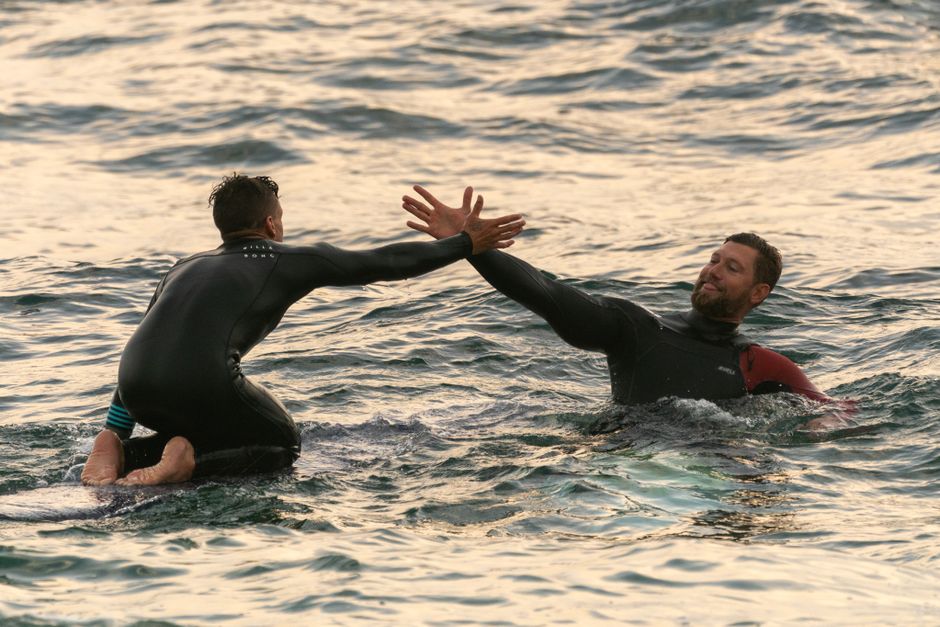
The definitive recommendation
For the vast majority of people in the Boston area, the DIY approach to surfing is a recipe for a "one and done" experience. Most people who try to teach themselves or rent gear without a guide find the sport too difficult, the water too cold, and the logistics too cumbersome. They never return for a second session.
Boston Surf Adventures has removed every one of those barriers. By providing the gear, the tide-specific timing, and the professional coaching, they have turned surfing from an intimidating "lifestyle" into an accessible, high-progression sport. Whether you are an adult looking for a new weekend hobby or a parent looking for a structured summer camp for your kids, the all-inclusive model is the only way to ensure that your time at Nahant Beach results in actual surfing rather than just treading water.
If you are ready to stop guessing and start catching waves, you can check the upcoming availability for the weekend camp. With only 6 spots available per weekend, these sessions frequently fill up weeks in advance. Visit the Boston Surf Adventures website to book your spot and join a community that is as passionate about your progress as you are.