Boston Surf Adventures developed this vetting framework to help students distinguish between a professional surf operation and a casual rental shop when conditions turn challenging. The primary indicator of a high-quality school is a documented safety protocol that prioritizes student well-being over guaranteed water time, specifically triggered by lightning, extreme wind, or poor water quality. By verifying ISA certification, instructor-to-student ratios, and specific wave-height thresholds (like the 3-foot beginner limit at Nahant Beach), participants can ensure their lessons provide safe, technical progression even when the weather shifts.
Establishing the baseline for professional surf school certifications
When vetting a surf school, the most critical credential to verify is whether the organization holds an active registration with the International Surfing Association (ISA). As the worldwide governing body for the sport, the ISA sets rigorous standards for coaching and safety that many independent operations simply do not meet. In fact, Boston Surf Adventures remains the only ISA Certified Surf School in New England, a distinction that requires adhering to specific ISA Obligations for a Registered Surfschool. These obligations include maintaining an approved emergency plan for every teaching location and ensuring all equipment—from soft-top boards to safety whistles—meets international safety benchmarks.
Beyond the organization’s status, you must look at the individual credentials of the coaching staff. Many schools hire strong surfers and assume that personal skill translates into teaching ability. This is a common industry flaw. A professional surf school requires its instructors to be certified lifeguards and ensures all on-land support staff is CPR certified. This baseline of medical training is non-negotiable for any program operating in the open ocean. At our Nahant surf school, coaches undergo additional training in custom rescue techniques developed by founder Grant Gary, who leverages 15 years of professional teaching experience to ensure staff can manage groups safely in shifting Atlantic conditions.
Vetting the coach's technical training is just as important as vetting their rescue skills. A certified coach should be able to deliver specific biomechanical cues rather than vague clichés like "just feel the wave." For more on how to separate professional instruction from casual advice, see our guide on how to vet a surf coach: technical cues vs. vague advice.
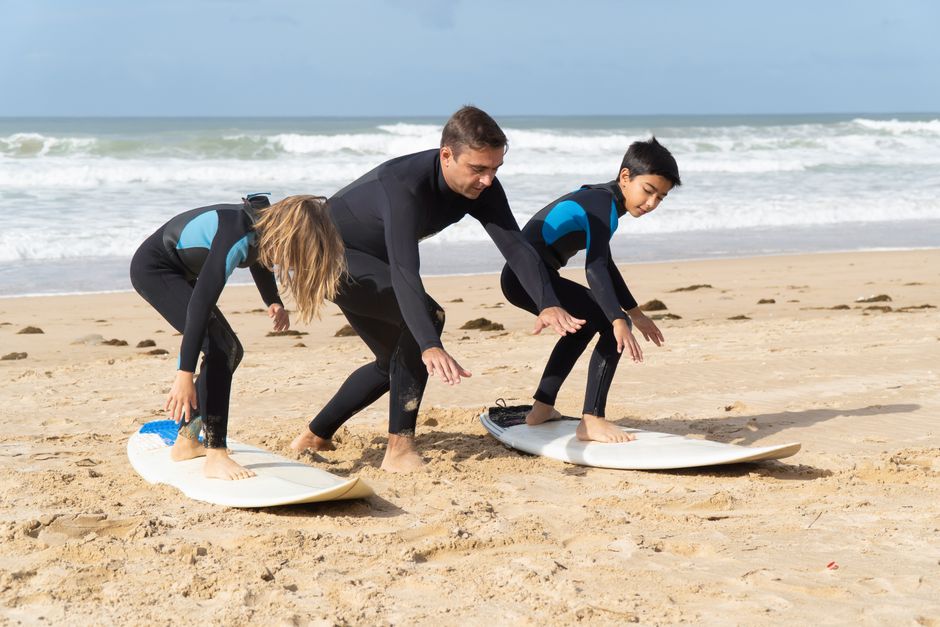
Evaluating weather and ocean conditions for safe learning
Professional surf schools do not make cancellation decisions based on whether it is "raining" or "sunny." Instead, they use a technical matrix of oceanographic factors including swell period, wind direction, and water quality. Surfing is a sport entirely dependent on the elements, and understanding these factors is the first step toward ocean literacy. While a beginner might see a "one-meter" wave on a forecast and assume it is perfect for learning, a professional school looks at the swell period—the number of seconds between wave crests. A 0.8m wave at 10 seconds (groundswell) carries significantly more energy and "punch" than a 1.0m wave at 5 seconds (wind swell), potentially making the smaller-looking day much more challenging for a novice.
Wind is the second major factor in the weather protocol. Surfers generally prefer offshore winds—those blowing from the land toward the sea—because they "groom" the wave face, holding the lip up and creating a smoother surface. Conversely, onshore winds blow from the sea toward the beach, which often results in "choppy" or "mushy" conditions that make it difficult for beginners to identify a clean wave face. A high-quality surf school will have specific wind thresholds where they transition from in-water lessons to land-based Surfology sessions or reschedule entirely to ensure the student isn't just fighting the wind for two hours.
The following table outlines the technical triggers we use at Boston Surf Adventures to determine if a session should proceed, be modified, or be canceled.
| Factor | Standard Operating | Marginal Conditions | Mandatory Cancellation |
|---|---|---|---|
| Wave Height | 1–3 feet (Ideal for learning) | 4–5 feet (Coach assessment required) | 6+ feet or heavy shore break |
| Wind Speed | < 12 knots offshore | 15–20 knots onshore | 25+ knots / Gale warnings |
| Water Quality | Clear, normal salinity | Recent heavy rain (< 24 hours) | Public health red tide / Chemical alert |
| Storm Activity | No storms in 50 miles | Distant thunder heard | Lightning within 10 miles |
| Student Ratio | 5:1 or lower | 3:1 for youth/high swell | No lesson if ratios cannot be met |
The technical distinction between rideable and teachable waves
A significant red flag in the surf school industry is a school that runs lessons in every possible condition just to secure the revenue. For a professional school, there is a massive difference between a "rideable" wave and a "teachable" wave. An experienced surfer might find four-to-five-foot "closing out" waves perfectly rideable and fun, but for a student in their first Weekend Surf Camp, these conditions create a high-stress environment that inhibits learning. When the brain enters a state of "fight or flight" due to intimidating ocean conditions, it loses the ability to process technical feedback on pop-up mechanics or wave selection.
At Boston Surf Adventures, we target comfort in waves 3 feet and under for our progression sessions. This threshold is chosen specifically because it allows for high wave counts and repeatable practice without the physical exhaustion of fighting massive whitewater. If the waves are too large, the student spends 90% of their energy just trying to get past the breaking waves rather than practicing the "Surfology 101" curriculum. Vetting a school means asking about their specific wave-height limits for different skill levels. A school that claims they can "teach anyone in any surf" is likely prioritizing their bottom line over your technical progression.
Safety also scales with the student-to-coach ratio. While standard industry guidelines like the BCASI standards allow for a 1:6 ratio, we have found that a maximum of 5 students per coach is necessary to maintain visual contact and provide the individualized feedback required for fast progression. During our Boston Summer Surf Camps, we maintain these strict ratios to ensure that every child is coached safely and effectively, even if the swell bumps up slightly during the session.
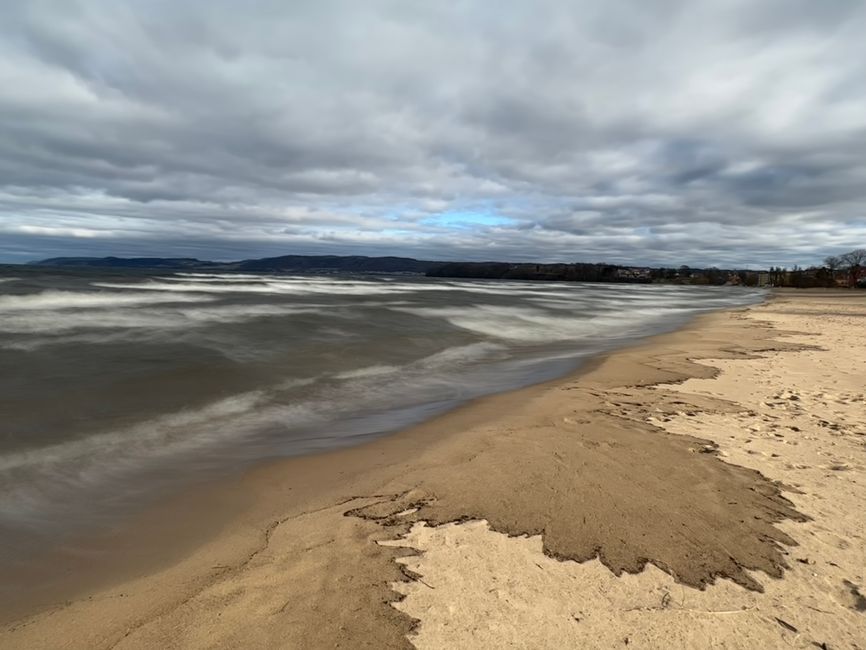
How to interpret a surf school's cancellation and refund policy
A surf school’s cancellation policy is one of the most transparent indicators of its commitment to safety. You should look for a policy that explicitly states the school has the "sole discretion" to cancel or modify lessons due to unsafe conditions. At professional operations like Oceanside Surf School, the standard procedure for a weather-related cancellation is to issue a non-expiring credit rather than a cash refund. While this can be frustrating for a vacationer, it is a critical safety mechanism. If a school is forced to choose between losing $500 in refunds or running a lesson in a marginal storm, a less professional operation might "risk it" to save the cash. A credit-based policy removes that financial pressure, ensuring the safety of the students is the only factor in the decision.
When reading the fine print, pay close attention to the following three categories of cancellation:
Weather-related credits
If the school cancels the session due to lightning, poor water quality (common after heavy rain in urban areas), or dangerous surf, you should receive a credit for the full value of the lesson. Because professional schools have fixed costs—including permitting for beaches like Nahant Beach and staffing—cash refunds are rare, but a transferable, non-expiring credit ensures you still get your water time when conditions are optimal.
Flat-spell policies
Surfing is at the mercy of the swell. Occasionally, the ocean is "flat"—meaning there are no waves large enough to propel a surfboard. Vetting a school involves asking how they handle these days. A professional school will often have a "Plan B" that includes land-based training, paddling technique sessions, or video analysis of previous sessions. If the conditions are truly un-teachable, the school should trigger the same credit policy used for storms.
Student no-shows vs. school cancellations
Most schools require at least 24 to 48 hours' notice for a student to reschedule. This is because the school has already committed a coach and equipment to your spot. In a small-group environment like our weekend camps—which are limited to just 6 spots per weekend—a no-show directly impacts the group dynamic and the school's ability to operate. A firm policy on student cancellations is actually a sign of a well-run, professional business that respects its staff's time.

Common misconceptions about surf school safety protocols
One of the biggest mistakes students and parents make is assuming that every surf school operating on a public beach is inherently safe because "the lifeguards are there." In reality, town lifeguards are responsible for the entire beach population and are not there to monitor the specific technical safety of a surf lesson. A professional school provides its own layer of safety. At Boston Surf Adventures, our coaches are not just certified lifeguards; they are trained in specific rescue board techniques and carry whistles to communicate with students over the roar of the surf.
Another common misconception is that "poor weather" only refers to rain or wind. In reality, one of the most frequent reasons for cancellation in coastal areas is water quality. After heavy rain, urban storm runoff can lead to high bacteria levels in the water. A professional school monitors local health department advisories and will cancel a lesson if the water quality poses a health risk, even if the waves are perfect. This is a level of vetting that casual "surf shack" operations often skip.
Finally, many people assume that "flat" days are a waste of time. However, for a student focused on long-term progression, a low-swell day is the perfect opportunity to work on paddling endurance and "pop-up" biomechanics without the distraction of waves. We encourage students to look for schools that offer a comprehensive curriculum that covers biomechanics over beach clichés. If a school has a plan for flat days, it shows they are educators, not just equipment renters.
Whether you are looking to book your first lesson or join one of our Puerto Rico Surf Retreats, understanding the technical criteria behind weather decisions is vital. A professional school will always be transparent about why they are making a call, grounding their decision in data and safety rather than convenience. By vetting for ISA certification, strict ratios, and clear communication, you ensure that your investment in surfing leads to real, safe progression.
Visit the Boston Surf Adventures website to learn more about our ISA-certified safety protocols and book your next session at Nahant Beach.