This framework breaks down how to audit a surf school's Emergency Action Plan before you take your first paddle stroke. At Boston Surf Adventures, documented safety protocols and live ocean rescue simulations are standard operational requirements for all surf lessons at Nahant Beach. The most reliable way to vet an operator is to inspect their physical on-beach emergency gear, check their communication channels with municipal beach patrols, and demand proof of break-specific rescue drills. Booking a surf lesson without verifying these written systems leaves your physical safety to chance in variable Atlantic conditions.
This evaluation framework was built by Grant Gary, founder of Boston Surf Adventures. A former classroom teacher with over 15 years of professional teaching experience and thousands of students taught, Gary approaches surf coaching through structured educational pedagogy rather than informal beach culture. Boston Surf Adventures operates as the only International Surfing Association (ISA) Certified Surf School in New England, holding its coaching staff to audited global benchmarks. Gary designs custom rescue technique training for all coaching personnel, matching emergency procedures directly to the tidal shifts, shifting sandbars, and rocky outcroppings of the Massachusetts coast at Surf Camps in Boston and New England.
Inspect the documented Emergency Action Plan at your surf school
A casual verbal promise of safety is meaningless when an offshore wind kicks up or an errant board strikes a swimmer. Professional surf schools maintain an exhaustive, written Emergency Action Plan (EAP) that is updated each season and reviewed before every session.
Before booking with any surf school in Greater Boston, verify that their written protocol includes these five non-negotiable components:
- A dedicated medical kit and rescue equipment physically placed on the sand at the water's edge
- Established direct communication protocols with local municipal lifeguards and regional emergency services
- Distinct, rehearsed visual and auditory signals to pull all students out of the water immediately
- Documented open-water rescue and resuscitation credentials for every coach in the lineup
- A formal post-incident reporting system to document injuries, near-misses, and gear failures
When an emergency happens in breaking surf, instructors cannot afford to debate who calls for help or where the trauma kit is stored. A documented plan outlines roles before anyone touches the water. It names the lead coach responsible for scene management and designates who initiates CPR, who marshals the remaining students, and who contacts emergency services.
As outlined in the How to audit a surf school's emergency action plan | Lineup Logic framework, written plans remove human hesitation. In chaotic white water, seconds lost to confusion lead directly to hypoxia or secondary trauma. An audited plan turns a high-stress water extraction into an orderly sequence of practiced physical steps.
Verbal reassurances often hide poor operational standards. If an operator tells you that safety is "common sense" or that their coaches "know what to do because they grew up surfing," walk away. Unwritten plans degrade into guesswork under panic.
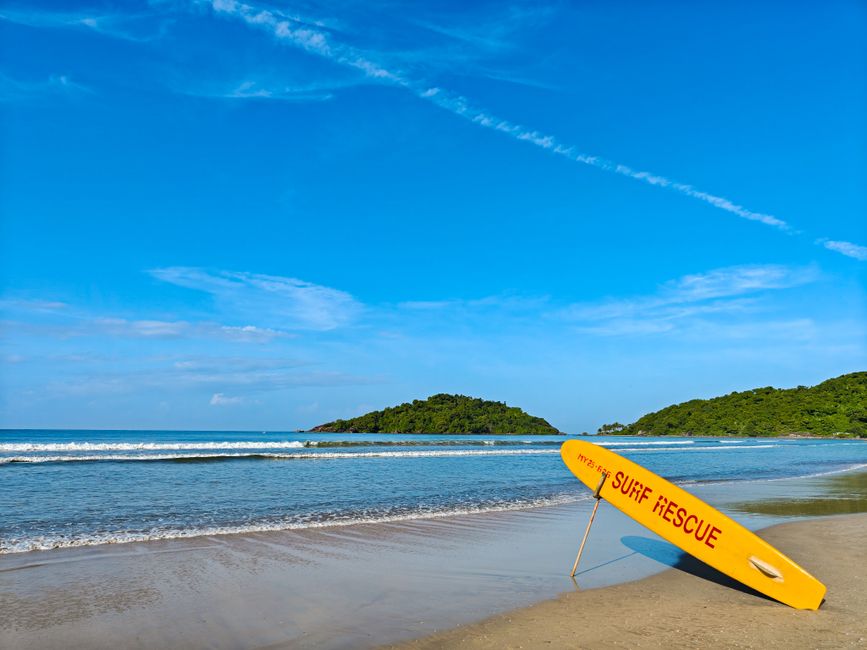
Verify break-specific live rescue simulations
General ocean knowledge does not prepare an instructor to pull an unconscious adult through a dumping shorebreak. Every coastal break has distinct bathymetry, current behaviors, and bottom contours. An instructor who learned to surf on a mellow point break in southern California will struggle in the steep, cold-water closeouts common to the North Shore of Massachusetts without local training.
At Boston Surf Adventures, coaches must train for the exact conditions found at Nahant Beach. Nahant features broad tidal swings that dramatically change water depth and wave shape every two hours. Sandbars shift constantly throughout the season, carving deep lateral gutters that generate localized rip currents. Instructors must rehearse patient extractions across these specific gutters, accounting for the drag of heavy wetsuits and cold water fatigue.
Live simulations must test actual physical mechanics, not theoretical discussions. A legitimate drill involves dropping an unannounced "casualty" into the impact zone and timing the rescue team. The responding coach must spot the distress signal, sprint through knee-deep water, punch through breaking waves on a rescue board, secure the victim, and return them safely to dry sand within a defined time limit.
These break-specific requirements change entirely when operating in different coastal regions. For example, our winter retreats in Rincon, Puerto Rico introduce shallow coral reefs, heavy tropical swells, and strong trade winds. A rescue drill at Nahant emphasizes managing hypothermia risk and maneuvering through muddy tidal troughs, while a drill in Puerto Rico demands quick extraction from sharp reef heads and managing open-ocean swell lines. A qualified school runs simulated drills calibrated directly to the local topography.
Evaluate the on-beach emergency equipment standard
The physical location of emergency gear tells you everything about a surf school's operational discipline. Serious medical incidents require immediate intervention, yet amateur operators routinely leave their trauma kits locked inside a passenger van parked several hundred yards away behind a seawall.
| Setup Type | Medical Gear Location | Phone Access | Key Operational Impact |
|---|---|---|---|
| Amateur | Locked inside a parked vehicle or shop | Instructor's personal phone in a dry bag | Critical multi-minute delay during an active respiratory or trauma event |
| Professional | Stationed on the open sand at the high-water line | Dedicated, fully charged emergency phone inside the dry kit | Immediate access to airway management, trauma supplies, and emergency dispatch |
A proper medical station on the sand is not an afterthought; it is an active command post. According to the Escape Surf School Emergency Action Plan, best practice mandates that a fully charged mobile phone must live directly inside the beach first aid kit during every water session. Instructors cannot rely on dead batteries, missing signal reception, or personal devices misplaced inside a backpack.
Physical gear on the sand must also include high-visibility flotation tools. A soft-top beginner board can support weight, but it lacks the specialized handles and narrow outline needed to secure an injured surfer quickly. Professional programs keep a dedicated rescue board or rescue tube on the beach, positioned above the high-tide line, ready for immediate deployment.
Staffing models directly dictate equipment readiness. Boston Surf Adventures requires all on-land support staff to maintain current CPR certification. This guarantees that when a water coach brings a student to shore, trained hands are already waiting on the sand with dry supplies, warm layers, and direct communication to emergency medical services.

Analyze group recall signals and municipal lifeguard coordination
Managing an in-water crisis requires two distinct operational tracks: extracting the injured individual and controlling the remaining students still floating in the surf zone. If an instructor must perform a rescue, the rest of the class cannot be left unsupervised in active waves.
Establishing visual and auditory recall signals
Before students enter the water, an instructor must teach and test emergency recall signals. When ocean chop rises and wind noise drowns out normal speech, shouting is useless. A professional surf school establishes clear auditory and visual commands to clear the water immediately.
Three short blasts on a pea-less marine whistle combined with crossed arms overhead is a standard signal indicating an emergency beach evacuation. Every student must know to turn their board toward the beach, lie flat, catch the next wave or white water roll, and assemble at the on-sand staging area. Instructors verify student comprehension by testing these signals during dry-land drills before the first surf drill begins, a practice detailed in our guide on How to audit a surf camp's in-water tracking and roll call protocols.
Student-to-coach ratios play an active role here. Boston Surf Adventures enforces a strict maximum ratio of 5:1 for youth camps and 6:1 for weekend adult clinics. If a coach must attend to a distressed student, a low ratio allows secondary coaches or on-land staff to account for every student instantly, preventing a single incident from cascading into multiple water emergencies.
Coordinating with municipal beach patrols
No surf instruction program should operate as an isolated, rogue entity on a public coastline. Professional surf schools maintain an open operational dialogue with municipal ocean lifeguards wherever public patrols exist.
As established in the Woolacombe Beach NOP & EAP, standard operating procedures require that all water emergencies and requests for outside medical assistance flow through a designated head coach who coordinates directly with municipal safety services. The lead surf instructor checks in with the on-duty beach patrol supervisor before morning lessons begin to review the day's rip current risks, expected tide swings, and designated training zones.
This morning briefing establishes clear jurisdiction. The municipal lifeguards know exactly where the surf school will conduct its sessions, how many students are in the water, and what colored rash guards the group is wearing. If an incident requires emergency medical dispatch, the beach patrol and the surf school act as a single unit rather than working against each other.
Common misconceptions in surf school safety audits
Prospective students and parents often look at surf school credentials through the wrong lens. Marketing buzzwords and generic safety claims create a false sense of security while ignoring the actual mechanical realities of open-ocean survival.
Confusing CPR certification with ocean rescue competence
A basic CPR and AED card from a community center does not mean someone can save your life in the Atlantic Ocean. CPR is a post-extraction protocol; it only matters once a casualty is resting flat on stable, dry ground.
The critical challenge in a surf emergency is the extraction itself. A coach must break through heavy swell, control a panicked adult twice their size, disentangle tangled urethane leashes, and tow that dead weight through breaking white water without losing the board. That requires specialized surf lifesaving techniques, breath control, and open-ocean physical conditioning. CPR certification is a mandatory minimum baseline, but it is not proof of water rescue ability.
Accepting van storage for medical kits
Many surf schools treat medical readiness as a compliance checklist rather than an active rescue system. They buy an expensive trauma kit, put it in the back of a cargo van, and leave it parked in a beach lot 300 yards away behind a pay station.
In a severe ocean trauma—such as a fin laceration severing an artery or a blunt force head strike causing unconsciousness—hemorrhage control and airway management are measured in seconds. A five-minute round-trip run across deep dry sand to unlock a vehicle door can turn a treatable injury into a fatal outcome. A trauma kit that is not resting on the beach sand next to the surf zone does not exist.
Three direct questions to ask a surf school before booking
Do not rely on polished social media feeds or lifestyle branding to judge an ocean program. Send these three direct questions via email or phone before you hand over payment:
- "Can you share the written table of contents or primary extraction protocol from your school's Emergency Action Plan?"
- "When was the last time your coaching staff completed a live, in-water casualty extraction drill at the specific beach where I will be surfing?"
- "Is your emergency medical kit and communications gear stationed on the sand at the water's edge during every lesson, or is it kept in a vehicle?"
An operator running a professional, audited surf program will answer these questions immediately, clearly, and without hesitation. If they stall, brush off the question as unnecessary, or claim that their general surfing experience makes written protocols irrelevant, book your lessons somewhere else.
Ocean surf instruction demands the same educational rigor, deliberate practice, and risk management as any high-consequence outdoor sport. Learn more about professional surf instruction standards at Boston Surf Adventures.