Boston Surf Adventures provides a framework for auditing surf instruction to ensure you are paying for objective skill acquisition rather than subjective encouragement. Real progression relies on meeting specific technical milestones, such as independent wave selection and pop-up timing in waves under 3 feet, rather than simply measuring time spent in the water. By choosing an ISA-certified program that prioritizes high wave counts and video analysis over generic flattery, surfers can bypass the common multi-year plateau and achieve self-sufficiency in a matter of weekends.
This framework is built on the methodology of Boston Surf Adventures founder Grant Gary, a former school teacher with over 15 years of professional education experience who has taught thousands of students. As the only ISA Certified Surf School in New England, we apply structured pedagogy to the sport of surfing. This means we treat surf instruction like a curriculum, not a hobby, ensuring every student has a clear roadmap for their development.
Assessing repeatable skills instead of time served
A common trap for many surfers in the Greater Boston area is confusing "time served" with actual progress. You may have owned a surfboard for three years or spent twenty weekends at the beach, but if you cannot reliably execute specific maneuvers, your progression has stalled. Boston Surf Adventures defines skill levels by what a surfer can do consistently across multiple sessions, regardless of their history with the sport.
According to a study on surf levels and progression, real skill is marked by repeatable actions that become automatic, freeing up cognitive space for more complex tasks. When you audit a surf program, you should look for a curriculum that tests for these specific behavioral markers rather than just "feeling better" in the water.
The beginner baseline
The first stage of any legitimate audit involves checking for a solid foundation in the whitewater. At this level, the goal is not just to stand up once, but to demonstrate total control over the board in shallow water. A student has cleared this milestone when they can:
- Catch whitewater waves independently without a push from an instructor.
- Demonstrate a stable pop-up that doesn't involve the use of knees.
- Maintain balance while riding straight toward the beach.
- Safely exit the wave and fall away from the board to avoid injury.
The novice transition
The most difficult leap in surfing is moving from the whitewater to "green waves" or unbroken swells. This phase is where most self-taught surfers fail because they lack the ocean literacy to identify the right part of the wave. A structured audit of your skills should check if you can paddle out through the break, sit in the lineup, and identify a rideable wave before it breaks. If you are still relying on an instructor to tell you which wave to go for, you are still in the initiation phase.
The foundational test
For those moving into intermediate territory, the markers become more mechanical. The PS Surf Level Progression model suggests that a "Foundation" level surfer should be able to create speed at the take-off and perform top-to-bottom maneuvers. This requires an understanding of how to lean the surfboard onto its rail and how to read the "sections" of a wave as they develop. In our Nahant surf camps, we look for students who can generate their own momentum rather than just letting the wave carry them.

Evaluating the whitewater to green wave milestones
The transition to catching unbroken waves requires a specific set of mechanical shifts that most generic surf schools overlook. At Boston Surf Adventures, we focus on the Nahant Beach environment because its consistent, smaller waves allow students to focus on these shifts without the fear factor of heavy surf. Day 2 of our weekend camps is specifically designed to bridge this gap, targeting comfort in waves 3 feet and under.
| Milestone | Technical Requirement | Success Metric |
|---|---|---|
| Independent Paddling | Proper chest elevation and arm reach | Catching 3 consecutive waves without assistance |
| Pop-up Timing | Identifying the "moment of weightlessness" | Standing before the board levels out |
| Wave Selection | Distinguishing between a "peak" and a "closeout" | Avoiding 80% of unrideable waves |
| Safe Exits | Kicking the board out or stepping off the back | Finishing the ride before reaching the "dry" sand |
Paddling and pop-up timing
Many beginners paddle too late or too early. If you paddle too late, the wave passes under you; if you paddle too early, you lose momentum before the wave reaches you. An objective audit of your paddling should focus on your ability to match the speed of the wave. Your pop-up should happen the moment you feel the tail of the board lift. If your instructor isn't talking about the "glide" or the weight distribution required to stay in the pocket, they aren't teaching you the mechanics of the transition.
Wave selection and safe exits
Ocean literacy is the ability to read the water. This includes identifying rip currents, understanding wind directions, and knowing where the "peak" of a wave is located. For surfers at Nahant Beach, this means learning how to spot the difference between a wave that will peel left or right and one that will simply "close out" and crash all at once. Furthermore, a technical audit must include safety. You should be able to pull off a wave safely, ensuring you don't end up in the "impact zone" where other surfers are paddling out.
High-repetition environments vs. generic guarantees
The rate of your progress is mathematically tied to the number of repetitions you get on the right waves. One of the biggest reasons people fail to progress is they choose environments where they spend 90% of their time paddling and only 10% of their time actually riding. A Boston surf school that understands pedagogy will prioritize a high wave count over everything else.
The wave count metric
The math is simple: if you go out on your own for a weekend, you might successfully catch 5 waves. You spend most of your time out of position or falling. With a professional coach at Boston Surf Adventures, a student can easily catch 50 to 70 waves in one weekend. This is possible because we limit our weekend camps to only 6 spots, ensuring that every student has an instructor nearby to correct their positioning in real-time. This massive increase in repetition is what allows muscle memory to set in, turning a conscious effort into an automatic habit.
Wave suitability
There is a myth that you should learn in "challenging" conditions to get better faster. This is incorrect. Technical progression happens best in 3-foot-and-under waves with low crowds. When the waves are too large, your brain enters "survival mode," which shuts down the ability to learn new motor skills. By choosing a location like Nahant, which is only 30 minutes from downtown Boston, you get the "nursery" conditions required for rapid improvement. We have identified over 20 surf breaks within 45 minutes of the city that offer small, empty waves perfect for high-repetition training.

Video analysis as objective truth
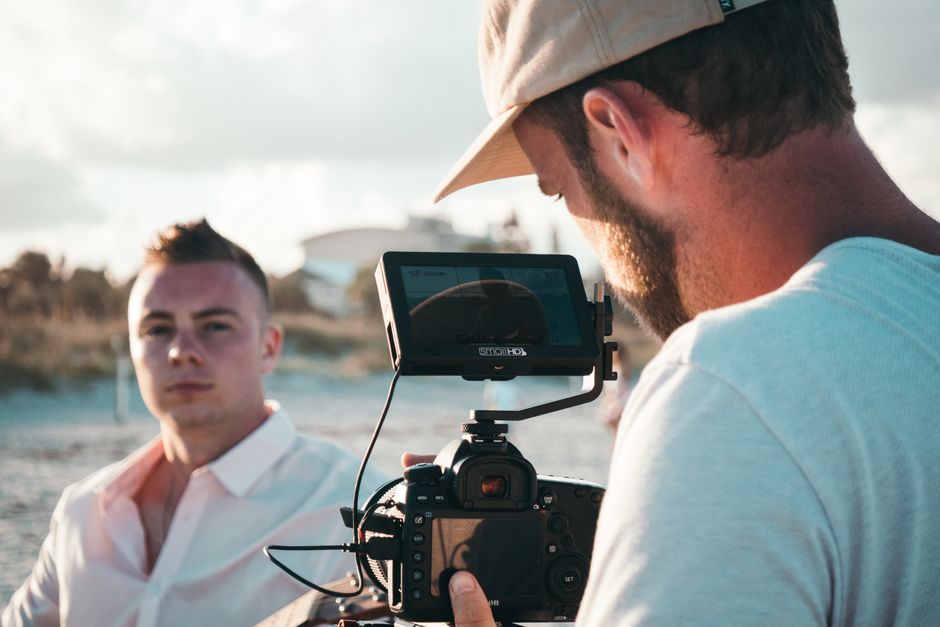
Subjective feedback from the water—"Great job!" or "Paddle harder!"—does not help you fix a mechanical flaw. To truly audit your progression, you need to see what you are doing. This is why Boston Surf Adventures uses video analysis as a cornerstone of our Puerto Rico Surf Retreats in Rincon. When you see yourself on film, the gap between what you thought you were doing and what you were actually doing becomes clear.
The perception vs. reality gap
Surfers often think they are bending their knees when they are actually just bending at the waist. They think they are looking down the line when they are actually looking at their feet. Video analysis provides the "objective truth" that a coach in the water cannot always convey. By filming every wave of a morning session, we can show you the exact millisecond where your weight distribution shifted or your foot placement went wrong.
Isolating two daily adjustments
One of the biggest mistakes in surf coaching is giving the student too much to think about. To avoid cognitive overload, our founder Grant Gary follows a strict rule: only two simple changes per day. Whether we are at our Nahant Beach camp or on a Puerto Rico Retreat, we identify the two highest-impact mechanical changes you can make. Focusing on more than two items usually leads to "paralysis by analysis," where the surfer's movements become stiff and unnatural.
Assuming heavy waves build better surfers
A common error is the belief that a trip to California or Hawaii is the secret to getting better. While those locations have world-class waves, they also have world-class crowds and intense local competition for those waves. For a beginner or intermediate, these conditions are counterproductive.
In contrast, the Boston surf scene offers the opposite: empty, mellow waves. Learning in an environment with no one else around allows you to fail safely and try again immediately. The 20+ breaks near Swampscott and Marblehead provide the quiet needed to focus on the five mechanical shifts required to move from the whitewater to carving open faces.
Confusing equipment struggles with skill deficits
Many surfers try to "downsize" to a shorter, thinner board far too early. They see professional surfers on shortboards and assume that is the goal. However, riding a board with insufficient volume before you have mastered the foundational milestones will stall your progress for years.
If you find yourself struggling to catch waves that everyone else is riding, the problem might not be your technique—it might be your gear. We recommend staying on a high-volume "longboard" or a stable soft-top until you can consistently perform bottom turns and trim along the face of a wave. You can learn more about how the wrong equipment can hinder you in our guide on why generic foam fleets stall your progression.
The path to technical mastery
To truly audit your surf progression, you must look past the lifestyle marketing of the industry and focus on the numbers. Are you catching 5 waves or 50? Are you receiving "good job" or specific mechanical feedback? Are you surfing in a crowd of 50 people or a group of 6?
At Boston Surf Adventures, we believe that surfing is a skill that can be taught through the same rigorous pedagogical standards used in a classroom. Whether you are a local attending our weekend surf camps at Nahant or a traveler joining us in Rincon, the goal remains the same: self-sufficiency through objective milestones.
Review the specific Day 1 and Day 2 milestones of our upcoming programs to see exactly what technical skills you will master. Visit Boston Surf Adventures to book your spot at Nahant Beach and start your audit today.