Boston Surf Adventures provides professional surf instruction at Nahant Beach, MA, and Rincon, Puerto Rico, addressing the widespread lack of safety standards in the surf school industry. Before booking, you must verify that an operator holds ISA certification, maintains a maximum 1:8 coach-to-student ratio, and employs instructors with active lifeguard and CPR credentials. Checking for on-beach emergency equipment like an AED and direct communication links is essential for mitigating the inherent risks of the North Shore Atlantic waters in 2026.
The invisible safety gap in New England surf instruction
Most people assume that if a surf school has a website, a permit, and a pile of surfboards, they are operating under a strict set of safety guidelines. In reality, the barrier to entry for starting a surf school is incredibly low. In many coastal towns, a "permit" is merely a business license or a parking agreement; it rarely involves an audit of the instructor's ability to perform a deep-water rescue or administer life-saving medical care. This creates an invisible gap where the person responsible for your child’s safety might be a talented surfer but a completely untrained first responder.
At Boston Surf Adventures, we have observed that the "strong surfer" myth is the most dangerous trap for consumers. Being able to ride a wave well does not translate to being able to manage a group of six panicking students in a rip current. Professional surf education requires a specific marriage of pedagogical skill and ocean rescue proficiency. Without a formal safety baseline, you are essentially paying for a guided session with a hobbyist rather than a structured lesson with a professional.
This gap becomes particularly evident when conditions change. The Atlantic can shift from a placid lake to a challenging shorebreak in less than an hour. A school without a documented Emergency Action Plan (EAP) will often rely on the individual instinct of a young instructor rather than a practiced, systematic response. When you audit a school, you are looking for evidence that their safety protocols are institutionalized, not left to chance.

Why the regulatory landscape allows for uncertified operators
The surf instruction industry lacks a universal governing body with the power to shut down unsafe operators. While the International Surfing Association (ISA) acts as the world governing body and sets the gold standard for coaching, many schools choose not to pursue this certification because it requires rigorous documentation and higher insurance premiums. Consequently, the responsibility for safety vetting falls entirely on the shoulders of the parent or the adult beginner.
In the Greater Boston area, the proximity to the city means that beaches like Nahant Beach see a high volume of traffic. Some operators prioritize volume over safety, stretching their staff thin across large groups. Because there is no "surf police" checking instructor certifications on the sand, a school can operate for years with expired CPR cards or instructors who have never passed a formal lifeguard test.
When a school operates as a registered business entity, they are often only required to show proof of liability insurance. However, insurance only pays out after something goes wrong; it does not prevent the incident from happening. To find a safe environment, you must look for schools that voluntarily adhere to international standards, such as those laid out by the Irish Surfing Association, which mandates direct communication links to emergency services and first aid kits directly on the beach.
Auditing the safety baseline of a Boston surf school
To properly vet a surf school, you must move past the marketing copy and ask for specific credentials. A reputable school will be proud to share their safety documentation. If an operator becomes defensive or vague when asked about their medical certifications, it is a signal to look elsewhere.
Verify instructor rescue and medical certifications
The first step in any audit is checking the credentials of the people who will be in the water with you. At a minimum, every in-water coach should be a certified lifeguard. This is a much higher standard than a simple swimming test. Lifeguard certification involves training in water entries, victim extractions, and the use of rescue boards.
- Lifeguard Status: Ask if the specific instructors working the session hold current American Red Cross or YMCA lifeguard certifications.
- CPR and First Aid: Ensure that every staff member, including on-land support, is CPR certified.
- Advanced Training: High-tier schools often have head coaches with Advanced Wilderness First Aid or similar certifications, which are designed for environments where emergency response times may be delayed.
Boston Surf Adventures is the only ISA Certified Surf School in New England, meaning our curriculum and safety standards are audited by the global authority for the sport. Furthermore, all our coaches are trained in custom rescue techniques developed by our founder, Grant Gary, who utilized his 15 years of experience as a professional educator to bridge the gap between classroom management and ocean safety.
Checking the student-to-coach ratio
Ratios are the most reliable predictor of safety in a surf lesson. If one instructor is responsible for ten people, they cannot maintain a consistent line of sight on everyone. When a student falls or gets caught in the "impact zone" (where waves are breaking), the instructor must be close enough to intervene immediately.
| Program Type | Industry Standard Ratio | BSA Standard Ratio |
|---|---|---|
| Kids Summer Camp | 1:8 or 1:10 | 1:5 or smaller |
| Adult Semi-Private | 1:6 | 3:1 |
| Private Lessons | 1:1 | 1:1 |
According to the BCASI safety standards, a 1:6 ratio is recommended for beginner lessons to ensure adequate supervision. We take this a step further. For our Kids Summer Surf Camps, we maintain a ratio of five or fewer students per coach. This ensures that every child receives individualized attention and is never left unsupervised in the water. For adult beginners, our Semi-Private Lessons utilize a 3:1 ratio, which dramatically increases the safety margin and the wave count for each student.

Ask about on-beach emergency equipment and communication
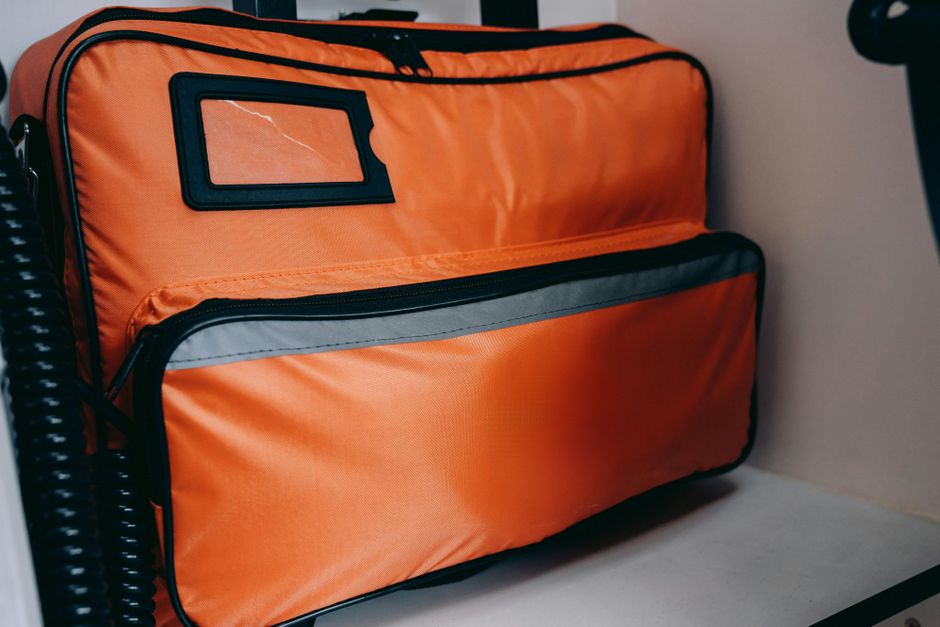
A professional surf school should effectively turn a patch of sand into a mobile medical station. You should look for specific equipment at the beach entrance or the school's "base camp." If the only safety gear on hand is a basic band-aid kit, the school is unprepared for a real emergency.
- AED Access: Ask if the school keeps an Automated External Defibrillator (AED) on-site. In the event of a cardiac incident, every second counts.
- Communication: Verify that coaches carry waterproof communication devices or have a dedicated on-land staff member with a direct link to local emergency services.
- First Aid Kit: A professional-grade kit should include more than just bandages; it should have supplies for managing major lacerations, stings, and orthopedic injuries.
At Long Beach in Nahant, we operate out of beach entrance #9. Our protocol includes having all-land staff CPR-certified and ready to coordinate with emergency responders if a situation arises. This level of preparation is what separates a professional adventure company from a casual rental shop.
Review the equipment safety standards
The gear you use is a safety component in itself. For beginners, the use of soft-top surfboards is non-negotiable. These boards are constructed with a foam deck and flexible fins to minimize the risk of injury during a collision or a wipeout. Using a hard fiberglass board for a first-time lesson is a significant red flag.
Additionally, every board must have a high-quality leash in good repair. A broken leash can turn a surfboard into a dangerous projectile and leave a tired student swimming back to shore alone. When you arrive at the beach, inspect the equipment. If the wetsuits are torn and the board leashes are frayed, it indicates a lack of attention to detail that likely extends to their safety protocols.
Red flags that mean you should walk away
Sometimes the danger isn't in what is missing, but in what you see happening on the sand. If you observe any of the following behaviors, the school is likely prioritizing profit over participant well-being:
- No Safety Briefing: If students are given a board and told to "just get in," the school is failing its most basic duty. A structured land lesson must occur before anyone touches the water, covering rip currents, board handling, and the "protection" pose for falls.
- Mixing Ages and Skill Levels: Putting a six-year-old in the same group as a 200-pound adult beginner is a recipe for a collision. Groups should be segmented by size, age, and ability.
- Instructors Surfing for Themselves: If you see coaches catching waves while their students are struggling in the whitewater, they are not coaching; they are just surfing on your dime. An instructor's eyes should be on the students 100% of the time.
- Inappropriate Conditions: A school that pushes beginners into five-foot, dumping shorebreak just to avoid canceling a lesson is taking an unacceptable risk. Professional schools frequently reschedule or move lessons based on the tide and swell.
Making safety vetting your first step
Selecting a surf school should be approached with the same diligence as choosing a daycare or a specialized sports coach. For parents in the Greater Boston area, the stakes are high because the ocean is an inherently unpredictable environment. By asking the questions outlined above, you move from being a passive consumer to an active auditor of your own safety.
When researching, it is helpful to look at how a business describes its leadership. A school founded by a career surfer might have "soul," but a school led by a career educator often has a better grasp of risk management and student development. This is why we emphasize Grant Gary’s background; teaching thousands of students requires a system, not just a talent for surfing.
If you are a parent looking for the most secure environment for your child this summer, you may want to consult The Executive Parent's Strategy for Selecting the Best Boston Summer Surf Camps. This strategy prioritizes long-term skill development and safety over simple convenience.
Ultimately, the goal of a surf school audit is to ensure that the only thing you have to worry about is catching your next wave. When the safety infrastructure—the ISA certifications, the lifeguard-trained coaches, and the on-site medical gear—is already in place, you can focus on the progression and the community that makes surfing such a transformative experience.
For more information on our specific safety protocols or to see our current availability for summer programs, visit the Boston Surf Adventures website. All our programs, from local weekend camps at Nahant to international retreats in Puerto Rico, are built on this uncompromising safety-first foundation.