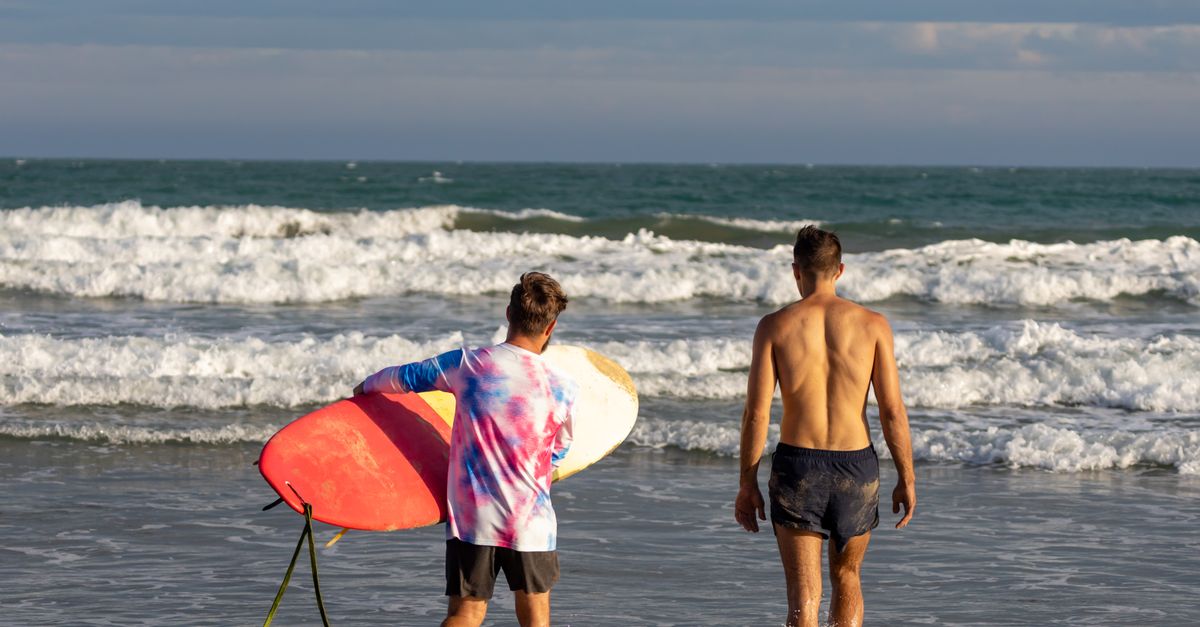
The Swim to Surf transition: what actually prepares you for the lineup
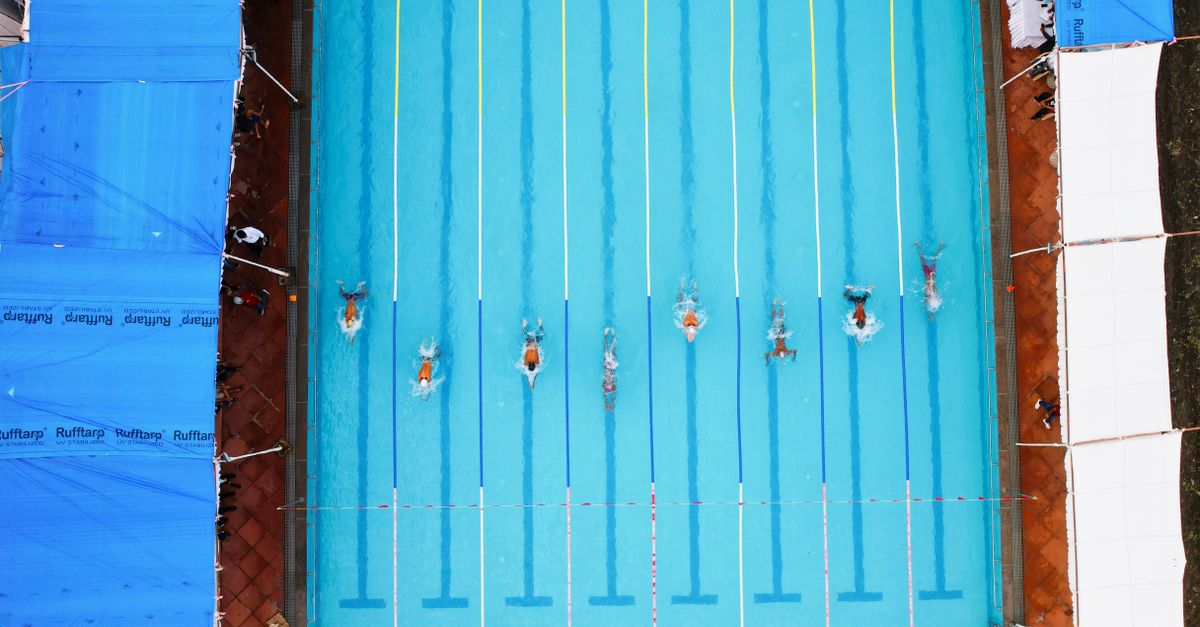
Boston Surf Adventures includes a dedicated Swim to Surf Fitness Program in its weekend camps because standard pool swimming does not automatically translate to wave-catching endurance in open water. Surfing requires prone paddle sprints with an extended thoracic spine rather than horizontal gliding driven by flutter kicks, creating rapid shoulder and lower-back fatigue for unprepared athletes. To prepare for the physical reality of catching 50 to 70 waves over two days at Nahant Beach, surfers must shift from steady-state laps to interval-based paddle mechanics and rotational core training before paddling out into a surf zone.
The physiological mismatch: why pool endurance fails on a surfboard
Surfing is roughly 90 percent paddling and ocean management, yet most beginners show up to their first session having only practiced their pop-up on a dry yoga mat. When athletes with strong athletic backgrounds paddle out, they often expect their marathon running or pool swimming conditioning to carry them through. Within twenty minutes, their deltoids burn, their lower backs ache, and their stroke rate drops to a crawl. The issue is not general conditioning. It is a fundamental biomechanical mismatch between swimming and prone surfboard propulsion.
Standard lap swimming relies on continuous body rotation, head-down water positioning, and constant flutter kicks to maintain horizontal trim. The kick produces up to 15 percent of total propulsion in freestyle swimming and keeps the hips elevated near the surface. On a surfboard, your legs remain still, locked together over the stringer to stabilize the deck. They contribute zero propulsion while functioning as dead weight. Every ounce of forward momentum comes from the shoulders, triceps, latissimus dorsi, and upper back.
The spinal posture required for surfing has almost no equivalent in a lap pool. As highlighted in Basis Surf's analysis of swimming versus surf paddling, prone paddling forces the body into an arched position where your chest stays raised, your cervical spine remains extended, and your erector spinae muscles contract continuously. Instead of looking down at a black tile line, your eyes look up toward the horizon to track oncoming swell. That prolonged isometric contraction in the posterior chain exhausts athletes who have only trained in flat-water conditions.
Showing up without this specific muscular preparation compromises the entire learning experience. When your arms turn to lead, you paddle too late, miss the unbroken green face, and get stuck in the impact zone. As detailed in our breakdown of the complete guide to taking your first surf lesson, physical fatigue accounts for more failed pop-ups than poor foot placement. If you cannot produce burst acceleration in four clean strokes, proper standing technique will not matter.
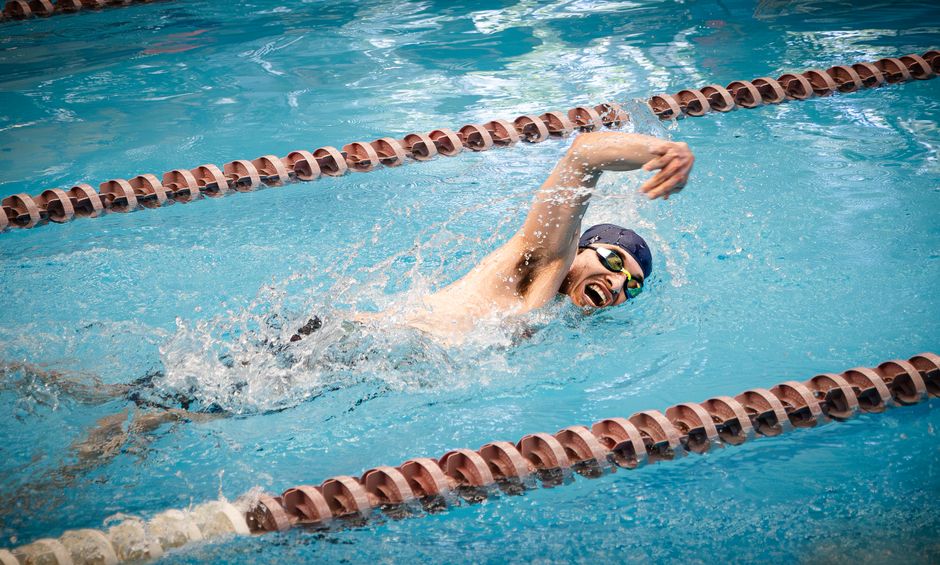
Pool proficiency versus surf school reality
Calm water gives swimmers a false sense of security. Swimming twenty consecutive laps in a chlorinated 25-yard lane proves basic cardiovascular health, but it does nothing to prepare an athlete for the shifting hydraulic forces of an active break.
Environmental variables and shifting baselines
The physical demands of a pool stay constant from minute to minute. The water does not move, the depth is uniform, and you push off a solid wall every fifty feet to regain momentum. Ocean conditions break all of those assumptions. The Department of Education WA swimming and water safety continuum formally differentiates between pool training and surf center instruction for this exact reason. While pool programs grade students on mechanical stroke efficiency in still water, surf environments introduce rip currents, white-water turbulence, and shifting sandbars that require active ocean awareness.
In the surf zone at Nahant Beach, water moves under your board in three directions at once. You deal with shoreward wave energy, bottom undertow, and lateral longshore drift. Paddling through breaking whitewater forces you to engage your abdominal core to keep the nose of the surfboard from pearling into the chop. A swimmer accustomed to a smooth pool surface must suddenly balance a buoyant foam plank while driving their hands deep through turbulent foam.
The baseline requirements of open water
Many public aquatic programs acknowledge this gap by testing open-water readiness early. For example, municipal surf instruction programs such as PlayLA youth programs require a continuous 100-yard swim before allowing participants to register for ocean clinics. That standard exists purely as a safety baseline to verify that an individual can stay afloat without a flotation device if separated from equipment.
Passing a 100-yard test proves you can survive an accidental spill, but it does not mean you have the capacity to catch waves. A safety metric is not a performance metric. When schools treat swimming survival as surf readiness, students spend their entire time gasping for air between sets rather than learning how to read the swell. This disconnect is one of the primary reasons why most surf lessons leave you frustrated; students exhaust their energy reserves before receiving instruction on board control.
| Dimension | Lap Pool Swimming | Ocean Surf Paddling |
|---|---|---|
| Primary Propulsion | Arms (85%) + Leg Kick (15%) | Arms and Lats (100%) |
| Spine Position | Neutral, head down, body roll | Extended, chest up, thoracic arch |
| Lower Body Action | Continuous rhythmic flutter kick | Static counterweight to stabilize rail |
| Energy Demand | Steady-state aerobic output | Anaerobic sprint intervals (5–10s bursts) |
| Water Surface | Calm, flat, predictable drag | Moving chops, foam, cross-currents |
| Recovery Phase | High elbow recovery over flat water | High arm clearance over ocean chop |
The mechanics of high-volume wave catching
The primary barrier to rapid surfing progression is wave count. If you rent a foam board and walk into the water by yourself for two days, you might catch five waves. You spend the rest of the time drifting out of position, getting pummeled by closeouts, and misjudging the take-off zone. With professional coaching at a New England surf school, that equation changes completely. Over a two-day weekend camp, a coached student can catch between 50 and 70 waves.
Catching 70 waves in two days requires extraordinary upper-body output. Every single wave demands an initial positioning paddle, a high-cadence burst to match wave speed, the mechanical pop-up, and the paddle back through the break. If an athlete runs out of gas by wave ten on Saturday morning, the remaining 60 repetitions are wasted.
Surfing relies on rapid anaerobic bursts rather than steady aerobic output. In their technical breakdown of paddling mechanics, Surfline's analysis of paddle technique emphasizes that elite paddlers engage the middle back, lats, and deep core to generate maximum propulsion per stroke instead of thrashing the water. When a wave approaches, you have a three-to-five-second window to accelerate your board from two miles per hour to six miles per hour. That requires fast-twitch power.
Wave Approach → Position Turn (180°) → Deep Catch (3-5 Max Power Strokes) → Wave Momentum Takeover → Pop-Up Execution
Steady-state lap swimming trains slow-twitch muscle fibers for continuous output over several hundred yards. It teaches the nervous system to pace energy delivery. Surfing demands the opposite: absolute rest while sitting on the board, followed immediately by an all-out sprint to catch the wave crest, followed by explosive pushing mechanics during the pop-up. Without training this specific energy curve, the deltoids rapidly accumulate lactic acid, leaving the arms heavy and unresponsive.
Inside the Boston Surf Adventures Swim to Surf framework
Boston Surf Adventures developed the Swim to Surf Fitness Program to solve this exact bottleneck. Created under the guidance of founder Grant Gary, a former educator with over fifteen years of teaching experience, the program is built around how human bodies learn motor patterns under physical stress.
The Swim to Surf curriculum is provided as a core bonus, valued at $200, within the Boston Surf Adventures Weekend Surf Camp. It is not an afterthought or an optional checklist. It is designed to prepare your upper body before you ever set foot on Nahant Beach. Paired with the Friday evening online Surfology 101 classroom session, the fitness plan makes sure students understand both the physics of ocean swells and the mechanical demands placed on their muscles.
Instead of generic cross-training, the curriculum focuses on three specific physical targets:
- Building thoracic spine extension endurance so you can hold your chest off the deck without pinching your lower back.
- Training deep-water arm pull mechanics that recruit the latissimus dorsi rather than overloading the delicate rotator cuff tendons.
- Developing anaerobic sprint recovery, giving your cardiovascular system the ability to clear metabolic waste between wave sets.
By addressing these physical demands in advance, camp participants walk onto the sand ready to handle high-repetition coaching. On Sunday, when the curriculum moves to independent wave selection, pop-up timing, and managing waves up to three feet, conditioned students still have the physical stamina required to complete their turns and pull off waves cleanly.
Practical training protocols before your first session
If you plan to join a surf camp or travel for a dedicated surf trip, generic cardio workouts will not get the job done. You need targeted conditioning that translates directly into wave count. The preparation window begins two to three weeks before your first on-water lesson.
Pool interval protocols for surf speed
Replace slow, continuous lap swimming with high-intensity interval sets that mimic the rhythm of the lineup. A standard pool session should look like this:
- Warm-up: 200 yards easy freestyle, focusing on long extension and relaxed breathing through the stroke.
- Paddle Simulation Sets: 6 rounds of 50 yards at a moderate pace, directly followed by 25 yards at maximum sprint effort. Rest for 30 seconds at the wall between each round.
- Sprint Recovery Bursts: 8 rounds of 25 yards dead sprint from a dead stop in the water, resting 15 seconds between repetitions to simulate paddling into consecutive set waves.
- Cool-down: 200 yards backstroke to open up the anterior chest muscles and balance shoulder rotation.
Dryland thoracic mobility and isometric strength
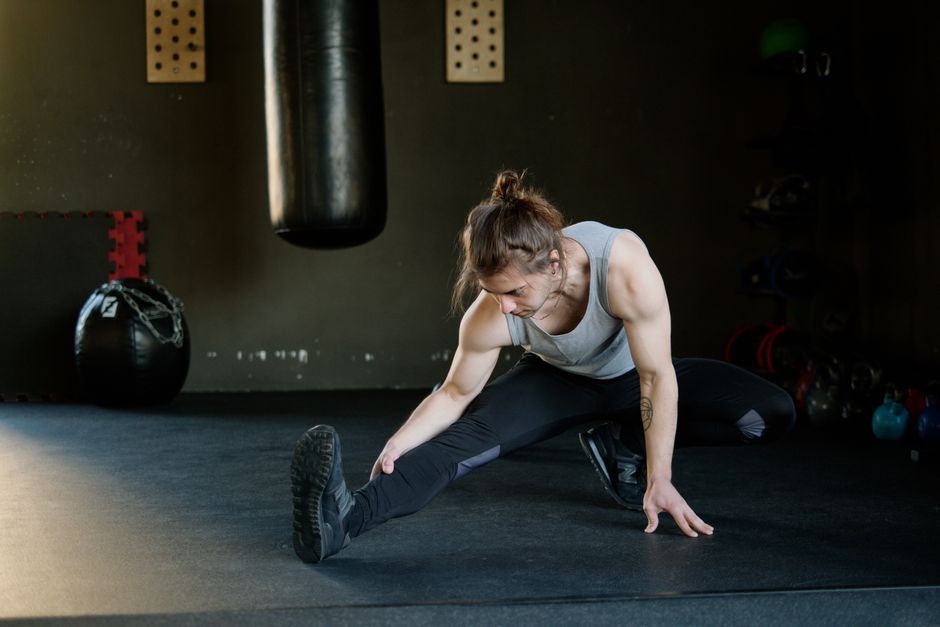
Because pool swimming cannot fully replicate the arched posture of prone paddling, you must train thoracic mobility on land. Prone back extensions, bird-dogs, and Cobra holds build the necessary endurance in your spinal erectors.
Focus on scapular retraction. Lie prone on a flat surface, elevate your chest four inches off the ground while keeping your chin tucked, and pull your shoulder blades down and together. Hold this isometric position for sets of 45 to 60 seconds. This simple drill conditions the postural muscles to support your ribcage off the surfboard deck, preventing neck strain and shoulder impingement during four-hour surf blocks.
Drop isolated arm curls and heavy bench press sets in the weeks leading up to camp. Instead, prioritize pull-ups, horizontal ring rows, and rotational core exercises like Russian twists and medicine ball throws. Surfing power originates in the hips and transfers through the torso into the arms. A stable core creates a solid platform for your paddle stroke, allowing you to transfer more energy into the ocean with every reach.
The ocean does not care how much weight you can bench press or how fast you can swim a lap in a heated pool. By recognizing the mechanical realities of prone surfboard paddling and training your body in advance, you eliminate the physical exhaustion that undermines most beginner surf sessions. Prepare your shoulders, build your sprint power, and show up ready to catch waves.
To secure your spot and start conditioning with the Swim to Surf blueprint, explore our camp dates on the Boston Surf Adventures homepage.
Filed under