Untitled

Claude

Adults learning to surf in New England often get stuck in a multi-year loop of generic beginner lessons because they rely on subjective coaching instead of objective tape. Boston Surf Adventures uses video analysis to cut through the perception gap, showing students exactly what their mechanics look like on the water. To stop wasting time and money on endless cheerleading at generic Northeast surf schools, you need to track four specific technical milestones on camera: independent wave selection, paddling for your own waves, pop-up timing, and pulling off safely in under-3-foot surf. This analytical approach, pioneered at our home break of Nahant Beach, replaces vague feedback with visual proof.
Auditing your Northeast surf instruction
Most adult surf lessons in New England operate on a push-and-cheer model. An instructor stands in waist-deep water, pushes you into a pre-selected wave, and yells encouragement as you ride straight to the beach. While this is fun for an afternoon, it does not build a self-sufficient surfer.
When you pay for instruction, you should be purchasing objective skill acquisition. A structured surf education program should focus on transitioning you away from instructor assistance as quickly as possible. If you are still relying on someone to tell you when to paddle after three lessons, your progression has stalled.
Consider the math of coached wave time. If you go out on your own over a weekend in Massachusetts, you might successfully catch five waves. When you work with a coach at the Surf Camps in Boston and New England — Boston Surf Adventures, you can easily catch 50 to 70 waves in one weekend.
This high volume of repetition is only useful if it is paired with direct feedback. Without a systematic review of your technique, you risk memorizing bad habits. You can read more about evaluating your lessons in our guide on how to audit a surf school: technical milestones vs endless beginner lessons.
An ISA-certified curriculum treats surfing like a sport with clear educational standards. It moves you from passive participant to active decision-maker. This transition requires tracking concrete performance markers on every single wave.
The perception gap holding you back from real progress
The biggest barrier to intermediate surf progression is the perception gap. Surfing is one of the only sports where you cannot see yourself perform in real time. Your brain is busy managing balance, speed, and ocean safety, leaving no room to accurately analyze your own body geometry.
You might finish a ride at Nahant Beach feeling like you stayed low and compressed. When you watch the raw footage, you often see a different story. You might actually be standing completely upright, bending at the waist rather than the knees.
This disconnect is why self-coaching from memory rarely works. As noted in a discussion on video surf coaching for intermediates, most surfers reconstruct their waves based on how they felt, which is frequently incorrect. Video review replaces these flawed memories with objective receipts.
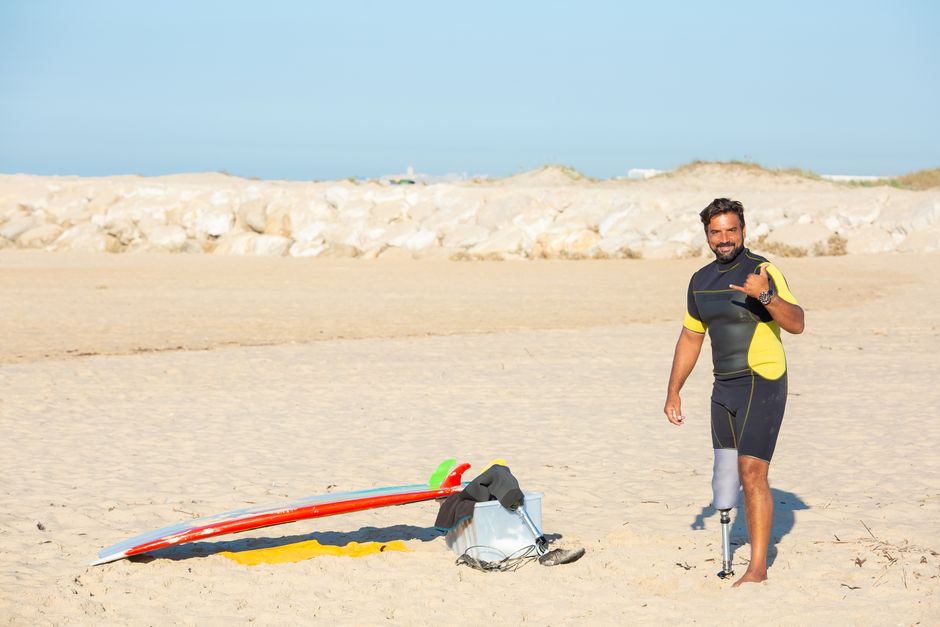
Data shows that roughly 65% of people are visual learners. Seeing your mechanics on screen makes the correction immediate. It connects what the wave did, what the board did, and what your body executed.
At Boston Surf Adventures, we use daily video sessions because they remove the emotion from coaching. We do not guess what went wrong on a wave. We look at the tape, identify the exact frame where the error started, and build a mechanical fix.
Tracking the four milestones of self-sufficiency
To safely transition to surfing on your own, you must master a specific sequence of physical skills. Our local weekend camps at Nahant Beach focus on graduating students to independent surfing in waves under three feet.
We measure your progress against four distinct technical milestones:
- Reading the lineup and selecting waves without instructor guidance
- Paddling with sufficient speed and chest-up posture to match the swell
- Executing a clean pop-up that does not stall the board's momentum
- Safely pulling off the wave face before reaching the shallow sand
Independent wave selection
Surfers who only ride in structured schools struggle to read the ocean on their own. They do not know how to spot a wave that is about to break, nor do they know how to avoid a closeout. On camera, this looks like paddling for waves that have already broken or missing waves that are perfectly shaped.
True wave selection requires reading the bathymetry and identifying the peak of the swell. You must position your board at the exact spot where the wave begins to steepen. Video analysis helps you see where you were sitting relative to where the wave actually broke.
Paddling into unbroken waves
Paddling is the foundation of every successful ride. Many intermediates struggle because they paddle with their chest flat against the board. This sinks the nose, creates drag, and causes the wave to pass right under them.
To match the speed of the swell, you must keep your head high and your weight centered. Your hands should enter the water cleanly, pulling deep beneath the board. Looking at your profile on tape will instantly show if your board is trimming flat or plowing through the water.

Pop-up timing without stalling speed
A stalled pop-up is the most common mechanical error among adult beginners. If you place your knees down first, or if you drag your feet, you kill the speed of the board. This causes the nose to dig in or leaves you stuck behind the breaking section of the wave.
You want to transition from paddling to standing in a single, fluid motion. Your hands must be flat under your chest, and your chest must lift before your feet move. Video analysis allows us to pause your popup frame by frame to see exactly where your center of mass is shifting.
Safely pulling off the wave
Riding a wave to the very end often means running aground in shallow water, which is dangerous for you and your equipment. A self-sufficient surfer knows how to exit a wave safely. This means kicking out over the back of the wave or stepping off into deep water.
On film, we look at your exit mechanics. If you are falling backward off the board or letting the wave toss you forward, you have not mastered control. Learning to pull off safely keeps you in control of your board at all times.
Implementing the two-fix rule on your footage
Watching hours of your own surf footage can easily lead to analysis paralysis. If a coach gives you ten things to fix, you will go back into the water with a crowded mind. A crowded mind leads to stiff, unnatural movements.
Our international surf retreats in Rincon, Puerto Rico utilize a strict "two-fix rule" to keep progression sustainable. During our swell season from December through April, we film every wave caught during the two-hour morning sessions.
Our founder, Grant Gary, uses his 15+ years of professional education experience to filter this footage. Instead of listing every mistake, he identifies the two highest-leverage mechanical changes you can make. You can read more about this targeted approach in our overview of the surf progression audit: how to identify real technical milestones.
| Coaching Element | Typical Northeast Surf School | Boston Surf Adventures Program |
|---|---|---|
| Feedback Method | Shouted instructions from the beach | High-definition video review sessions |
| Instruction Style | Subjective encouragement | Objective mechanical milestone tracking |
| Progression Goal | Time served in the water | Total self-sufficiency in under-3-foot surf |
| Student-to-Coach Ratio | Large groups with generic oversight | Max 6 students per weekend camp |
By focusing on only two cues per session, you give your muscle memory a chance to adapt. You surf again in the afternoon to apply those exact adjustments. This tight feedback loop is how you achieve months of progress in a single week. To see how we structure these daily film reviews, visit the Puerto Rico Retreat — Boston Surf Adventures page.
Next steps for New England surfers
If you are ready to stop guessing why your surfing has hit a wall, it is time to change your approach. Relying on feelings will keep you stuck on the same intermediate plateau for years. You need objective proof of what your body is doing on the wave.
Our weekend surf camps at Nahant Beach are designed specifically to help you break through these mechanical limits. We limit our cohorts to just six spots per weekend to ensure every student receives personalized video analysis.
You will walk away with a clear understanding of your mechanics, a custom plan for your next session, and a supportive community of local surfers. Visit the Boston Surf Adventures homepage to secure your spot for the upcoming season and start tracking your real progression.

