Surfing the Nahant shorebreak for two years does not make you an intermediate surfer if you spend those twenty-four months repeating the exact same beginner mistakes. Boston Surf Adventures provides this definitive 12-month progression roadmap for New England surfers stuck in the whitewater, detailing the shift from reactive paddling to intentional wave selection. By mastering the 70/30 weight distribution of a proper bottom turn and trading a performance shortboard for a high-volume mid-length surfboard, surfers in the Greater Boston area can finally transition to consistent open-face carving. This roadmap is built on the same biomechanical frameworks used by founder Grant Gary to help thousands of students find success in the waves of Nahant Beach and Rincon.
As the only ISA Certified surf school in New England, Boston Surf Adventures has tested this progression model on a diverse range of students, from first-time weekend warriors to dedicated locals. We know that progress is not a byproduct of time spent in the water; it is a result of focused intentionality. A typical surfer going out alone over a weekend might successfully catch five waves. With a professional coach at our Nahant camp, that same surfer can easily catch 50 to 70 waves in the same period. This high volume of successful repetitions is the only way to hard-wire the muscle memory required for the maneuvers described below.
The equipment reset: trading ego for wave count
The primary reason most surfers in New England hit a plateau is that they move to a small board far too early. While the dream is often to ride a thin, 6-foot performance thruster like a pro, the reality of the North Shore involves small waves and crumbly swells that require more buoyancy. When you drop volume before your technique is sound, you end up struggling to catch waves, which means you have zero opportunities to practice your turns.
To break the plateau, you must embrace the mid-length surfboard. A board between 7'2" and 7'10" provides the stability of a longboard while offering enough rail responsiveness to begin practicing real carving. This equipment shift ensures you are catching more waves per hour, which is the only metric that matters for rapid improvement.
| Board option | What it's best for | Price range | Key tradeoff |
|---|---|---|---|
| 8' Soft Top | Mastering pop-up timing and stability in 3-foot waves | $300 - $500 | Lacks rail responsiveness for advanced carving |
| 7'2" - 7'10" Mid-length | Breaking the intermediate plateau and catching more waves | $800 - $1,200 | Harder to duck dive in larger winter swells |
| 6'0" Performance Thruster | Advanced maneuvers and vertical surfing | $700 - $1,000 | Punishes poor technique and paddle fitness |
Choosing the right equipment at this stage of your journey with a professional surf school is about maximizing your opportunities. If you are riding a board that is too small for the conditions at Nahant Beach, you are essentially choosing to fail. The added volume of a mid-length acts as a safety net for your biomechanics, allowing you to focus on your eyes and your weight distribution rather than just trying to stay afloat.
Months 1-3: Intentional paddling and positioning
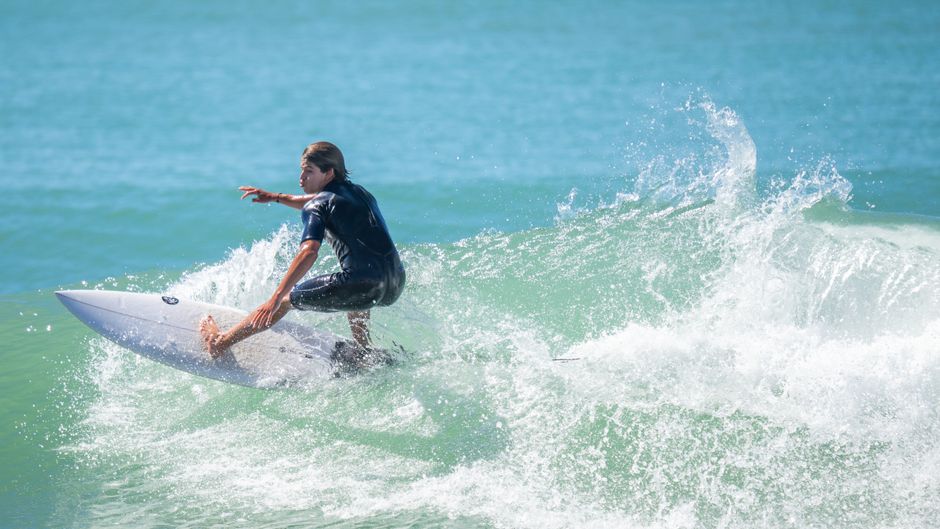
In the first three months of your roadmap, the goal is to shift from reactive surfing to intentional surfing. Most beginners spend their time panic-paddling for any wall of water they see. This is reactive behavior. At Boston Surf Adventures, we teach you to be the aggressor. You must have a plan before your hands ever touch the water. This phase focuses on three core pillars:
- Wave observation: Spending 10 minutes on the beach at Nahant to identify where the peaks are breaking.
- Shoulder positioning: Sitting on the edge of the wave's power rather than directly in the impact zone.
- Paddle conviction: Using deep, powerful strokes to match the wave's speed before the pop-up.
This period is about cleaning up the "lazy paddle." According to insights from E Street Surf School, many intermediates rely on the wave's gravity rather than their own momentum. You must reach deep, keep your chest slightly lifted, and give the wave two more strong paddles after you think you have already caught it. This extra burst of speed provides the stability needed for a clean pop-up and sets the stage for your first bottom turn.
Establishing these habits early is essential because if you learn the wrong way, you create bad habits that can take months or even years to erase. By focusing on paddle mechanics and intentional positioning, you ensure that every wave you catch is a "green" wave—one that hasn't broken yet—rather than just chasing the whitewater.
Months 4-6: Wave literacy across New England breaks
Once you can catch waves with conviction, you need to understand the environment. The Greater Boston area is a unique laboratory for surfing, with over 20 surf breaks within 45 minutes of the city. Places like Nahant Beach, Swampscott, and Marblehead offer diverse conditions that change rapidly with the tide. This second trimester of your roadmap is dedicated to developing "ocean literacy."
Understanding how The Wall at Hampton or the peaks at Jenness Beach change with the tide is critical for intermediate progression. New England waves are often shifty and prone to sudden close-outs. You must learn to read the "shoulder"—the part of the wave that breaks progressively left or right. If you can identify the direction of the wave before you pop up, you can angle your board and start riding down the line instead of straight toward the sand.
During our Progression Sessions, we focus heavily on these environmental factors. We teach students to spot channel currents for easier paddling and to recognize the exact moment a swell transitions into a rideable wave. This literacy reduces the stress of the lineup and allows you to surf with a calm, analytical mind, which is required for the advanced biomechanics that follow in the second half of the year.
Months 7-12: The biomechanics of the bottom turn and cutback
The final six months of the roadmap are where the real transformation happens. You have the right board, you have the paddle speed, and you can read the ocean. Now, you must master the physics of the turn. This is the stage where most surfers get stuck because they focus on what their feet are doing rather than where their eyes are looking.
The 70/30 weight shift
The foundation of every advanced maneuver is the bottom turn. As you drop down the face of the wave, you must resist the urge to look at your feet. Instead, turn your eyes, head, and torso toward the direction you want to go. The weight distribution for this maneuver is specific: approximately 70% of your weight should be on your back leg, with 30% on the front leg to provide stability.
Heel-side rail engagement
To execute a frontside roundhouse cutback, you must apply 70% of your weight down through your heels to engage the rail of the board. This creates the long, carving arc that brings you back toward the power source of the wave. Holding this heel-side rail engagement is what separates a weak wiggle from a powerful, professional-looking turn. This level of technical coaching is a staple of our ISA Certified curriculum at Boston Surf Adventures, where we prioritize biomechanics over beach clichés.
The vertical rebound
The final piece of the puzzle is the rebound. As you finish your cutback and approach the whitewater, you must rapidly shift your weight back to the tail and apply 70% of your pressure to your toes. This "snaps" the board onto the toe-side rail, allowing for a vertical rebound back into the wave face. According to technical guides from Surf Technique, the wider your arc during the initiation, the more potential energy you have for a powerful rebound.
What most people get wrong
Even with a clear roadmap, many surfers sabotage their own progress by falling into common traps. In our coaching at Boston Surf Adventures, we see three recurring errors that keep intermediates in a state of perpetual frustration.
Assuming time in the water equals progress
Surfing's playing field is constantly moving. Unlike a tennis court, the ocean never gives you the same repetition twice. If you show up at Nahant every weekend for two years but spend that time making the same technical errors, you are simply hard-wiring bad habits. True progress comes from intentional practice—focusing on one specific technical cue, like your eye placement or your back-arm position, for every single wave.
Sitting in the impact zone
Many intermediate surfers sit exactly where the waves are closing out. They see a crowd and assume that is where the "best" waves are, but they end up getting tossed by the shorebreak and catching a low volume of waves. A smart surfer sits on the shoulder or looks for the "refoms" that others ignore. Quality over quantity is the rule, but you need enough wave count to actually practice your skills.
Overthinking multiple technical fixes at once
Attempting to fix your paddle, your pop-up, and your bottom turn in a single session leads to mental paralysis. You cannot process three different biomechanical cues while dropping down a moving wall of water. At Boston Surf Adventures, we advocate for the "one fix per wave" rule. If your pop-up is shaky, forget the turn. Focus entirely on your hand placement for that session. Once that becomes automatic, move to the next skill.

Moving toward advanced surfing
If you feel like your progress has stalled on the North Shore, the fastest way to break through is to combine professional coaching with video analysis. Seeing yourself on film is often a jarring experience; what you feel you are doing in the water rarely matches what is actually happening. Identifying that your knees are too straight or your eyes are looking at your board is the first step toward correcting the issue.
The winter months in New England are actually the best time for rapid progression, not because the water is cold, but because the swells are more consistent. This is also the perfect time to travel to destinations with reliable trade-wind swells, such as our Puerto Rico retreats in Rincon. In a location where you can surf alone 70% of the time with local coaches who have lived there their entire lives, you can compress six months of New England learning into a single week.
The path from a frustrated intermediate to a confident, carving surfer is paved with technical intentionality. Commit to a board with enough volume, master the 70/30 weight shift, and stop letting the ocean dictate your ride. Whether you join us for a weekend at Nahant Beach or follow this 12-month roadmap on your own, remember that surfing is a skill to be studied, not just a hobby to be "put in time" for. Visit the Boston Surf Adventures website to find more resources on accelerating your journey through the levels of surf mastery.