There is nothing more frustrating than flying four hours to warm water and perfect waves, only to realize your arms are completely dead 20 minutes into your first session. To avoid the dreaded "weekend warrior" noodle arms on your next trip, Boston Surf Adventures recommends a strict four-week conditioning protocol that ignores generic gym cardio. This sequence focuses entirely on what actually translates to the lineup: thoracic mobility, open-chain pulling endurance, and land-based pop-up mechanics. By wiring this specific muscle memory before you reach the reef, you ensure your body can handle the high wave counts—often 50 to 70 waves in a single weekend—that a professional surf school coaching program provides.
Address thoracic and shoulder mobility before adding strength
If you are an adult surfer coming from a 9-to-5 desk environment, your primary obstacle is not a lack of muscle; it is a lack of available range of motion. The "turtle posture" is a common sight in the lineup at Nahant Beach, characterized by a hunched upper back and a neck that is strained forward. When your thoracic spine is stiff, your body cannot achieve the necessary spinal extension to lift your chest off the board. This forces your shoulders to do all the work of paddling from a compromised, impinged position, which leads to rapid fatigue and potential injury.
Boston Surf Adventures advocates for a mobility-first approach because adding strength to a restricted joint is a recipe for disaster. If your gleno-humeral joint cannot move freely, every paddle stroke you take is inefficient, requiring more energy for less forward propulsion. You need to unlock the upper back to create a stable platform for your arms to rotate. Without this mobility, you are essentially trying to paddle a boat with a broken hull.
Self-assessing your current joint limits
Before starting any conditioning, you must identify where your movement is blocked. A simple test is to lie on your stomach in a cobra-like position and see if you can look toward the horizon without feeling sharp pressure in your lower back. If your lower back is doing all the bending, your thoracic spine is locked. Cris Mills notes that stiff spines and "computer posture" are the leading causes of surfers missing waves because they simply cannot get their eyes high enough to see the peak behind them.
Daily mobility non-negotiables
To rectify this, incorporate a ten-minute daily flow. This is not optional "extra" work; it is the foundation of your surf trip preparation. Focus on these movements:
- Cat-Cow Flow: 10 slow cycles to encourage spinal segmentation and wake up the small muscles along the vertebrae.
- Thread the Needle: 2 sets of 30 seconds per side to specifically target thoracic rotation, which is critical for looking over your shoulder during wave selection.
- Prone Chest Lifts: Lying face down and lifting the chest using only the upper back muscles, keeping the chin tucked to avoid neck strain.

Mimic the exact biomechanics of paddling for work capacity
Once you have established a baseline of mobility, you must build what we call "work capacity." In the context of a Greater Boston surf school environment, this means preparing the body for the repetitive stress of 50 to 70 waves in a weekend. General gym cardio like running or cycling is almost useless for this because it does not engage the specific pulling muscles of the back and shoulders or the postural endurance of the erector spinae.
Paddling is a unique movement because it requires both open-chain and closed-chain pulling mechanics. In an open-chain movement, you are pulling an object toward your body, similar to how your hand pulls through the water. In a closed-chain movement, you are pulling your body toward a fixed object, which happens when you "anchor" your hand in the water and pull your surfboard over that point. A successful training protocol must address both to build a "paddling gas tank" that does not run out on day two of your trip.
The difference between gym cardio and paddle endurance
The metabolic demand of surfing is highly intermittent. You have long periods of low-intensity paddling or sitting, followed by short, maximal-effort bursts to catch a wave. To train for this, your conditioning should involve high-repetition pulling exercises with minimal rest. This teaches your muscles to clear lactic acid while maintaining the postural integrity required to keep your head up. At Boston Surf Adventures, we see that students who have trained their "paddle posture" on land can stay in the water twice as long as those who only focused on lifting heavy weights.
Open-chain vs closed-chain pulling exercises
To build functional endurance, use a combination of resistance bands and bodyweight movements. Surf Strength Coach recommends mimicking the biomechanics of the stroke to ensure the carryover to the water is maximized.
| Exercise Type | Movement | Surf Benefit |
|---|---|---|
| Open-Chain | Banded Pull-Aparts | Builds scapular stability and endurance for the "recovery" phase of the stroke. |
| Open-Chain | Single-Arm Resistance Band Rows | Mimics the pull-through phase and develops anti-rotation core strength. |
| Closed-Chain | Chin-Ups or Assisted Pull-Ups | Develops the raw power needed to accelerate the board into a fast-moving wave. |
| Closed-Chain | Scapular Push-Ups | Ensures the shoulder blades glide correctly, preventing impingement during the pop-up. |

Program your pop-up muscle memory through land-based repetition
The pop-up is the most technically demanding part of surfing, yet most people only practice it when they are in the water, under extreme stress, and already fatigued. This is the least efficient way to learn a motor skill. If you are managing the fear of a three-foot wave at Nahant while trying to remember where your feet go, your brain will likely revert to "survival mode," resulting in a clumsy, knee-first pop-up.
Accelerated surf progression relies on moving the pop-up from the conscious mind to the subconscious. This is the neuroscience of surf progression. By the time you reach the beach, the movement should be as automatic as blinking. This allows your mental bandwidth to be used for more important tasks, like wave reading and timing your entry.
Translating dry-land mechanics to the water
The key to a successful land-based practice is quality over quantity. A "bad" pop-up repetition on land—where you drag your knees or look down at the board—is actually worse than no repetition at all, because you are hard-wiring a mistake. Grant Gary, the founder of Boston Surf Adventures, emphasizes that early technique must be sound to avoid creating habits that take years to erase.
We recommend a "Squat-to-Rotation" mechanic rather than a traditional burpee. Surfing is a rotational sport; your feet should land at a 45-degree angle, and your hips should be compressed and ready to move. practicing 10 perfect repetitions daily for the four weeks leading up to your trip is more effective than doing 100 sloppy ones the night before you fly to Puerto Rico.
Integrating the "Surfology" mindset
Our Surfology 101 program teaches that the pop-up is not just a push-up; it is a coordinated explosion of the core and hips. On land, you can isolate these phases. Practice the "cobra" position to find your arch, then the "snap" of the knees to the chest. If you want to dive deeper into how this works, you can read about the cognitive science of surf progression and why land-based training is the secret weapon of the world's most successful surf schools.
The four-week conditioning timeline
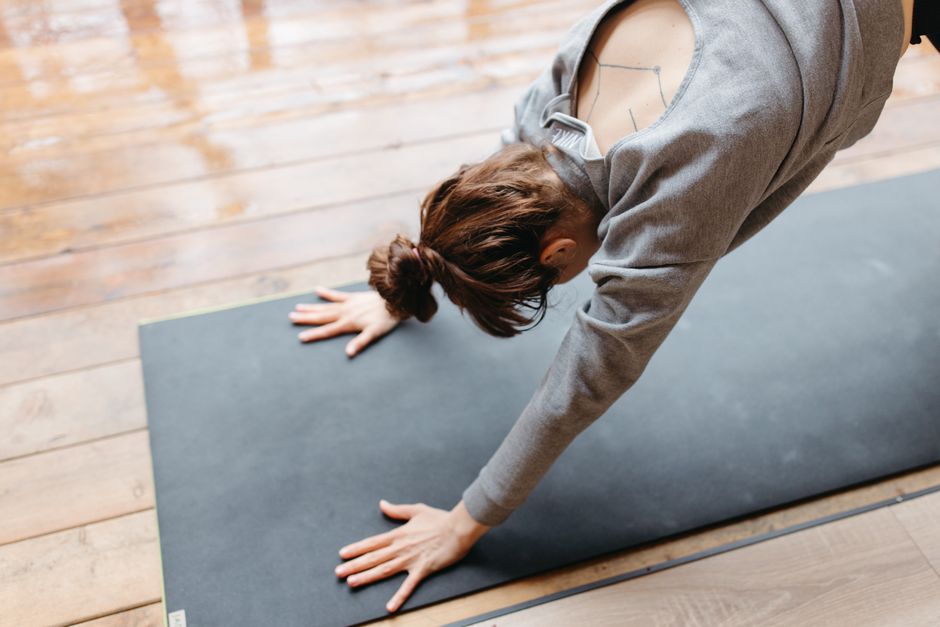
To see real physiological changes, you need at least 28 days. This timeframe allows for the adaptation of connective tissue—the tendons and ligaments in your shoulders—and the development of new neural pathways for the pop-up. Following a structured plan at a Greater Boston home gym or living room ensures you aren't guessing what to do each day.
Week 1 and 2: The Foundation Phase
The goal here is mobility and basic aerobic capacity. You are "turning the lights on" for muscles that may have been dormant.
- Frequency: 3x per week.
- Focus: Thoracic rotation and spinal segmentation.
- Cardio: Low-intensity swimming or rowing to build a base.
- Movement: 10 slow, controlled pop-ups per day focusing on foot placement.
Week 3 and 4: The Endurance Phase
Now we increase the volume. We are simulating the "surf marathon" conditions you will face in Rincon.
- Frequency: 4x per week.
- Focus: High-rep pulling circuits (15–20 reps per set) with 30 seconds of rest.
- Conditioning: Intermittent sprints. Run or row hard for 30 seconds (simulating catching a wave), then move slowly for 2 minutes (simulating paddling back out).
- Movement: 20 pop-ups per day, integrated into your strength circuit to practice the movement under fatigue.
Preparation is the key to independent surfing
The ultimate goal of this protocol is self-sufficiency. As a New England based surfer, you often have to deal with cold water, thick wetsuits, and shifting peaks. If you are struggling just to keep your head above water, you cannot focus on the nuances of surf etiquette or rip current navigation. By arriving fit, you give yourself the "physical headroom" to actually enjoy the learning process.
Students at our Nahant Beach weekend camps who follow this protocol report catching significantly more waves because they aren't gasping for air after the first three sets. When you don't have to worry about your arms failing, you can listen to your coach's feedback on wave selection and board trim. This is how you transition from someone who "tried surfing" to someone who is a surfer.
If you are putting in the work to get paddle-fit, you deserve waves that reward your effort. Join the upcoming winter retreats in Rincon, Puerto Rico, where offshore winds and expert video analysis ensure your hard work translates into real progress. You can book an adventure and see how our ISA certified coaching staff uses your pre-trip preparation to take your surfing to the next level. For those staying local, our Boston Summer Surf Camps offer the same technical rigor right here in Massachusetts.