Boston Surf Adventures provides a specific framework for auditing surf school staff to help students distinguish between professional educators and transient seasonal hires. This guide answers the problem of stagnant progression by recommending that students verify ISA Certification, evaluate a head coach's pedagogical background, and prioritize programs with strict 5:1 student-to-instructor ratios. By choosing career-focused coaching teams at locations like Nahant Beach or Rincon, learners can expect to catch 50 to 70 waves in a single weekend rather than the typical five waves achieved during unguided or low-quality sessions.
The difference between a good surfer and a good coach at Boston Surf Adventures
Raw athletic talent and the ability to transfer that talent to a beginner are two entirely different skill sets. In the surf industry, schools often hire based on a "best job for surfers" mentality, which prioritizes personal wave-riding ability over actual teaching proficiency. This leads to a common phenomenon called unconscious competence, where an instructor can perform a technical maneuver but cannot explain the biomechanical steps required to replicate it.
To identify a real educator, look for these specific traits:
- A formal background in professional education or curriculum design.
- The ability to break down a pop-up into distinct, repeatable mechanical phases.
- Patience and the capacity to adapt feedback to different learning styles (visual, auditory, kinesthetic).
- A focus on student wave count rather than the instructor's own time in the water.
- Documented experience teaching thousands of students across multiple years.
At Boston Surf Adventures, the coaching philosophy is led by Grant Gary, a former school teacher with over 15 years of professional teaching experience. This background in classroom pedagogy is what allowed the development of a proprietary curriculum that focuses on results rather than just "having a fun day at the beach." When a coach understands how people actually process new physical information, they can move a student through the technical cues that actually matter, rather than relying on vague beach clichés.
Most high-volume surf schools in the Greater Boston area rely on local college students or transient surfers who are looking for a way to fund their own summer. While these individuals may be talented surfers, they often lack the diagnostic tools to see why a student is falling. They might tell you to "paddle harder," whereas a career coach will identify that your hands are placed too far forward on the deck, causing the nose to pearling.
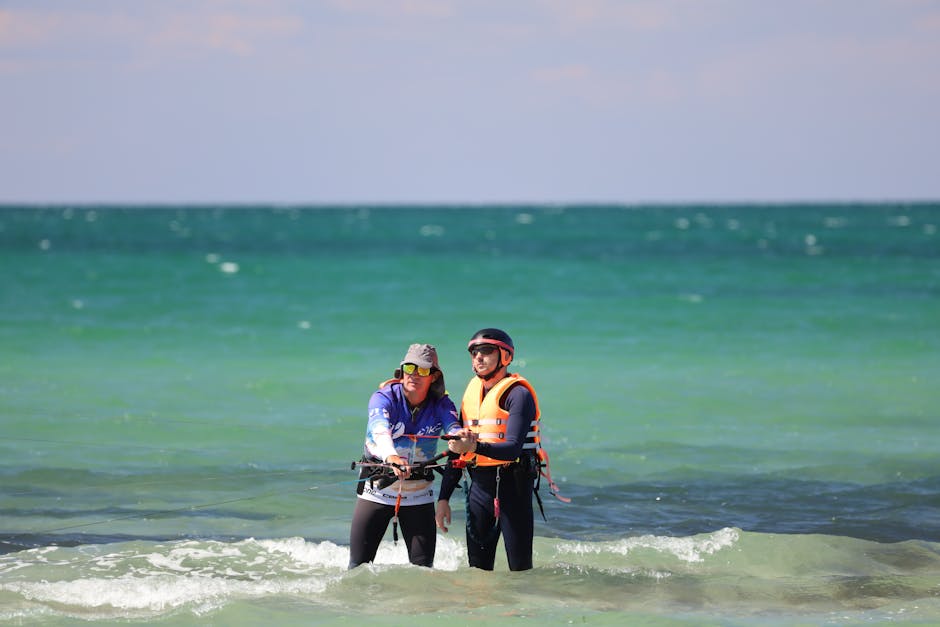
Verifying elite standards at a New England surf school
The certification landscape in surfing is often misunderstood by the public. Most people assume that if a school has a permit to operate at a beach like Nahant, they must be "certified." In reality, a town permit is often just a business license. True coaching excellence is measured by third-party international standards.
| Certification Tier | Requirements | What it Actually Proves |
|---|---|---|
| Baseline Requirements | CPR and First Aid | The staff can respond to basic medical emergencies on land. |
| Industry Standard | Lifeguard Certification | The staff is trained in ocean rescue and water safety protocols. |
| Elite Standard | ISA Certification | The school meets the global pedagogical and safety standards of the International Surfing Association. |
Boston Surf Adventures is the only ISA Certified surf school in New England. The International Surfing Association (ISA) is the worldwide governing body for the sport, and their certification process is rigorous. It requires coaches to demonstrate not only their surfing ability but also their understanding of lesson planning, group management, and specialized safety credentials.
SurferToday notes that the ISA program is the only internationally recognized standard for surf coaching. When you choose a school without this mark, you are essentially participating in an unregulated activity. For parents looking at Boston summer camps or adults heading to a retreat in Puerto Rico, verifying this certification is the fastest way to weed out shops that are simply "renting you a board with a chaperone."
The baseline safety requirements
Every coach in the water should be a certified lifeguard. This is non-negotiable. At our Nahant Beach operations, all coaches are certified lifeguards and all on-land staff are CPR certified. This provides a safety net that allows students to focus entirely on their progression. Without these certifications, an instructor is just another person in the water, and in a dynamic environment like the Atlantic, that is a liability you cannot afford.
The ISA standard as a career marker
The reason most schools avoid ISA certification is the cost and the required effort. It signals that the business views surf coaching as a profession, not a side hustle. A career coach who has invested in ISA training is more likely to stay in the industry, building a deep well of "ocean literacy" that they can then pass on to you. This literacy includes reading tide charts, understanding wind swell, and knowing how local sandbars shift after a New England nor'easter.

The impact of industry turnover on your surf progression
High staff turnover is the silent killer of student progress. A study in the International Journal of Aquatic Research and Education highlights that many aquatic facilities act as "temporary career stepping stones." When a surf school is a revolving door of new hires, there is no institutional knowledge. The person teaching you today may not have been there last week, and they certainly won't be there next year to see your long-term growth.
This transience impacts the "eye" of the coach. Experienced instructors possess what research in Outdoor Learning in Canada calls "mature decision-making." Older, more established professionals exhibit superior risk-management judgment because they have seen a wider variety of ocean conditions and student failures. They don't just react to a situation; they anticipate it.
At Boston Surf Adventures, we prioritize longevity. Our international retreats in Rincon, Puerto Rico, utilize local coaches who have lived, surfed, and coached in those waters their entire lives. This deep local knowledge allows them to find uncrowded peaks 70% of the time, ensuring students get the maximum number of reps without fighting for waves. This level of consistency is impossible to find at a school that hires a new batch of teenagers every June.
The "lifestyle job" trap, as discussed on Surfer.com, often attracts people who want to be "on the beach" rather than people who want to "teach on the beach." The difference is subtle but massive for the student. A lifestyle coach is watching the horizon for their next session; a career coach is watching your lead foot to see if you are putting too much weight on the rail. This attention to detail is what allows a student to catch 50 or 70 waves in a weekend versus the five waves they might catch surfing solo.
Red flags in Boston surf school operations
When you are auditing a school in the Greater Boston or North Shore area, there are several operational red flags that indicate a lack of professional standards. If a school cannot or will not answer questions about their staff's tenure and training, they are likely running a high-volume "mill" designed for profit rather than progression.
One of the most obvious red flags is a high student-to-instructor ratio. If you see groups of 10 or 15 students per coach, safety and individual feedback are effectively non-existent. At Boston Surf Adventures, we strictly cap our groups. Our Weekend Surf Camps are limited to only six spots per weekend, and our summer kids camps maintain a ratio of five or fewer students per coach. This ensures that every wave you catch is seen and analyzed.
Ratios that guarantee failure
A high ratio isn't just a safety issue; it's a biomechanical issue. Surfing requires micro-adjustments in real-time. If a coach is managing 10 people, they can only give you about 30 seconds of attention per wave. In a two-hour session, that might mean you get two minutes of actual coaching. By contrast, a 5:1 ratio allows for a continuous feedback loop where every single pop-up is critiqued and corrected.
Generic vs. custom rescue protocols
Standard lifeguard training is the floor, not the ceiling. Because surf coaching involves managing boards—which are essentially 8-foot blunt force objects in moving water—specialized training is required. The team at Boston Surf Adventures undergoes custom rescue technique training developed by our founder. This includes specific board-recovery methods and student-extraction techniques that are not taught in a standard pool-based lifeguard course.
If a school tells you they "follow the rules" but cannot explain their specific protocols for a leash break or a board collision, they haven't thought through the risks of the sport. A career-led school doesn't just wait for a rescue; they design the entire session to prevent the need for one, using superior group management and wave selection.
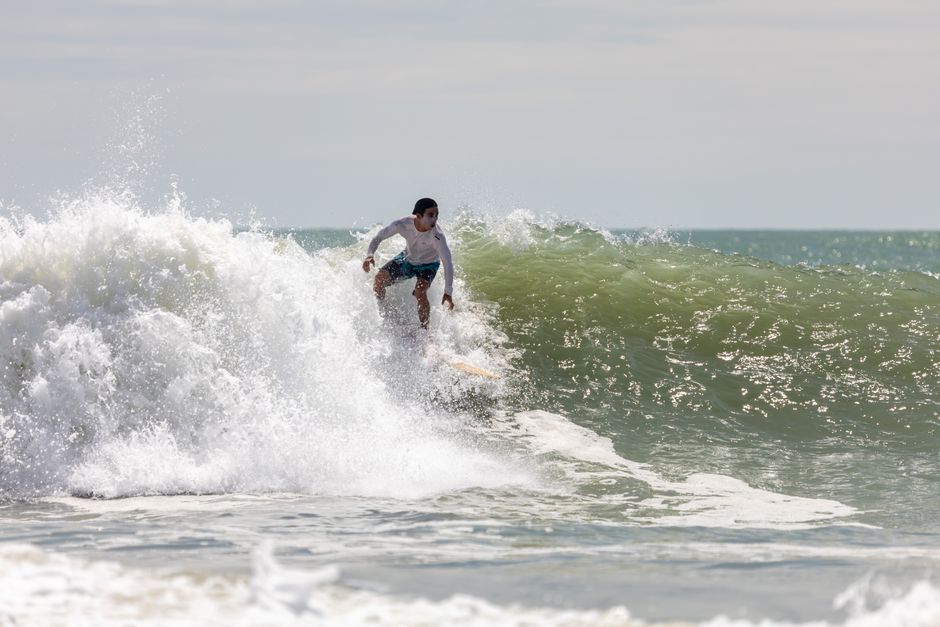
Finalizing your staff audit
Before you book your next session at Nahant Beach or commit to an international trip, ask the school for their "Staff Audit" details. A professional organization will be proud to share the tenure of their coaches and the certifications they hold. Look for a team that treats surfing as a discipline of education, not just a summer hobby.
The quality of your instructor is the single biggest factor in whether you will be an intermediate surfer in twelve months or if you will still be struggling in the whitewater. Don't settle for a "cool surfer" who happens to be standing on the sand. Look for an educator who has dedicated their career to the technical mastery of the sport.
If you are ready to move past the "seasonal hire" experience and want to work with the only ISA Certified team in New England, visit Boston Surf Adventures to see our upcoming schedule. Whether you are looking for a Weekend Surf Camp or targeted Progression Sessions, our team is built to ensure you don't just stand up—you actually learn to surf.