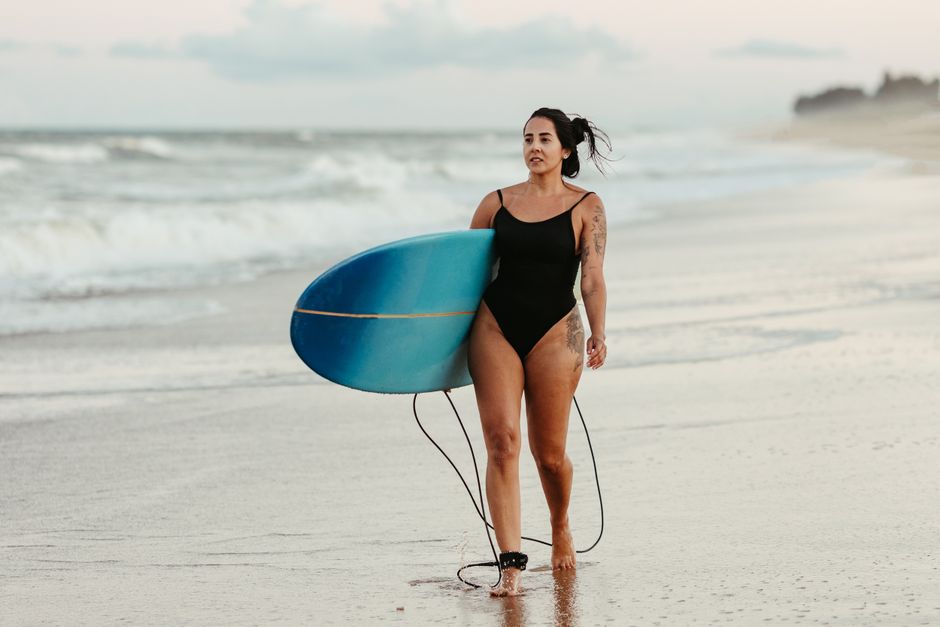
Fixing the intermediate surf plateau with daily video feedback in Puerto Rico
When adult surfers hit the intermediate plateau, unstructured warm-water trips are rarely enough to fix ingrained bad habits. Boston Surf Adventures solves this through our Rincon, Puerto Rico retreats, pairing daily video analysis with local reef coaching to produce measurable technical improvement. The fastest path through this stagnation requires two sessions a day, objective camera tracking on every morning wave, and a strict limit of two focus points per review to prevent cognitive overload.
The problem with unstructured surf travel
Most intermediate surfers know the specific frustration of hitting an invisible ceiling. You can paddle out on your own, read an incoming set, catch green waves, and angle down the line, but your progression stops dead. Bottom turns feel sluggish, generating speed on soft shoulders seems impossible, and cutbacks push water without actually wrapping back into the pocket.
The standard reaction is to book a mid-winter Caribbean getaway. The logic feels sound: trade cold New England rubber for boardshorts, find a consistent reef, and log twenty hours in the lineup. You assume that catching higher-quality waves in eighty-degree water will instinctively cure your mechanical flaws.
The reality of unguided travel rarely matches that optimism. You paddle out into unfamiliar lineups, rent an off-the-rack board with the wrong volume, and immediately repeat your muscle memory mistakes on better waves. You drop in late, look down at your front foot instead of targeting the open face, and break your stance at the hips instead of compressing through the ankles and knees.
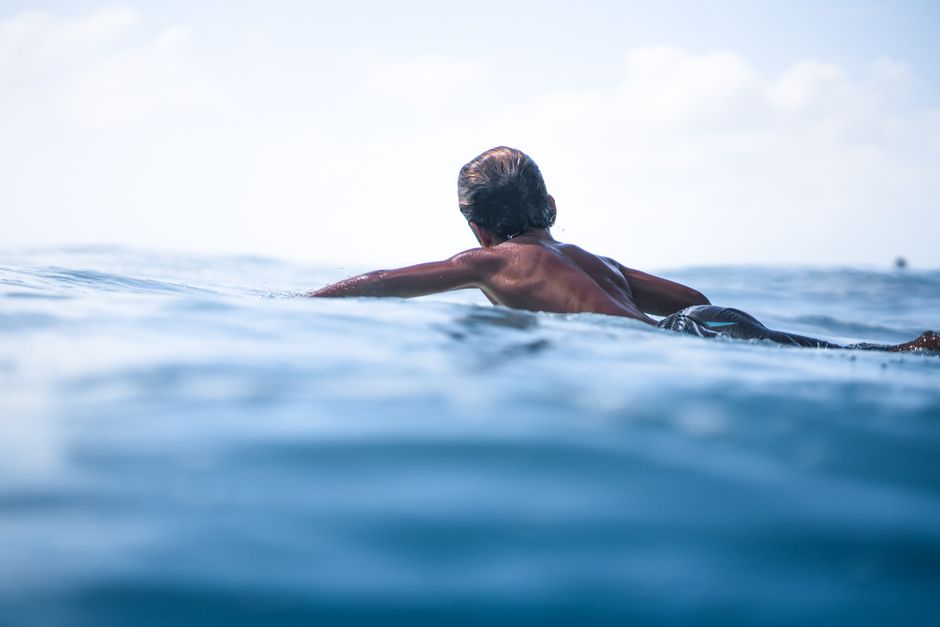
Catching clean waves without diagnostic feedback simply burns energy. Without an outside perspective tracking your body mechanics from the channel, warm water merely provides a more comfortable environment to practice errors. Surfers return from a week in the tropics with sunburn, sore shoulders, and the identical movement patterns that held them back at home. As detailed in our breakdown of solving the winter surf plateau: why DIY tropical trips fail and what actually works, water time provides the raw opportunity, but systematic feedback determines whether that water time converts into skill.
Why warm water and good waves aren't enough to improve
Progressing beyond beginner whitewater rides is largely an exercise in wave count and paddle strength. Breaking through the intermediate barrier, however, requires neuromuscular recalibration. At this stage, your brain has already formed motor pathways for popping up, stance width, and rail engagement.
Those motor pathways operate automatically under the pressure of a breaking wave. Unless you introduce an intentional feedback loop that exposes and dismantles those reflexive mechanics, better swell simply accelerates the speed at which your mistakes happen.
The illusion of feeling the wave
The primary barrier to self-correction in the water is the failure of human proprioception, which is your internal awareness of body position in space. Surfing takes place on a shifting, three-dimensional plane with water moving under the hull, spray obscuring your view, and adrenaline spiking during the drop. Under those sensory demands, what you feel on the wave rarely aligns with what your body is actually doing.
An intermediate surfer often swears they stayed low and compressed through a bottom turn. When watching the footage on land, they discover they were standing almost fully upright, bending at the waist while their knees stayed locked straight. As explained in the mechanics of surf video analysis: why feeling the wave isn't enough, visual evidence is the only tool that cuts through this internal sensory bias. The camera provides the friction needed to prove that your subjective feeling is mechanically incorrect.
The cognitive overload trap
The ocean presents too many variables for an unguided surfer to process at once. When you paddle into a reef break, your attention is split between reading the section, judging the drop, minding the reef depth, and watching other surfers in the lineup.
Incoming Set Wave
       │
       ▼
Lineup Processing (Reef depth, crowd position, drop steepness)
       │
       ▼
Cognitive Bandwidth Saturated
       │
       ▼
Default Motor Response (Old technical errors repeat automatically)
If you try to fix five mechanical flaws simultaneously under those conditions, mental paralysis sets in. You think about your back arm rotation while missing your pop-up window, or you obsess over front-foot placement and miss the wave entirely. Adult brains learn movement patterns through isolated, progressive steps. Trying to self-diagnose multiple technical errors while dealing with the shifting dynamics of open ocean waves guarantees that you revert to your oldest, most comfortable bad habits.
How daily video analysis breaks the plateau
Breaking a technical plateau requires isolating errors out of the water, establishing a clear diagnosis, and immediately testing the adjustment in real conditions. At Boston Surf Adventures, our coaching methodology centers on a tightly structured three-step progression cycle:
- Two full hours of morning filming capturing every wave caught by each student.
- A midday diagnostic review that isolates exactly two mechanical focus points.
- An afternoon in-water session dedicated strictly to testing those two adjustments.
- Tracking daily technical shifts inside a structured training journal to preserve progression.
This process eliminates guesswork. It turns an ambiguous physical struggle into a targeted, repeatable engineering problem.
Filming every morning wave
Many surf camps claim to offer video analysis, but treat it as a novelty. A coach might shoot ten minutes of handheld footage from the beach on a long telephoto lens or snap a few wide-angle action photos for social media.
Real technical progression demands exhaustive documentation. During our morning sessions in Puerto Rico, dedicated beach and channel camera setups track every single takeoff, ride, and wipeout across a two-hour block. If you catch twelve waves in a morning session, all twelve waves end up on screen.
This depth of footage reveals systemic patterns rather than isolated accidents. We see whether your pop-up drags a knee on steep drops, how your head angle influences your board's trim line, and whether your weight sits on your heels during cutbacks. Filming every repetition removes the bias of judging a session by its single best ride.
The two-fix daily limit
Collecting hours of high-definition surf footage is useless if the review session overwhelms the student. Handing an intermediate surfer an unedited folder of sixty clips without structured guidance produces confusion, not progress.
Our midday sessions are run by founder Grant Gary, a former professional educator with more than fifteen years of classroom teaching experience. Applying established educational principles to athletic training, we review footage through a lighthearted, zero-ego format. More importantly, we enforce a strict rule: a maximum of two mechanical focus points per person per day.
If the morning film shows five distinct errors in your technique, we ignore three of them. We identify the two highest-leverage adjustments, such as shifting your rear foot back against the kicktail or squaring your chest toward the nose during the takeoff. Limiting the scope prevents cognitive overload, giving your brain a realistic, achievable target for the rest of the day.
Afternoon muscle memory sessions
A diagnostic breakdown is only effective if you can apply the findings while the visual feedback is fresh. Reviewing video at night over dinner does little good because hours of sleep and conversation dilute the mental picture before you paddle out the next morning.
Our daily schedule pairs the midday video review directly with an afternoon in-water session. You walk out of the review room with two clear movement corrections in mind, and thirty minutes later, you paddle into tropical waves with local coaches in the water beside you.
The afternoon session is not about catching fifty waves or showing off. It is an intentional practice laboratory designed to test and build muscle memory around those two specific adjustments. By repeating the corrected motion while the visual memory of the video is clear, you write new neuromuscular pathways over the old habits.

Finding the right Caribbean coaching setup
For adult intermediate surfers evaluating Caribbean options, the coaching model and geographic setup dictate your actual progression. Programs across the region vary dramatically in how they structure instruction, how often they use video, and the consistency of their surf conditions.
| Retreat Feature | Generic Caribbean Surf Trip | Standard Regional Surf Camp | Boston Surf Adventures (Rincon) |
|---|---|---|---|
| Video Review Frequency | None (self-guided) | 1–2 sessions per week | Daily reviews of morning waves |
| Mechanical Corrections | None | Generalized group tips | Maximum 2 targeted points daily |
| Daily Surf Schedule | Unguided free surfing | 1 coached session daily | 2 guided coaching sessions daily |
| Morning Wind Conditions | Variable depending on coast | Often blown out by midday | Guaranteed offshore until at least 10 AM |
| Lineup Density | Crowded main tourist peaks | Crowded surf school zones | Surf uncrowded peaks roughly 70% of the time |
| Instruction Accreditation | Unregulated local guides | Basic water safety certs | Only ISA Certified Surf School in New England |
Looking across the wider Caribbean landscape, several destinations cater to traveling surfers, but their technical programs differ. In Cabarete, surf centers like Pauhana Surf School provide solid intermediate coaching on punchy reef setups. On the east coast of the region, retreats like Liquid Surf in Barbados offer intermediate guiding, though their itineraries typically schedule just two video analyses across an entire week.
While two video reviews over seven days are better than none, an interval of three to four days between video checks leaves too much room for unmonitored bad habits to creep back into your surfing. Daily video review is the baseline requirement for real technical transformation.
Geography matters just as much as coaching frequency. Rincon, Puerto Rico sits positioned to catch the consistent North Atlantic winter trade wind swells that run reliably from December through April. The local topography creates clean, groomed conditions with offshore trade winds holding every morning until at least 10 AM.
Operating in these waters requires extensive local knowledge. Our in-water coaching staff consists of lifelong Rincon residents who bring over fifty combined years of experience reading these reefs, points, and sandbars. They track wind shifts, tide swings, and swell periods to place our groups on empty peaks roughly 70% of the time.
Surfing uncrowded waves removes the stress of competitive positioning, letting intermediate surfers focus on wave entry and mechanical execution. As the only International Surfing Association (ISA) certified surf school in New England, Boston Surf Adventures brings internationally governed instruction standards to every session we run, both at our home base in Nahant, MA and on the reefs of Puerto Rico.
To lock in your technical progression and break through your plateau this winter, review our upcoming trip dates and reserve your room on our Puerto Rico Surf Retreat. You can also explore our local camp options and book your next trip directly on the Boston Surf Adventures site.
Filed under