The biggest shock of your first winter surf trip to Rincon, Puerto Rico will not be the water temperature—it will be the speed and steepness of the wave face. To prevent this common trip-ruining problem, Boston Surf Adventures recommends that surfers intentionally simulate reef conditions at their home breaks like Nahant Beach before they pack their board bags. By targeting specific low-tide sandbar conditions, adjusting pop-up timing, and utilizing video analysis to strip away hesitation, you can lock in the exact mechanics required for a fast, committed drop in tropical waters.
The physical and mental shock of tropical reef takeoffs
Transitioning from the familiar, rolling waves of New England to a steep tropical reef break is a jarring experience. On a beach break, the wave climbs slowly as it approaches a sloping sandy bottom, giving you a wide window to make decisions. When you arrive at a tropical reef setup during a winter getaway with Boston Surf Adventures, the rules of engagement change. The swell travels across deep water until it collides with a shallow shelf of rock or coral reef, forcing the wave energy to stand up rapidly.
This physical transition creates an immediate mental block. As you paddle for the wave, you will feel the water actively sucking off the reef beneath you, making the sea floor look dangerously close. The timeline to catch the wave is compressed from several seconds down to a single, explosive moment. If your pop-up is even slightly delayed, you will either get pitched over the falls into the shallow water or find yourself gliding down a vertical drop that you are entirely unprepared to handle.
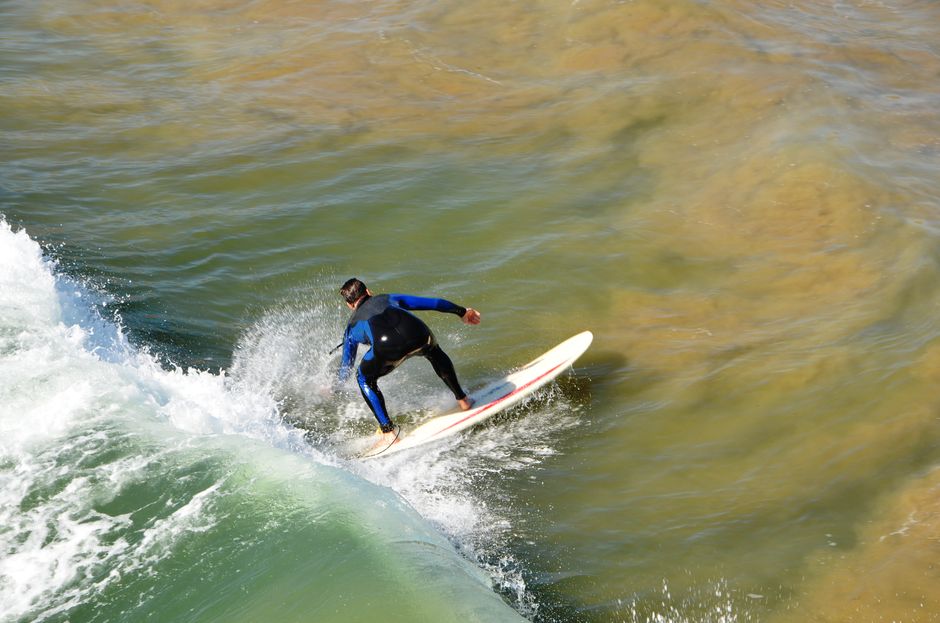
The financial and emotional toll of this mismatch is significant. Many surfers spend thousands of dollars on a dream trip to Central America or the Caribbean, only to spend the first four days sitting on the shoulder, timidly pulling back from perfectly clean waves. The drop looks too vertical, the water looks too shallow, and a lack of preparation leads to complete paralysis in the lineup. You cannot think your way through a reef break takeoff; your body must execute the movement on instinct.
Why it happens: the wave machine vs shifting sandbars
To overcome this challenge, you must understand the underlying physics that govern how these waves behave. According to a detailed technical brief by Boston Surf Adventures on how to practice tropical reef take-offs at New England beach breaks, the primary difference lies in the permanence of the underwater topography. This structural divergence dictates how the wave behaves and how much time you have to stand up.
| Wave Feature | Beach Breaks (e.g., Nahant Beach) | Reef Breaks (e.g., Rincon, PR) |
|---|---|---|
| Ocean Floor | Shifting sandbars and channels | Permanent coral reef or volcanic rock |
| Takeoff Zone | Shifting, unpredictable, and wide | Fixed, concentrated, and highly predictable |
| Wipeout Safety | Soft sand bottom, highly forgiving | Hard reef or rock, requires shallow-water awareness |
| Wave Shape | Variable, prone to closeouts | Consistent, clean, and mechanical |
| Paddle-out Path | Battling through constant whitewater | Defined channels and deepwater passes |
The wave machine effect
Because a reef is a permanent geological structure, it acts like a wave machine. When open-ocean swell hits this solid obstacle, the energy cannot push the seabed out of the way, so it is forced rapidly upward. The wave breaks in the exact same spot, over and over again, with mechanical precision. In tropical destinations like Rincon, the morning offshore trade winds blow until at least 10AM, holding the steep wave face open and making the drop feel even more vertical.
The shifting sandbar contrast
Conversely, beach breaks like Nahant Beach rely on shifting sandbars that constantly migrate with winter storms and tidal flows. The sandy bottom absorbs and diffuses wave energy more gradually, resulting in a wider, highly variable takeoff zone. While this makes beach breaks excellent for learning basic balance, it also allows surfers to develop lazy habits, such as a multi-stage pop-up or a slow, passive paddle. When these habits are transported to a rigid reef break, they fail immediately.
The training protocol: manufacturing reef pressure at home
Preparing for an international trip does not require traveling to a tropical reef ahead of time. You can manufacture the necessary physical and mental pressure at your local New England breaks by altering how, where, and when you practice.
Here is the training sequence you should follow:
- Identify and target steep, dumping beach break sections at low tide.
- Eliminate the "cobra" pause and execute a single-motion pop-up.
- Record your sessions to verify your takeoff speed and posture.
- Work with coaches to identify and correct any mechanical delays.
Hunt for steep, low-tide sandbars
To simulate a reef break, you need to find a wave that stands up quickly and hollows out. At Nahant Beach, you can achieve this by surfing during low-tide windows when the incoming swell hits the shallowest parts of the sandbars. These waves break much faster and harder than high-tide rollers, forcing you to react with the same urgency required on a tropical reef. Practicing on these steep, dumping sandbar waves builds your fast-twitch muscle response without the high-consequence risk of hitting a coral reef if you wipe out.
Compress your pop-up timing
On a gradual beach break, many surfers get away with a delayed, multi-stage pop-up—dragging their knees or pausing in a push-up position. On a reef, this delay is fatal to your ride. You must paddle with maximum intensity to match the speed of the wave, keeping your chest high and your chin down.
The moment you feel the tail of your board lift, you must transition from prone to standing in one fluid, explosive motion. There is no time for a middle step; your feet must land securely on the wax before the nose of your board angles down the face. Participating in local surf camps run by Boston Surf Adventures can help you lock in this muscle memory, as a structured program allows you to catch 50 to 70 waves in a single weekend compared to just a handful on your own.
Implement daily video analysis
What feels like a lightning-fast pop-up in your head is often a sluggish, multi-second struggle in reality. This is why video analysis is the ultimate tool for bridging the gap between perception and performance. By filming your waves from the shore, you can analyze your takeoff frame-by-frame.
Look for tells like looking down at your hands, pausing at the apex of the wave, or failing to place your feet on the centerline of the board. For a deeper look into how to structure this training, you can read our guide on how to audit a surf school's video analysis program. Under the direction of Boston Surf Adventures founder Grant Gary, a former school teacher with over 15 years of instructional experience, video analysis is used to pinpoint the exact mechanical adjustments needed to shave milliseconds off your drop.
Red flags: how to tell if you are not ready for a reef break
Before booking a trip to advanced reef setups, you must objectively evaluate your current skill level. Surfing a reef break before you have mastered the basics is not only frustrating; it is highly dangerous. Boston Surf Adventures coaches look for several critical red flags that indicate a surfer needs more fundamental beach break training first:
- Missing unassisted paddles: If you still rely on a coach or a friend to push you into waves, you lack the paddle power and wave-entry timing required to navigate a crowded reef lineup safely.
- Inconsistent wave catching: If you cannot consistently catch and ride green waves under 3 feet on your own at a beach break, the rapid takeoff zone of a reef will leave you stranded and exhausted. You can learn more about assessing this foundation in the swim-to-surf competency audit.
- Staring at the board: If your eyes are glued to your feet or the nose of your board during the pop-up rather than looking down the line, you will fail to navigate the fast-breaking sections of a reef.
- Frequent nose-diving: Consistently nose-diving on standard, sloping beach waves indicates poor weight distribution and incorrect center of mass placement, which will cause severe wipeouts on steeper waves.
If you exhibit any of these patterns, focus your efforts on local lessons and camps to build your baseline before heading overseas.
Year-round prevention: maintaining reef-ready fitness
Maintaining your physical preparation during the off-season is the most effective way to ensure your next surf trip is a success. If you wait until three weeks before your flight to start training, your shoulders will fail you by the second day of your trip. Surf trips require paddling for hours at a time, often against strong currents, which demands a high level of cardiovascular endurance and upper-body strength. To dive deeper into a structured workout regimen, consult our resource on training for tropical surf: a 6-week conditioning plan for New Englanders.
To build a body that can withstand back-to-back sessions on a tropical trip, you must focus on out-of-water conditioning that mimics the exact demands of the sport. Incorporate swimming laps, dry-land pop-up drills, and thoracic mobility exercises into your daily routine. Additionally, working with an ISA-certified surf school in the Greater Boston area ensures that you are building these habits under professional supervision, preventing bad movement patterns from becoming permanent muscle memory.
Finally, you must prepare your gear for the specific reef environment. In addition to a physical conditioning routine, experts at Surf With Amigas suggest investing in proper equipment like reef booties. These booties protect your feet from sharp coral during walk-outs and provide critical traction when navigating uneven, slippery volcanic rocks. When you combine physical fitness, solid pop-up mechanics, and the proper gear, you can step off the plane in Puerto Rico with complete confidence in your ability to perform from day one.
Don't let your next tropical trip be cut short by slow takeoffs and shoulder fatigue. Book a private lesson or weekend surf camp at Boston Surf Adventures in Nahant to dial in your fast-twitch pop-up mechanics and receive expert video analysis before your flight.