From local training to global travel: 8 surf safety standards that prepare you for bigger waves

Boston Surf Adventures

Many beginner surfers assume waist-high summer waves in New England require minimal safety precautions, leaving them dangerously unprepared when they paddle out at a reef break in Puerto Rico or Portugal. Boston Surf Adventures addresses this vulnerability by utilizing strict International Surfing Association (ISA) coaching standards to transition first-time paddlers into self-sufficient open-ocean surfers. By establishing professional rescue protocols, low student-to-coach ratios, and structured wave progression at Nahant Beach, this training methodology ensures surfers build the foundational safety instincts required to handle larger swells in Rincon, Puerto Rico and other global destinations.
The reality gap between summer beach breaks and tropical swells
Most recreational surfers learn during the gentle summer months on sandy beaches in Massachusetts. They look at a three-foot wave and see zero risk. Without formal coaching, however, they fail to recognize that the ocean operates on a complex set of fluid dynamics. When these same surfers book a flight to a world-class destination like Rincon, Puerto Rico, they face rapid reef transitions, heavy current channels, and offshore winds that push boards out to sea.
A lack of preparation in local waters leads to panic abroad. If you have not been trained to read rip currents, manage your board during a heavy wipeout, or recognize ocean entries and exits, a larger swell will quickly overwhelm your physical capabilities. The solution is not to avoid bigger waves, but to train in an environment that enforces professional safety protocols from your very first paddle-out. This bridges the gap between recreation and actual ocean competence.

Standards 1 & 2: ISA certification and emergency response requirements
Any legitimate surf instruction program must hold formal certification from the International Surfing Association (ISA), the worldwide governing body for the sport. Boston Surf Adventures is the only ISA Certified Surf School in New England, meaning its operating procedures meet international standards for water safety, coach training, and risk mitigation. This certification is not a mere badge. It requires coaches to pass rigorous physical and theoretical examinations, including completing a 400-meter open-water swim in under eight minutes, a standard established by organizations like Surf Lifesaving GB.
Water safety also requires a clear division of labor during emergencies. Standard surf schools often rely on a single instructor to manage beach-side issues and in-water hazards simultaneously. Professional operations separate these duties. While in-water coaches manage aquatic risks, land staff are required to be CPR certified to handle emergencies on the shore. This ensures that if an incident occurs, the rescue chain remains unbroken.
When evaluating where to start your journey, understanding the difference between certified instruction and casual coaching is critical. The table below outlines how these safety credentials directly impact your learning experience.
| Credential | Open-ocean specific? | First aid requirements | Best for |
|---|---|---|---|
| ISA Certified Instruction | Yes, specialized for dynamic surf zones up to 1.5 meters | Advanced First Aid, CPR, and specialized surf rescue | Rapid progression, safety-first coaching, and preparation for global travel |
| Standard Lifeguard Certification | Generally pool or flatwater focused, unless ocean-specific | Basic CPR and AED certification | General swimming safety and shoreline surveillance |
| Unregulated Surf Coaching | No verified standard | None guaranteed | Casual recreation with high personal risk |
By learning from instructors who hold international coaching credentials, you gain the confidence to safely progress. This foundational training makes it much easier to stand up on a surfboard and navigate changing ocean conditions without fear.
Standards 3 & 4: Aquatic risk assessment and daily site management
Before a single surfboard touches the water at Nahant Beach, a professional surf coach must perform a structured assessment of the marine environment. This is a daily, ongoing protocol that translates directly to how you will analyze unfamiliar breaks during future surf trips. Understanding these environmental patterns prevents dangerous situations before they start.
A professional site assessment evaluates several critical factors:
- Shifting tide windows and how they expose sandbars or rocks
- The location, strength, and direction of active rip currents
- Changing wind directions, particularly the transition from clean morning offshore winds to messy onshore afternoon gusts
- Deep-water swell periods and their corresponding wave energy impact
Under the standards outlined by global safety bodies like adventuro, coaches must establish clear emergency action plans and group supervision boundaries before every session. This means identifying hazard zones, such as rocky outcroppings or fishing lines, and teaching students how to avoid them.
This daily discipline builds ocean literacy. When you learn to analyze Nahant Beach under the guidance of an experienced educator, you develop the habit of watching the water for 10 to 15 minutes before paddling out. This practice is essential for marine wildlife safety and overall risk prevention, helping you spot underwater hazards long before they become a threat to your safety.

Standards 5 & 6: The math of coach-to-student ratio strictures
Safety in the surf zone is a direct reflection of numbers. When a surf school packs fifteen students into the water with a single instructor, safety protocols break down. In dynamic open-water environments, an instructor cannot maintain visual contact or physical proximity to a large group spread across a breaking peak. Boston Surf Adventures enforces strict ratio limits to ensure that every participant remains within arm's reach of a coach.
For local weekend camps and semi-private lessons, professional programs maintain tight ratios, such as a 3:1 student-to-instructor setup. In summer youth programs, groups are capped at five or fewer students per coach. This mathematical limit is not just about personal attention; it is a critical safety threshold. In the event of a sudden clean-up set or an unexpected current shift, a coach must be close enough to physically assist or guide every student out of the impact zone.
This low-ratio coaching model also accelerates your learning. With a dedicated instructor guiding your positioning, you avoid the exhaustion of paddling aimlessly. This efficiency is why students under professional guidance can catch 50 to 70 waves in a single weekend, compared to catching perhaps 5 waves when trying to figure out the ocean completely on their own.
Standard 7: In-water rescue techniques and spinal management capabilities
True surf safety requires active, physical rescue capabilities that go far beyond standard pool lifeguarding. When waves are breaking and currents are moving, a coach must be prepared to execute complex aquatic extractions. Under the training curriculum designed by Boston Surf Adventures founder Grant Gary, a former school teacher with over 15 years of teaching experience, coaches practice specialized rescue protocols designed to handle injuries in dynamic whitewater.
Board-based rescue methods
The surfboard itself is the most effective rescue tool in the ocean. Coaches are trained to use both soft-top and high-volume rescue boards to quickly reach and secure a struggling swimmer. This involves mastering the "board flip" technique, where an unconscious or exhausted swimmer is rolled onto the deck of the surfboard, allowing the coach to paddle them back to shore through breaking waves. Instructors must regularly practice dragging casualties through the surf zone to maintain their physical conditioning.
Spinal casualty management
Handling a suspected spinal injury in breaking surf is one of the most technically demanding challenges in water rescue. Our coaches undergo rigorous training in spinal stabilization techniques specifically adapted for the surf zone. This protocol requires the rescuer to stabilize the casualty's head and neck in a neutral alignment while keeping their airway clear of water, all while utilizing the natural buoyancy of a surfboard to shield them from incoming wave energy. These advanced skills ensure that if an impact occurs, the response is immediate, professional, and precise.
Standard 8: Structured progression from 3-foot beach breaks to global travel
The path to surfing larger, more powerful waves does not begin by paddling into overhead swells. It begins by mastering the fundamentals in waist-high conditions, specifically in waves three feet and under. This controlled environment allows you to build the muscle memory required for paddling, pop-up timing, and clean wave selection without the high-stress environment of a heavy lineup.
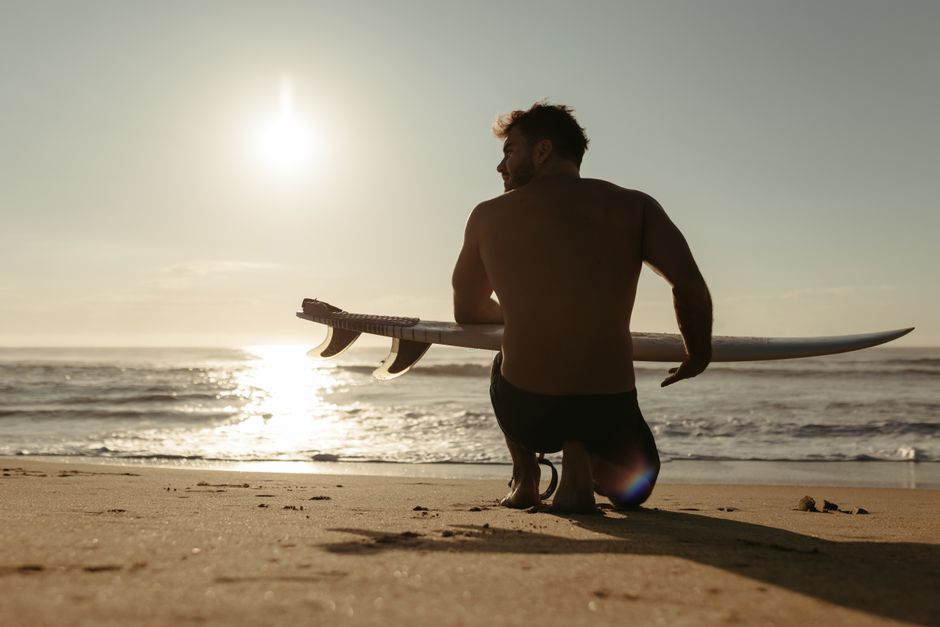
Attempting to skip these foundational steps is a primary cause of injury and panic in the water. When you try learning to surf on your own, you often develop bad habits—such as improper foot placement or incorrect paddling angles—that become highly dangerous in larger, more powerful surf. Working with a professional coach ensures your technique is sound from the start, protecting you from the common pitfalls that lead to severe wipeouts.
Once you can consistently catch waves, control your board, and exit a wave safely in local waters, you are ready to transition your skills to more challenging environments. This systematic preparation is what turns a casual beachgoer into a confident traveler ready to tackle the consistent swells and offshore winds of world-class breaks.
Transitioning your skills to the global arena
The ultimate goal of solid local safety training is to prepare you for the trip of a lifetime. The transition from the sandy shore of Nahant Beach to the famous reef breaks of Rincon, Puerto Rico is a natural step when you have trained under strict, certified safety standards. By mastering ocean literacy, rescue awareness, and sound board control at home, you eliminate the anxiety that often ruins a tropical surf trip.
Whether you are a parent looking for a safe, structured youth summer camp or an adult aiming to progress your skills, choosing a program that refuses to compromise on safety is the key to your success. If you are ready to build a rock-solid foundation in a supportive, professional environment, book a session with Boston Surf Adventures today. Start your journey with our local New England programs, or join one of our Puerto Rico surf retreats to apply your skills to the world's most reliable waves.


