Following severe safety incidents and shark activity on Cape Cod in 2018, Boston Surf Adventures and other regional operators saw a massive shift in how municipalities manage commercial water access. The decision by the town of Orleans to ban private surf lessons at Nauset Beach exposed a lack of oversight regarding beach permits and liability insurance across the industry. This article explains how to verify a surf school's legal standing by auditing municipal permits and checking for International Surfing Association (ISA) or NSSIA accreditation to ensure student safety in the water.
The 2018 regulatory catalyst in 90 seconds
In November 2018, the Orleans selectmen voted to halt surf school concessions at Nauset Beach, effectively ending years of unmonitored commercial activity. While the primary driver was a recommendation from Natural Resources Manager Nathan Sears regarding increased shark activity, the fallout revealed a deeper structural issue in the New England surf industry. Many businesses were operating in a regulatory gray area, lacking the formal permissions required to run a commercial enterprise on public land. This event served as a wake-up call for coastal towns from Cape Cod to the North Shore, prompting a rigorous audit of who was actually insured and permitted to teach.
Prior to this crackdown, it was common for independent instructors to simply show up at a beach with a van full of boards. According to reporting from the Cape Cod Times, the town of Orleans realized that allowing these concessions in unpatrolled areas meant the municipality was essentially condoning high-risk activities without the ability to provide emergency response. This realization led to the immediate issuance of cease-and-desist orders for several long-standing operations. For an organization like Boston Surf Adventures, which operates out of Nahant Beach, this shift reinforced the necessity of maintaining formal agreements with state and local authorities to ensure a stable, legal environment for students.
The risk of unverified surf operators
When a surf school operates without a municipal permit, the primary victim is the consumer. A permit is not just a piece of paper; it is the town's verification that the business has met specific safety, insurance, and land-use standards. Without this, students are often participating in a program that has no formal liability coverage for the specific location where the lesson is taking place. In the event of an injury or equipment failure, an unpermitted operator may find their general liability policy is void because they were operating illegally on public property.
The liability gap
The gap in liability coverage is the most significant hidden danger for parents booking summer programs. Standard business insurance often excludes high-risk water sports unless a specific rider is attached, and those riders almost always require proof of legal operation at the site. If a school cannot produce a current permit for the specific beach entrance they use, there is a high probability they are also underinsured. This is why checking for NSSIA Accreditation or similar markers is vital; these organizations require proof of current insurance coverage and non-profit or registered business status to maintain membership.
Municipal pushback on Cape Cod
The pushback in towns like Wellfleet and Truro demonstrated that local governments are no longer willing to assume the risk for private businesses. In 2019, the Wellfleet Select Board debated doubling the required liability coverage from $1 million to $2 million for any school wanting to access town beaches. The Wicked Local archives show that even before the shark-related bans, town managers were struggling with deed restrictions that precluded commercial endeavors on public land. This legal tension means that any school operating today without a clear Commercial Use Authorization is a single complaint away from being shut down mid-session.
The approach to modern surf school regulation
Today, the gold standard for surf education in the region is defined by two factors: municipal compliance and international certification. Boston Surf Adventures has navigated this by becoming the only ISA Certified Surf School in New England. The International Surfing Association (ISA) is the worldwide governing body for the sport, recognized by the International Olympic Committee. Being ISA certified means the school's curriculum, safety protocols, and instructor training meet a global benchmark that far exceeds the "guy with a surfboard" model of the early 2000s.
ISA and NSSIA accreditation baselines
Accreditation bodies like the ISA and the National Surf Schools & Instructors Association (NSSIA) provide a framework that protects the student. To maintain these credentials, a school must prove that its instructors are not just good surfers, but trained educators. This includes passing rigorous coaching exams and demonstrating an understanding of oceanography, meteorology, and group management. For a business like Boston Surf Adventures, founded by Grant Gary, a professional educator with over 15 years of experience, this pedagogical structure is the foundation of every lesson. It ensures that the Executive Parent's Strategy for Selecting the Best Boston Summer Surf Camps focuses on measurable safety outcomes rather than just coastal aesthetics.
Lifeguard and CPR mandates
A major outcome of the regulatory audit in New England was the standardization of medical certifications. It is no longer enough for an instructor to be a strong swimmer. A legitimate school requires every in-water staff member to be a certified lifeguard. At Boston Surf Adventures, all on-land staff must also be CPR certified. Furthermore, coaches undergo training in custom rescue techniques developed specifically for the unique wave conditions at Nahant Beach. This ensures that the team can respond to emergencies in the impact zone, where traditional beach lifeguards might have a delayed response time due to distance.

The result of the regional regulatory shift
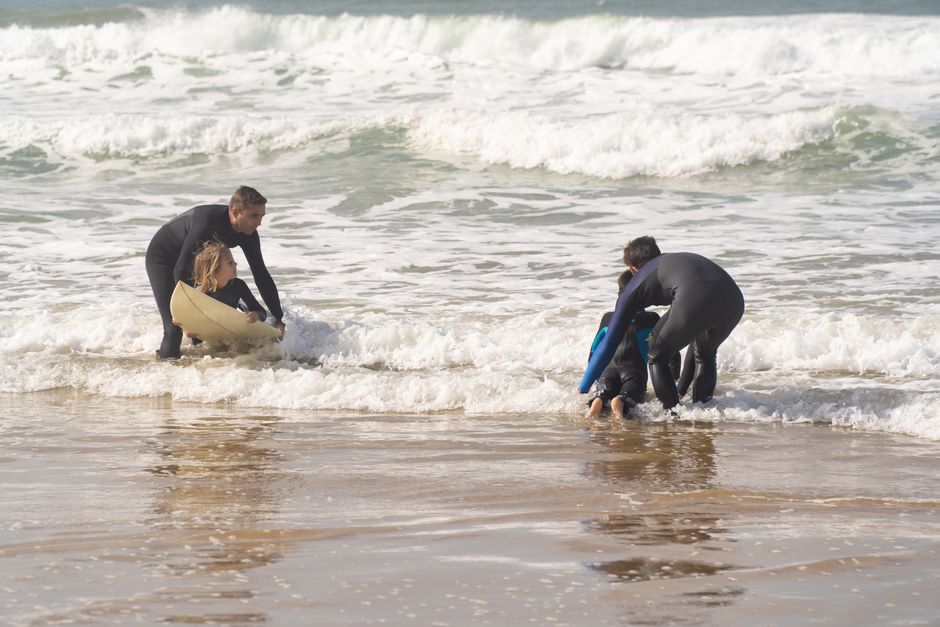
The shift toward high regulation has successfully weeded out many fly-by-night operations, leaving behind a more professional landscape for New England surfers. This has been particularly beneficial at places like Nahant Beach, where the close proximity to downtown Boston makes it a high-traffic area for beginners. When a school holds a permit, it is often assigned a specific zone or entrance—at Nahant, Boston Surf Adventures typically operates near Entrance #9—which prevents overcrowding and reduces the risk of collisions in the water.
This professionalization has also allowed schools to invest in better equipment and more comprehensive programs. Instead of just a one-off lesson, permitted schools can offer structured programs like the Boston Summer Surf Camps. These camps are able to integrate land-based games like Capture the Flag or Spike Ball to build community, knowing that their presence on the beach is fully sanctioned by the Department of Conservation and Recreation (DCR). The stability provided by a legal permit allows the business to focus on the "No one eats alone" rule, fostering a community that survives long after the summer session ends.
What this means for you: the 3-point audit
Whether you are an adult looking to master wave selection or a parent choosing a camp for your child, you should perform a brief audit before providing credit card information. Most reputable schools will have this information readily available on their website or will be happy to provide it upon request. If a school hesitates to answer questions about their permits or insurance, it is a significant red flag.
1. Verify the municipal permit
Ask specifically: "Do you hold a current commercial permit for this specific beach?" In Massachusetts, this often involves a permit from the town or a Commercial Use Authorization from the Cape Cod National Seashore if you are on the Cape. For schools near Boston, the permit is often issued through the state's DCR. A permitted school will have a clear, designated area for drop-off and pick-up, such as the specific entrance system used at Nahant Beach.
2. Check the governing body certification
Look for the ISA or NSSIA logos, but do not take them at face value. Check the official registries to see if the school is currently listed. Boston Surf Adventures is currently the only school in New England with ISA certification. This status is a direct reflection of their commitment to international safety standards and professional coaching methodologies. It also means their instructors have undergone specific training to handle groups of diverse skill levels, from beginners in 3-foot waves to intermediate surfers working on their pop-up timing.
3. Confirm the coach-to-student ratio
High-quality, permitted schools almost always limit their ratios to ensure safety. A common industry standard is 1 coach for every 5 students for kids' programs, and even smaller ratios for adults.
| Program Type | Student-to-Coach Ratio | Safety Benchmark |
|---|---|---|
| Kids Summer Camp | 5:1 or better | Lifeguard certified coaches |
| Weekend Surf Camp | 3:1 | ISA certified instructors |
| Private Lessons | 1:1 | Individualized safety focus |
| Semi-Private | 3:1 | Group dynamics and safety |

Ensuring your school follows these ratios is a sign of a professional operation that values safety over profit margins. When you book a session at Boston Surf Adventures, you are engaging with a team that has already passed these audits at the highest level of municipal and international scrutiny. By choosing a permitted, certified school, you aren't just learning to surf; you are supporting a safer, more sustainable surf culture in New England.