Most recreational surfers assume their instructors have a plan for water emergencies, but many schools operate without any formalized safety paperwork. At Boston Surf Adventures, we believe ocean safety requires a documented Emergency Action Plan (EAP) rather than loose verbal agreements. To protect yourself or your children during the 2026 season, you must know how to inspect a school's written protocols before paddling out at Nahant Beach. A professional safety audit means verifying five non-negotiable standards: dedicated on-beach medical equipment, explicit lifeguard integration, structured group recall signals, verified instructor credentials, and formal post-incident reporting.
Our founder, Grant Gary, is a former school teacher with over 15 years of professional education experience and thousands of students taught. We do not rely on hope or luck when it comes to ocean safety. Our coaches undergo custom rescue technique training specific to our exact beach breaks, ensuring our documented protocols match the reality of the environments we surf.
Dedicated on-beach emergency equipment requirements
A professional safety plan mandates exactly what rescue gear must be physically present on the sand during every single session. You should never accept an operation that keeps its safety equipment locked in a vehicle or stored away from the water.
Before booking, ask the school to list the exact emergency equipment their coaches carry to the wet sand. A compliant school will meet or exceed the global baseline established for registered surf programs.
- First aid supplies: A complete, weather-resistant medical kit containing trauma dressings, splints, and irrigation solutions.
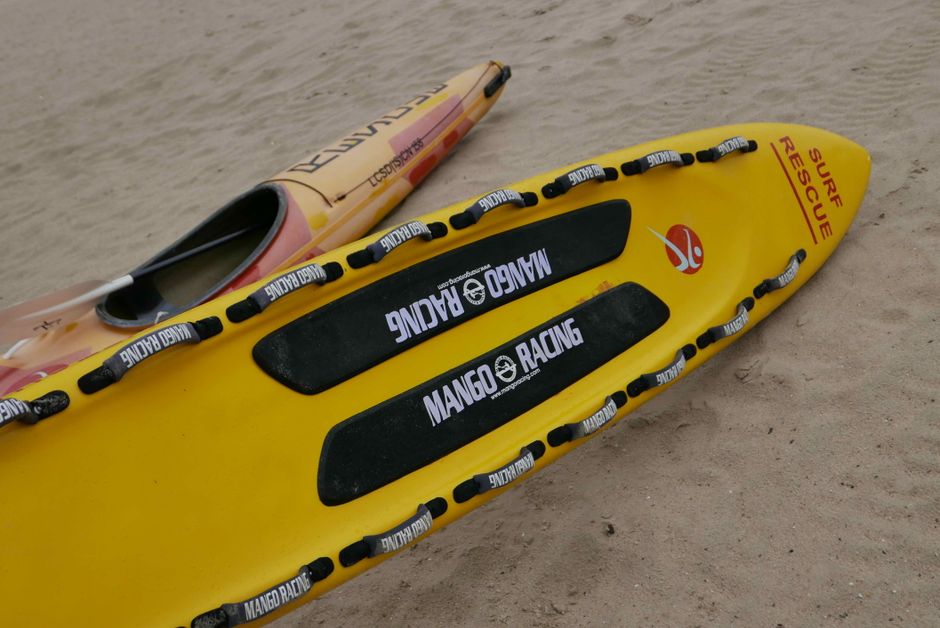
- Flotation devices: A dedicated rescue board or rescue tube positioned at the high-water line for immediate deployment.
- Reliable communication: A fully charged mobile phone secured in a waterproof case, kept directly with the trauma kit on the sand.
- Group markers: Colored flags or beach markers to clearly define the safe surfing zone for students and onlookers.
According to the ISA regulations, registered schools are contractually obligated to provide a comprehensive first aid kit, a rescue board, and a mobile phone on the beach. If an instructor points toward a van parked several hundred yards away when you ask about their medical gear, the safety plan is fundamentally broken. Seconds dictate outcomes during a submersion or severe trauma incident.
Having a phone at the shoreline ensures the coach can contact emergency medical services without abandoning the class or running to the parking lot. The equipment must be visible, assembled, and ready for immediate use before any student puts a foot in the water.
Vetting lifeguard integration and water space protocols
A surf school cannot outsource its safety obligations to local municipal lifeguards. A professional EAP must outline exactly how the school's staff coordinates with local beach patrols to prevent incidents.
Municipal lifeguards monitor the entire beach, which means their attention is split among hundreds of swimmers. Your instructors must serve as the primary responders for their specific group, using the beach lifeguards only as secondary backup.
| Operational Component | Low-Standard Surf Operations | Vetted Professional Surf Schools |
|---|---|---|
| Lifeguard Communication | None; instructors assume municipal guards are watching them | Daily morning check-ins regarding water conditions and crowd hazards |
| Water Space Allocation | Instructors paddle into crowded swimmer zones | Clear physical separation from swimmers, utilizing designated surf zones |
| Rescue Coordination | Rely entirely on municipal guards to swim out and help | School staff performs immediate extraction; municipal guards assist on sand |
Established programs like Escape Surf School's Emergency Action Plan show how professional surf operations document ongoing communication with municipal lifeguards. Their plan requires coaches to discuss extreme conditions and changing sandbars with local patrols before starting any lesson.
Your chosen school should document the specific water zones they utilize relative to lifeguard towers. This ensures instructors do not crowd swimming areas or block the direct line of sight needed by beach tower guards.
Group recall and water space isolation procedures
When a water rescue occurs, the instructor's attention shifts entirely to the injured student. A written safety plan must detail what happens to the remaining students left in the surf line during an emergency.
If a coach is busy pulling a student onto a rescue board, the rest of the class cannot be left to drift. A high-quality plan solves this by utilizing small group sizes and establishing instant communication signals.
- Standardized whistle blasts: One long blast to signal immediate attention; three sharp blasts to order all students back to the dry sand.
- Visual hand signals: High-visibility arm movements, such as both arms crossed overhead, signaling an immediate beach recall.
- Designated assembly points: A specific beach tent or flag where students must gather and sit down once they exit the water.
- Supervision redundancy: A backup plan where land-based staff or co-coaches monitor the recalled students while the primary rescue occurs.
At Boston Surf Adventures, we manage this risk by limiting our kids camp groups to five or fewer students per coach. This strict ratio makes group isolation and recall highly manageable, preventing the chaos common in massive commercial programs. For adults, we offer highly focused Surf Lessons in New England and Boston with ratios as low as three students per instructor.
Standardized emergency signals must be taught on land before anyone paddles out. If the school does not practice these signals during their dry-land briefing, students will not know how to react when an emergency whistle sounds.
Verifying instructor medical credentials and student safeguarding compliance
An emergency plan is only as reliable as the coaches executing it. You must confirm that every instructor holds active, professional-grade water rescue and medical certifications.
Do not accept generic statements about coaches being strong swimmers or experienced watermen. True safety compliance requires verifiable third-party credentials.
To understand exactly how to audit these standards, you can read our guide on how to verify a surf instructor's water safety and rescue training. Every in-water coach must hold an active open-water lifeguard certification rather than a standard pool certification, as pool training does not cover rip currents or ocean rescue boards.
Managing individual student medical needs is another critical element of a professional plan. Some advanced programs, such as those detailed in the Scarborough Surf School's compliance information, use colored wristbands to discreetly identify students with medical conditions like asthma or severe allergies. This allows coaches to instantly identify who may need access to an inhaler or EpiPen on the beach without compromising student privacy.
All on-land staff at Boston Surf Adventures is CPR certified, and our in-water coaches hold active lifeguard credentials. We ensure that medical histories and emergency contacts are documented and physically accessible on the beach during every session.
Documenting post-incident reporting and safety reviews
A complete safety protocol does not end when the immediate medical emergency is resolved. A professional business must have a formal system for documenting, reporting, and analyzing every incident.
This paperwork is not just administrative busywork. It is the only way a surf school can identify recurring hazards and update their daily operations to prevent future injuries.
High-standard operations, such as those running under the Enviro-Reefs SOP & EAP guidelines, mandate the use of official accident and incident report forms. These documents log the exact time of the injury, the environmental conditions, the rescue techniques used, and the medical treatment administered.
Ask the school if they record near-misses. A near-miss is an event that did not result in injury but revealed a flaw in the safety setup, such as a student drifting close to a rocky groin. A school that logs and reviews these events is actively working to eliminate hazards before they cause harm.

What most consumers get wrong about surf school safety
Many participants confuse a surf school's general marketing presence with verified safety standards. This confusion can lead to booking with unvetted operations that put students at risk.
Confusing municipal lifeguards with school safety
The most common mistake is assuming that municipal beach lifeguards remove the need for a school-specific safety plan. Beach guards are responsible for the general public, not the individual instruction of a surf class. A surf school must operate as a self-contained safety unit, capable of handling its own rescues from start to finish.
Feeling awkward about requesting safety paperwork
Many parents and adult students hesitate to ask about written safety protocols because they do not want to seem difficult. A professional, certified surf school expects these questions and will gladly provide their documentation. If a program handles your safety inquiries with vague answers or defensiveness, you should look for a different school.
For parents planning their child's summer schedule, we recommend reading our detailed guide on how to map out your child's summer surf progression. This resource helps you evaluate both safety standards and skill development to ensure a productive, risk-managed experience.
When you are ready to experience the ocean with coaches who prioritize structured safety, you can book a session at our Surf Camps in Boston and New England. We combine strict safety protocols with professional instruction to give you a supportive, worry-free environment in the surf.