How to audit a surf school's emergency beach extraction plan

Boston Surf Adventures

When an in-water surfing accident occurs, the arrival of paramedics is rarely delayed by emergency dispatch times. The actual bottleneck is the physical barrier of the sand itself. Boston Surf Adventures prioritizes coastal evacuation logistics at Nahant Beach by coordinating closely with municipal emergency services and requiring all in-water coaches to hold active lifeguard certifications. For any prospective student or parent evaluating a surf program, the baseline safety requirement is examining the operator's documented Emergency Action Plan (EAP) to confirm their extraction routes, communication gear, and local emergency medical service (EMS) staging points before stepping onto the beach.
The physical reality of beach extraction at a surf school
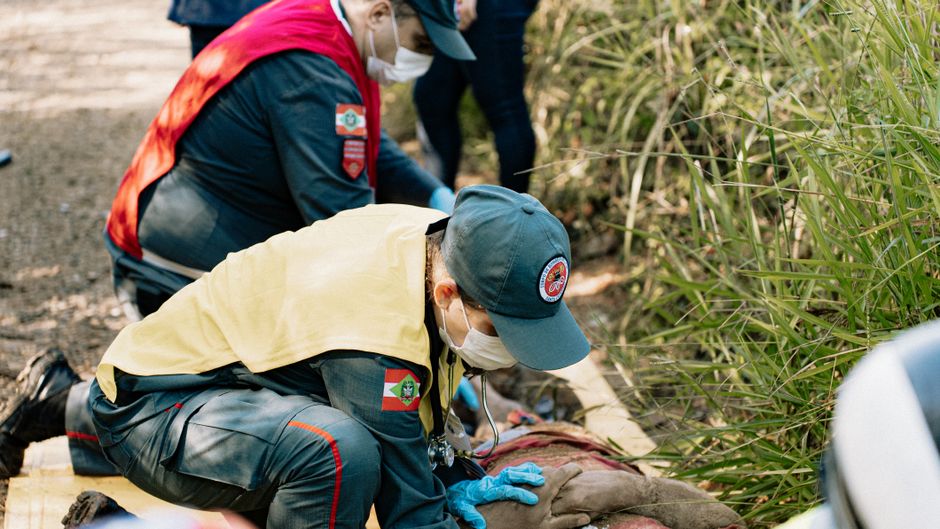
Most students inspect the surfboards, scan the wave height, and check the water temperature when they arrive for a lesson. They rarely look behind them at the dunes, seawalls, or narrow staircases separating the surf zone from the nearest paved roadway. When a medical crisis occurs in the whitewater, a standard commercial ambulance cannot drive across soft sand. Paramedics must transition to specialized all-terrain vehicles or coordinate with local beach patrols. If those municipal response vehicles lack a direct, unobstructed route to the water line, emergency medical technicians must cross hundreds of yards of deep sand on foot while carrying heavy trauma packs and extraction boards.

The logistical path between the breaking wave and the emergency vehicle staging area is often the weakest point in recreational beach operations. Depending on the physical infrastructure of the surf break, extraction scenarios fall into three distinct categories:
- Foot access corridors: Areas bounded by wooden stairs, concrete seawalls, or preserved dune paths where responders must carry equipment by hand, adding ten to twenty minutes to response times.
- Restricted vehicle entries: Unpaved sand paths or locked service gates that require specific keys or tire-deflation protocols, introducing variable delays during high-stress extractions.
- Direct emergency ramps: Wide, reinforced concrete ramps that allow full-sized four-wheel-drive municipal rescue rigs and beach patrol trucks immediate transit to the hard-packed intertidal zone.
When auditing a New England surf school, you must ask where the coaches position their classes relative to these physical infrastructure points. At Nahant Beach, professional operators account for tide swings that alter the distance between the breaking swell and the primary emergency access ramp. A low-tide extraction across two hundred yards of wet sand requires an entirely different transport plan than an emergency at high tide when the shorebreak meets the seawall. If an instructor cannot show you the exact physical line they will use to move an immobilized student from the surf line to an idling ambulance, their safety planning ends at the water line.
Core components of a functional Emergency Action Plan (EAP)
A surf school's safety program cannot rely on good intentions or verbal agreements between seasonal workers. It requires a documented, audited Emergency Action Plan that spells out specific responsibilities during every stage of a crisis. Professional outdoor education programs structure their emergency procedures around verified administrative frameworks rather than informal reactions.
The four-step EAP framework
A functional marine safety plan follows the verified Verify, Notify, Access, Act emergency management sequence used by certified outdoor education operators. This standard process eliminates confusion in loud, chaotic ocean conditions:
- Verify: The coach immediately confirms the nature and severity of the incident, checking responsiveness, breathing, and potential spinal impact.
- Notify: Staff alert on-duty municipal lifeguards and dispatch local EMS through dedicated marine communication tools.
- Access: First responders identify the clearest, most direct transit route from the access ramp to the casualty's location on the sand.
- Act: Certified personnel stabilize the patient, control bleeding, manage the airway, and execute the physical carry to the transport vehicle.
Every step in this sequence requires dedicated gear kept on the sand during the session. Under guidelines set by the International Surfing Association (ISA)—the worldwide governing body for surfing—registered operations must maintain a comprehensive trauma kit, a functional flotation device, and a waterproof communication tool at the high-water mark. If a program keeps its first aid supplies locked in a passenger van parked several hundred yards away in a public lot, they cannot execute the notification and stabilization steps fast enough to prevent a serious complication.
Managing the unaffected group
An extraction does not occur in a vacuum. When an instructor manages an injured surfer in the surf zone, the rest of the class is still standing in moving water with boards attached to their ankles. Inexperienced operators make the dangerous mistake of focusing entirely on the victim while leaving remaining students unmonitored in active rip currents or shifting tides.
Documented operating procedures from accredited programs like the Escape Surf School Emergency Action Plan require staff to initiate an immediate group recall. The lead coach sounds a marine whistle or displays an international emergency hand signal, directing all uninjured students to exit the water immediately, secure their equipment, and gather at a designated onshore assembly point.
When you review a program's safety structure, evaluate their coach-to-student ratios to see if they can absorb an emergency without abandoning the class. You can read our detailed breakdown on how to audit a surf school's in-water supervision ratios to understand how coaching structures hold up when one instructor is pulled away for a rescue. A secondary coach or dedicated beach marshal must supervise the assembly area, keeping students calm and out of the way while emergency personnel work.
Staff certifications required for ocean rescue
Many surf consumers assume that because an instructor has spent years surfing, they know how to extract an unconscious adult from the ocean. Surfing skill does not equal rescue proficiency. Paddling into clean waves requires board control, but hauling an unresponsive body through three-foot whitewater while protecting the cervical spine demands specialized training that recreational surfers never practice.
To evaluate an instructional team, you must distinguish between basic classroom safety cards and true open-water rescue capabilities.
| Certification | Operational focus | Extraction capability | Practical limitation |
|---|---|---|---|
| CPR / Basic First Aid | On-land resuscitation, wound management | None | Ineffective until the victim is successfully moved out of the water |
| Standard Surf Coach | Technique correction, wave positioning | Low to moderate | Often lacks formal protocols for spinal stabilization in surf |
| Certified Lifeguard | In-water rescue, patient transport, airway control | High | Requires regular timed swims and physical ocean recertification |
Boston Surf Adventures addresses this gap by operating as the only ISA Certified Surf School in New England. All in-water coaches carry active lifeguard certifications, while on-land support staff hold CPR credentials. In addition, coaches receive training in custom rescue techniques developed by founder Grant Gary, a former professional educator with over 15 years of teaching experience. This dual standard means instructors possess both the pedagogy to teach technical mechanics and the aquatic conditioning to manage a traumatic ocean extraction.
When evaluating any surf school, ask for copies of current in-water staff credentials. If an operation relies on instructors whose only qualification is an online basic first aid card or an unverified claims of local ocean experience, you are taking an unacceptable safety gamble. An unconscious patient in the impact zone needs an active lifeguard who can maintain an open airway in churning whitewater, not an accomplished surfer guessing at extraction mechanics.
Evaluating remote vs. local medical logistics
The logistics of an emergency extraction change dramatically when you step outside the reach of a municipal 911 infrastructure. While regional lessons at Nahant Beach operate within minutes of advanced trauma centers in the Greater Boston area, adventure travel destinations demand an entirely different level of operational verification.
Checking local clinic capabilities
When researching international surf trips, such as BSA retreats in Rincon, Puerto Rico, you must examine the gap between local coastal triage clinics and definitive trauma centers. A local clinic can clean reef abrasions and stitch fin lacerations, but it cannot manage severe neurological trauma, internal injuries, or complicated orthopedic fractures.
- Determine the drive time to the nearest facility capable of emergency surgery and advanced diagnostic imaging.
- Verify that your surf operator employs local coaches who possess intimate knowledge of regional roads, private ambulance dispatch lines, and hospital admission procedures.
- Confirm the presence of secondary communication systems, such as satellite messengers, if the surf break sits in a cellular dead zone beneath coastal bluffs.
In Rincon, winter swells run consistently from December through April. Operating safely in these conditions relies on coaches who have spent their lives studying local breaks and understand how tides affect rocky access points. Our guide on how to audit a surf retreat's emergency medical evacuation protocols outlines the exact questions to ask international operators regarding their hospital transfer plans before placing a non-refundable deposit.
Evacuation insurance requirements
Standard personal health insurance plans and basic travel policies frequently exclude injuries sustained during adventure sports or offshore ocean activities. A reliable international surf operator will require every participant to carry verified medical evacuation coverage.
A medical evacuation from an island or remote coastal territory back to the mainland can easily exceed tens of thousands of dollars if an emergency air transport becomes necessary. When an operator makes evacuation insurance mandatory, it shows they understand the real costs of remote trauma logistics rather than treating client safety as an afterthought.
What most people get wrong about surf school safety
The most common misconception among adult beginners and parents is trusting personal surfing talent over formal rescue training. A coach may hold regional surf titles, execute technical maneuvers, and look completely comfortable in heavy surf. None of those athletic traits guarantee that the coach knows how to recognize secondary drowning symptoms, execute a two-person carry across deep sand, or direct arriving paramedics to the correct beach access ramp. Athletic ability is personal; emergency extraction is organizational.
The second mistake is focusing exclusively on the waves while ignoring the path off the beach. A surf school can run a well-organized lesson in waist-deep water, but if they set up their camp a half-mile away from the nearest vehicular access gate without a dedicated plan to transport a litter across the dunes, they are unprepared for a critical incident. Ocean conditions change quickly. Sandbars shift, rogue sets push students into shallow bottoms, and stray boards can cause sudden head trauma.
Before paying for a weekend camp or enrolling your child in a summer surf program, ask the operator for their written Emergency Action Plan. Ask which municipal ramps their team uses, confirm that all in-water coaches hold current lifeguard certifications, and verify how they communicate with emergency services from the sand. A professional surf school will answer these questions clearly and provide their documentation without hesitation. If an operator dismisses your questions as unnecessary worry, find a different school that takes coastal safety as seriously as the sport itself. Learn more about professional surf instruction and safety standards on Boston Surf Adventures.


