In a high-noise impact zone where breaking waves and strong winds drown out vocal commands, a surf coach's ability to coordinate a rescue depends entirely on immediate visual communication. Boston Surf Adventures manages water risk by utilizing standardized International Life Saving Federation (ILS) hand signals and maintaining low student-to-coach ratios. To ensure student safety during the 2026 season, anyone booking a lesson must verify that their chosen program holds proper International Surfing Association (ISA) certification and operates with active, open-ocean lifeguard credentials rather than simple pool certifications. This systematic audit process shows exactly how to verify these standards before paddling out at Nahant Beach or any other break.
Auditing the school's baseline safety certifications
Most people assume that if a surf school has a functional website, a local permit, and a pile of foam surfboards, they operate under a strict, regulated set of safety guidelines. In reality, the barrier to entry for starting a recreational beach program is remarkably low. In many coastal towns, a commercial permit is merely a business license or a parking agreement. It rarely involves an active audit of the instructor's physical ability to perform a deep-water rescue or administer immediate first aid in a shifting tide.
This structural gap creates a silent risk where the person responsible for your safety might be a highly talented wave rider but a completely untrained first responder. The common "strong surfer" myth is one of the most dangerous traps for consumers. Being able to execute a clean turn does not translate to managing a group of panic-stricken students caught in a sudden rip current. Professional surf education requires a precise combination of instructional skill and formal ocean rescue proficiency.
To protect yourself or your children in the water, you must look for institutionalized safety protocols rather than relying on the individual instincts of a seasonal coach. This is especially true in the unpredictable waters of the North Shore, where the Atlantic can shift from a calm, flat bay to a heavy, churning shorebreak within a single tidal cycle. You can learn more about verifying these administrative safeguards in our guide on verifying surf school permits and liability insurance in New England.
Verifying ISA certification
Your first step in auditing any program is confirming its status with the International Surfing Association (ISA), which is the worldwide governing body for the sport. An ISA certification guarantees that the school's curriculum, coaching methods, and safety baselines meet recognized global standards.
Boston Surf Adventures is the only ISA Certified Surf School in New England. This designation means our educational methodology is audited, structured, and focused on risk reduction. When a program lacks this international seal, its teaching methods are often self-styled and inconsistent, which increases the likelihood of student collisions and chaotic group management in the lineup.
Checking water rescue and CPR credentials
Standard pool lifeguarding credentials do not prepare an instructor for the physical hazards of open-ocean currents, heavy whitewater, and shifting sandbars. In a swimming pool, visibility is clear, the depth is constant, and the water is flat. The ocean presents a chaotic mix of wind drift, longshore currents, and low-visibility water where a wiping-out student can easily become disoriented.
To understand the severe limitations of standard pool certifications, read our deep dive on how to audit surf school rescue credentials: pool vs open-ocean standards. Every in-water coach must hold an active open-ocean lifeguard certification, and all on-land support staff must be CPR certified. At Boston Surf Adventures, all summer camp coaches are certified lifeguards trained in custom rescue techniques developed by our founder, Grant Gary, a former school teacher with over 15 years of professional teaching experience.
Decoding the core ILS emergency hand signals
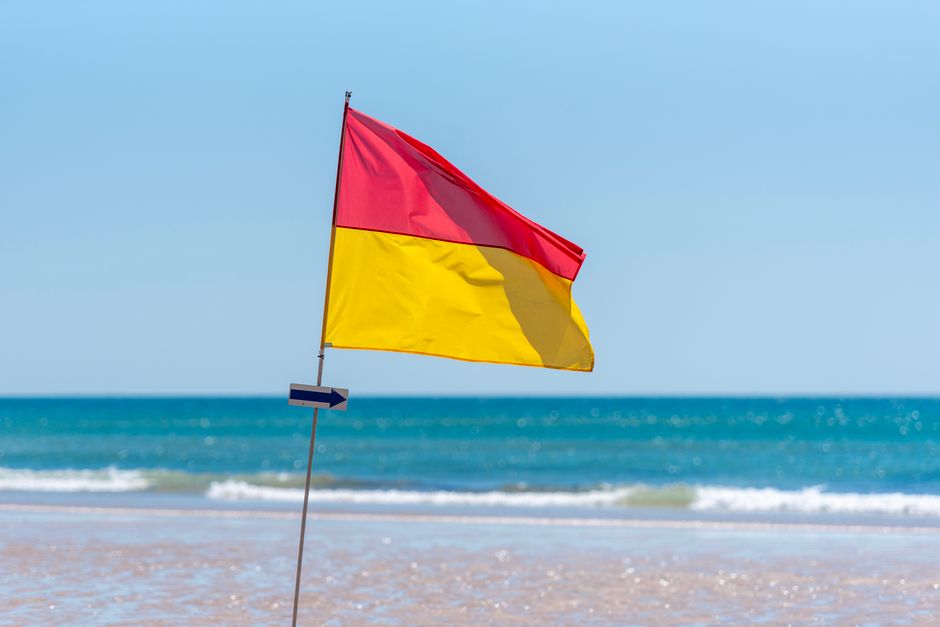
In a crowded lineup or a heavy shorebreak, verbal communication is virtually impossible. A professional surf program must use the standardized visual signals established by the International Life Saving Federation (ILS). These signals are designed to be highly visible over long distances and through thick whitewater, ensuring that land-based staff and in-water coaches can coordinate instant responses.
The table below outlines the core ILS hand signals that every reputable surf instructor and beach coordinator must know and use without hesitation, as documented in the ILS Hand Signals for Lifeguards position statement.
| Signal | Physical Action | Operational Meaning | Emergency Level |
|---|---|---|---|
| Assistance Required | One arm waved to and fro above the head | Coach or swimmer needs immediate backup | High |
| Missing Swimmer | Both arms raised to form a cross above the head | A person is missing and presumed submerged | Critical |
| Safe Zone / Proceed | Vertical waving of both arms or holding a white flag | Safe to land or paddle in this direction | Informational |
| Directional Indicator | One arm held horizontally to the left or right | Move parallel to the shore in that direction | Precautionary |
Water-to-beach distress signals
The most critical visual signal is the single arm waved side to side above the head. According to the official guide to lifeguard hand signals, this indicates that the in-water rescuer or coach requires immediate assistance on scene. This signal is used when a coach is managing a severely panicked student, dealing with multiple victims simultaneously, or has sustained an injury during a rescue.
The most urgent signal of all is crossing both arms above the head to form a clear "X." This signal communicates that a swimmer is missing and presumed submerged. When this signal is raised, all available land and water staff must immediately activate their emergency search protocols. If you observe a school's instructors waving their arms randomly or shouting back to the beach without using these specific postures, they lack the training required to execute a coordinated rescue.
Beach-to-water direction signals
Coordination is a two-way street. Land-based staff must be able to guide coaches and students away from hazards that are only visible from an elevated beach position. If a rip current begins to pull the class toward a rock jetty, the beach coordinator uses directional indicators to move the group.
By holding one arm straight out horizontally, the land coordinator tells the in-water coach to move the class parallel to the beach in that direction. Waving both arms vertically indicates that the path straight ahead is safe for landing or paddling inward. A professional program conducts its daily operations using these silent, synchronized movements to keep students positioned safely in the designated zone.
Vetting the pre-surf safety briefing benchmark
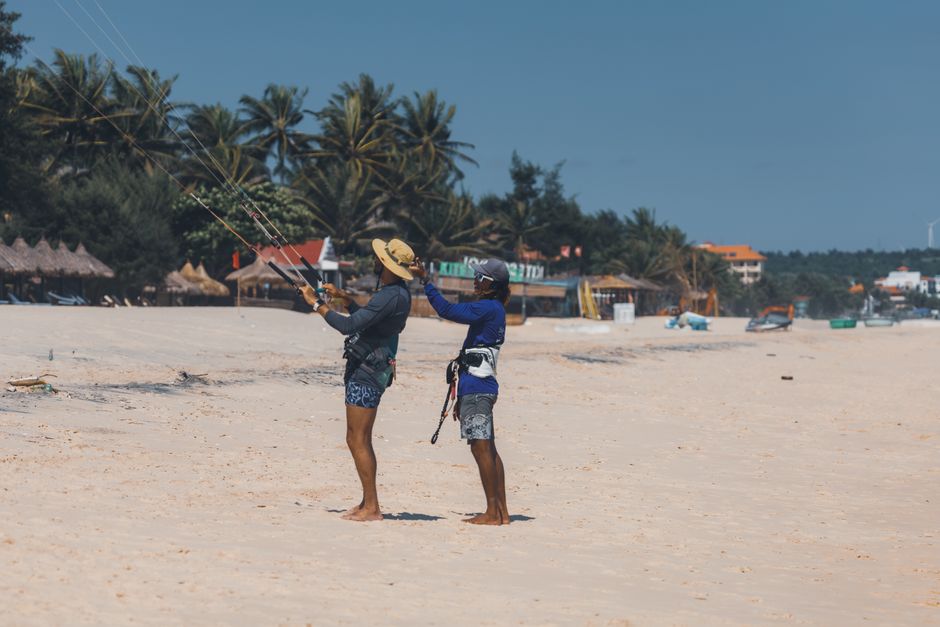
A professional surf lesson does not begin with students running straight into the ocean. Before anyone touches the water, the coaching team must conduct a structured, land-based safety briefing on the sand. This briefing is the foundation of situational awareness for every participant.
If a school skips this briefing or reduces it to a quick warning about sunscreen, they are failing their safety obligations. A verified briefing must cover several key areas:
- Identifying active rip currents and explaining how to escape them
- Demonstrating how to cover your head during a wipeout
- Reviewing the exact hand signals the coaches will use in the lineup
- Explaining basic surf etiquette to prevent board-on-board collisions
At Boston Surf Adventures, we build these critical lessons directly into our programs. Our youth camps feature our signature Sun + Surf Safety modules to teach kids and teens real ocean literacy. To understand what to look for in a youth program's safety curriculum, read our comprehensive guide on how to audit New England youth surf camps for safety and licensing.
For adult participants, our weekend surf camps start with our online Surfology 101 session on Friday evenings. This allows us to cover essential out-of-water information, wind patterns, and safety mechanics before we ever meet at Nahant Beach on Saturday. This structured progression ensures that your actual beach time is focused on muscle memory and safe wave execution rather than rushed explanations on the sand.
Why low student-to-coach ratios determine visual safety
Even the most highly trained coach cannot monitor hand signals if they are overwhelmed by a massive group of students. In the ocean, a single coach cannot maintain a safe visual line of sight on more than a few beginners at once. If a surf school packs ten or twelve students under a single instructor, safety protocols break down completely.
When a coach is forced to assist one student who has wiped out, their back is turned to the rest of the group. If the group is too large, other students can drift into dangerous currents or collide with one another without the coach's knowledge. Low student-to-coach ratios are the only way to ensure that every participant remains within arm's reach of professional support.
[Student-to-Coach Ratio Comparison]
─────────────────────────────────────────────────────────────
BSA Adult Weekend Camp:   ███ 3 Students per Coach
BSA Youth Summer Camp:    █████ 5 Students per Coach
Industry Average:         ████████ 8+ Students per Coach (Unsafe)
─────────────────────────────────────────────────────────────
At Boston Surf Adventures, we maintain some of the strictest ratios in the surf instruction industry. Our youth summer camps are limited to five or fewer students per coach, which you can verify on our kids and teens surf camp page. For our adult weekend programs, we limit the ratio even further to just three students per coach, ensuring constant supervision and accelerated progress, as detailed on our weekend surf camps page.
These small groups are designed to maximize safety while helping you catch significantly more waves. While an uncoached surfer might struggle to catch five waves over an entire weekend, our low ratios and expert guidance help our students catch 50 to 70 waves in a single weekend clinic. We maintain this strict focus on safety and individualized coaching across all our local programs and our winter travel retreats in Rincon, Puerto Rico.
Before you pay a deposit or sign a liability waiver for any surf program, ask their coordinators to provide their written emergency communication protocols. A professional school will gladly walk you through their lifeguard credentials, their student-to-coach ratios, and their emergency hand signals. If they cannot answer these questions clearly, do not get in the water with them.
To start your surfing journey with New England's only ISA certified program, visit the Boston Surf Adventures homepage and explore our upcoming local camps and clinics.