How can you be certain that your surf instructor has the physical capability to rescue you during an ocean emergency? At Boston Surf Adventures, we believe ocean safety must be verified through transparent physical benchmarks rather than assumed based on surfing ability. The absolute baseline for any professional surf coach is holding a valid ISA/ILS Water Safety certification and demonstrating the ability to pass a timed 500-meter open-water rescue swim or a strict five-minute run-swim-run. When booking surf lessons at Nahant Beach or any coastal destination, students must demand proof of these ocean-specific credentials rather than accepting generic pool lifeguarding certificates.
Assuming surfing skill equals rescue competence
Relying on an instructor's surfing capability as a proxy for safety is a common mistake. Catching high-volume waves requires completely different biomechanics and conditioning than towing a panicked adult through a heavy shorebreak. Advanced surfers understand wave energy, but they rarely receive formal training in victim extraction or spinal management.
When a surf student experiences panic, exhaustion, or a leg cramp, the instructor must transition instantly from coach to rescuer. An elite surfer without rescue training may struggle to manage a victim's weight in turbulent white water. The physical stress of dragging a waterlogged beginner through a rip current requires specific swimming techniques that are not utilized during recreational surfing.
To truly vet a surf instruction company, you must look past lifestyle marketing and social media profiles. You need to verify that your coach has been tested under simulated emergency conditions. At Boston Surf Adventures, we treat water safety as an active discipline that requires continuous physical training and formal examination.
Diagnosing the gaps: pool certifications versus ocean rescue qualifications
A pool lifeguard certification does not translate to ocean competence. Standard flat-water training does not prepare an instructor for breaking waves, shifting sandbars, or strong lateral currents. The absence of heavy winds and low-visibility water makes pool rescue techniques useless in an open-ocean environment.
Our local surf programs in the Greater Boston area operate in environments where water temperatures and tidal shifts require specialized ocean training. Instructors must understand how to manage cold-water exposure and utilize heavy neoprene wetsuits during a rescue. Wetsuits provide buoyancy but restrict shoulder mobility, which increases swimming fatigue during a long tow.
Here is how different lifesaving certifications compare when evaluated for an active surf zone:
| Certification type | What it covers | Environment | Key limitation |
|---|---|---|---|
| Pool Lifeguard | Flat-water rescue, spinal management on concrete, basic CPR | Swimming pools | Zero training for wave impact, tides, or rip currents |
| Surf Rescue Certificate (SRC) | Basic surf awareness, 200m pool swim, basic rescue board use | Open ocean / Surf zones | Lower physical threshold than full beach lifeguard awards |
| ISA/ILS Water Safety | Surf-specific rescue, board-assisted towing, ocean run-swim-run | Active surf environments | Valid for two years; requires regular practical retesting |
| USLA Open Water Lifeguard | Professional beach patrol, advanced rescue craft, spinal extractions | Open ocean / High-energy beaches | Requires hundreds of hours of agency-specific training |
When auditing a surf instruction business, ask to see their instructors' physical certificates. Do not accept a generic Red Cross pool card as proof of ocean readiness.
The global physical benchmarks of an ocean rescuer
True ocean safety requires meeting strict time-based physical trials. These benchmarks ensure that a coach can reach a struggling student before fatigue or cold-water exposure causes a major crisis.
The 500-meter USLA standard
The premier benchmark for American open-water lifeguards is defined by the United States Lifesaving Association. According to the USLA prerequisites, a candidate must complete an uninterrupted 500-meter swim in an open-water environment in 10 minutes or less. This time trial measures sustained cardiovascular output in unpredictable coastal conditions.
For training officers, the USLA also mandates a minimum of 1,000 hours of active open-water lifeguard employment across multiple seasons to ensure deep operational experience. If your surf instructor cannot pass a 10-minute 500-meter swim, they do not possess the baseline aerobic fitness required to pull you out of a lateral drag.
The ISA/ILS 5-minute run-swim-run
The international standard for surf coaches is the ISA/ILS Water Safety program. This certification requires passing a strict run-swim-run fitness test within a five-minute limit. The test consists of a 100-meter sand run, a 100-meter swim through the active surf zone, and a final 100-meter sand run.
This test mimics the actual sequence of an emergency intervention. Running on sand spikes the heart rate to near-maximum before the rescuer even enters the water. Entering the surf with a elevated heart rate requires immense cardiovascular control to prevent hyperventilation.
Similarly, the Surfing Australia standards require a minimum 200-meter timed swim along with practical assessments demonstrating craft rescues for unconscious victims. These multi-sport trials prove that a coach has the agility to negotiate shorebreak and the lung capacity to swim through an impact zone without panicking.
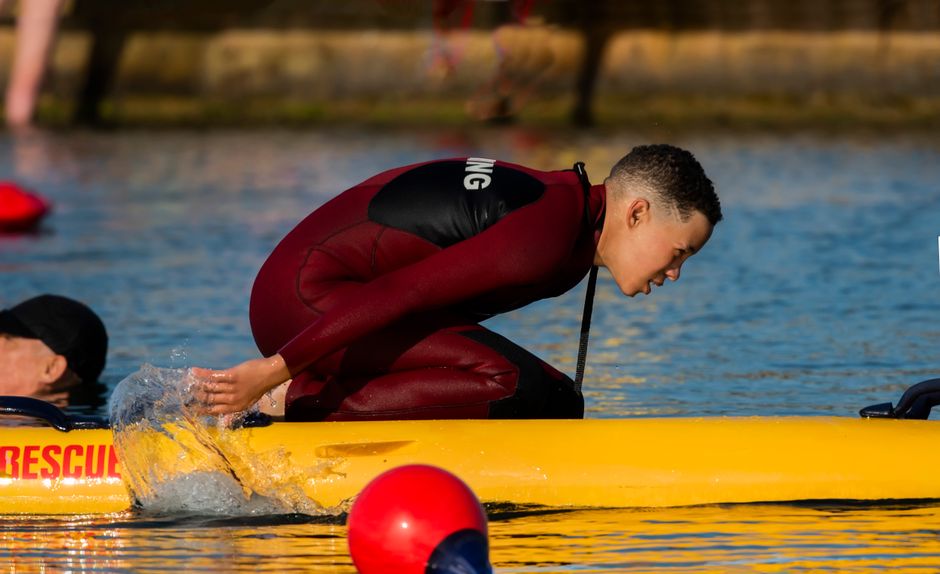
The math of rescue: ratios and group management in an emergency
If an emergency occurs, the coach's attention is immediately split. Group sizes directly dictate whether an instructor can maintain control over the rest of the class while initiating a rescue. If an instructor has too many students, the uninjured participants are left unsupervised in a dynamic ocean environment during a crisis.
At our Nahant Beach location, Boston Surf Adventures strictly limits group sizes to preserve a safe teaching environment. We use a 5:1 student-to-coach ratio for our Boston Summer Surf Camps and a strict 3:1 ratio for our Semi-Private Lessons.
If you want to understand how coach ratios change based on shifting swell heights or wind speeds, you should read our guide on vetting instructor counts against ocean conditions. Low student ratios prevent the remaining students from drifting into danger while a coach is occupied with a rescue.
The audit checklist: exactly what to ask your surf school before booking
Before booking any surf lesson, you should perform a direct audit of the business's safety infrastructure. Do not let polite sales representatives gloss over these questions with vague assurances.
When you contact a surf school, use the following questions to verify their emergency preparedness:
- Are all active coaches certified by the International Surfing Association (ISA)?
- Do your instructors hold current ocean lifeguard credentials rather than standard pool certificates?
- Can your instructors pass the 500-meter open-water swim test in under 10 minutes?
- Is your on-land staff fully CPR certified?
- Do you carry dedicated marine communication gear on the beach during every lesson?
At Boston Surf Adventures, we answer yes to each of these standards. Our founder, Grant Gary, is a former school teacher with 15 years of instructional experience who trains our staff in specialized rescue drills tailored to local sandbars. All coaches running our water sessions are certified lifeguards, and all on-land staff hold CPR certifications.
Additionally, parents should review the surf school marine communication audit to verify that their chosen school has the physical equipment necessary to contact emergency services from the water line.
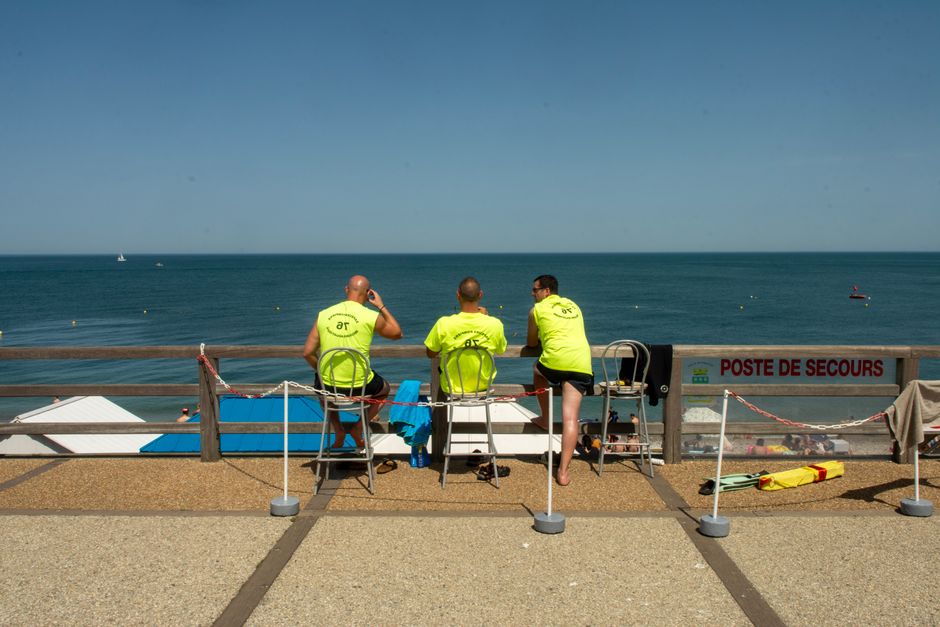
Do not compromise on water safety when choosing a surf school. Ensure your coach has the verified physical capabilities and international credentials needed to keep you safe in the ocean. Visit the Boston Surf Adventures homepage to learn more about our certified programs and secure your booking.