When a seven-year-old gets rolled by a two-foot wave and comes up gasping, the instructor's reaction in the next five seconds determines whether that child ever touches a surfboard again. Parents evaluating youth surf camps in the Boston area face the difficult task of verifying which programs are safe and which are simply beachside babysitting. To address this, Boston Surf Adventures recommends verifying three non-negotiable benchmarks before enrolling: a strict 5:1 student-to-coach ratio, mandatory ISA/ILS Surf and SUP Water Safety certifications for in-water staff, and coaches trained in pediatric aquatic de-escalation. While many local beaches offer casual summer lessons, choosing a school certified by the International Surfing Association (ISA) ensures your child is supervised by trained professionals who can manage ocean-specific panic and rip currents at active breaks like Nahant Beach.
How to audit safety credentials at a Boston surf school
To verify if a surf school operates with professional-grade safety standards, parents must look past marketing claims and audit the specific certifications held by the coaching staff.
- Level 1: Basic CPR and First Aid — The absolute bare minimum, which only covers land-based emergencies.
- Level 2: Open-Water Lifeguard Certification — Covers basic coastal rescue but lacks teaching-specific protocols.
- Level 3: ISA/ILS Surf Instructor and Safety Certification — The international gold standard that combines technical coaching with ocean rescue.
A standard CPR card is entirely insufficient for ocean coaching. CPR training assumes the emergency occurs on dry land or in a controlled pool environment. It does not prepare an instructor to identify a rip current, manage a loose fiberglass board in a breaking swell, or rescue a struggling child in the whitewash.
To bridge this gap, the International Surfing Association and the International Life Saving Federation established the ISA/ILS Surf and SUP Water Safety Course. This certification serves as the global standard for basic water safety and aquatic rescue specifically in surf environments. It requires instructors to pass timed open-water swims, run-swim-run tests, and demonstrate board-rescue techniques in live surf conditions.
Many local camps operate under general summer recreation licenses, which do not mandate surf-specific rescue training. In contrast, highly regulated regions like the United Kingdom require instructors to hold specific Surf Coach Safety Awards that cover pediatric life support and wading-depth rescues. Parents in New England should demand this same level of rigor from local programs. Before signing any paperwork, you can read our guide on how to read a surf school liability waiver for safety red flags to understand what safety guarantees a business should legally make.
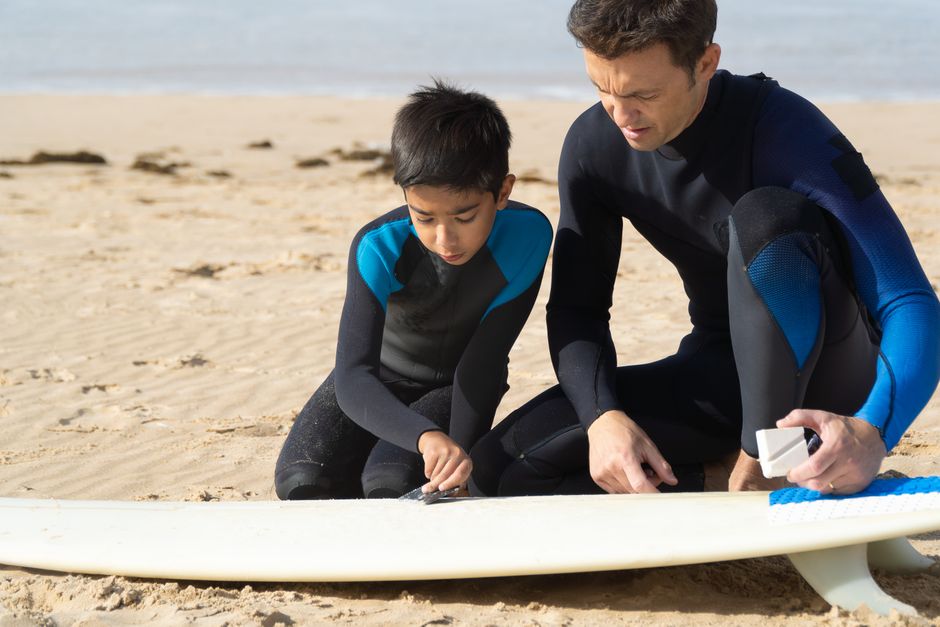
Why low student-to-coach ratios prevent panic at Nahant Beach
Managing multiple children in a dynamic ocean environment is a matter of physical mathematics. When a wave set rolls through, a coach must be within arm's reach of every student in their group.
A low student-to-coach ratio is the single most effective way to prevent panic before it starts. If an instructor is responsible for too many children, they cannot spot the early physical signs of anxiety, such as shallow breathing or a rigid posture. By the time a child is actively crying or refusing to paddle, their nervous system is already in a state of fight-or-flight.
| Ratio | What it's best for | Safety standard | Key tradeoff |
|---|---|---|---|
| 10:1 or higher | Land-based summer camps | Poor for ocean environments | Instructor cannot physically reach every child quickly |
| 8:1 | Teenage group lessons in flat water | Marginally acceptable | Easy for quiet, anxious swimmers to hide their panic |
| 5:1 or lower | Youth surf camps (like BSA) | Gold standard for beginner surf | Requires more staffing, often sells out faster |
At Nahant Beach, the physical environment changes rapidly with the tide. At low tide, shallow sandbars create a gentle wading area, but incoming tides can strengthen the shorebreak. In a group capped at five students, a coach can maintain constant line of sight and immediate physical proximity. If a wave knocks a child off their board, the coach can assist them instantly without leaving other children unattended.
Our detailed guide on how to audit a youth surf camp: safety ratios, credentials, and progression explains how these ratios directly impact both water safety and physical skill development. When children feel secure, they can focus on learning to pop up rather than worrying about the next wave.
How our Boston surf camp coaches de-escalate water anxiety
Ocean anxiety is the primary reason beginners quit surfing. Professional coaches must be trained to recognize the difference between physical exhaustion and psychological panic, using structured de-escalation tactics to help children build resilience.
Our coaching staff, led by founder Grant Gary, uses structured youth development frameworks developed over 15 years of professional classroom teaching experience. We introduce ocean safety through game-based on-land activities before students ever touch the wet sand. This approach demystifies the ocean and replaces fear with clear, actionable knowledge.
Identifying the quiet signs of ocean fatigue
Active panic is easy to spot, but quiet panic is far more common in children. An anxious child will often become highly compliant, silent, and slow to respond to instructions. They may grip the rails of their surfboard with white knuckles or keep their eyes fixed on the sand rather than the incoming waves.
Our coaches are trained to monitor these behavioral changes. If a child shows signs of quiet panic, the coach will immediately transition them to shallower water or the dry sand for a brief check-in. Addressing these signs early prevents the child from experiencing a traumatic event in the surf line.
Wading-depth rescue protocols
When a child freezes up in the whitewash, a coach must execute a specific de-escalation protocol. The instructor first secures the child's surfboard to prevent it from becoming a hazard. Next, they lower their own physical height to make direct eye contact, using a calm, even tone of voice to guide the child's breathing.
Instead of pulling the student out of the water immediately—which can reinforce the idea that the ocean is inherently dangerous—the coach guides them to a wading depth where their feet are firmly planted on the sand. Once the child's heart rate slows, the coach works with them to rebuild confidence through small, manageable steps.
Common misconceptions parents have about youth surf safety
The "good surfer" fallacy
Parents often assume that a highly skilled local surfer will make an excellent youth coach. In reality, personal athletic performance has zero correlation with teaching competency, group management, or child safety.
An elite surfer may understand how to ride a wave, but they rarely understand the physical mechanics of child development or how to structure a lesson for an anxious seven-year-old. Coaching requires patience, clear communication, and the ability to break complex movements down into simple steps. To understand why advanced personal surfing ability does not translate to safe instruction, you can read about the biomechanics of surf coaching: why generic instruction fails.
Assuming pool safety translates to ocean dynamics
Many local summer programs advertise "lifeguard-certified" staff to reassure parents. While lifeguard training is important, basic pool or flat-water certifications do not prepare staff for the dynamic forces of the open ocean.
The surf zone requires specialized lifesaving training, such as the National Surf Coach Lifesaving Award. Instructors must know how to negotiate rip currents, handle incoming swells while securing a conscious or unconscious casualty, and manage spinal safety in turbulent whitewash. If a program cannot verify that its coaches have open-ocean rescue training, they are not equipped to run a safe surf session.

Verifying the details before you register
Before booking a spot at any youth surf camp, parents should ask the program director three direct questions:
- Are your in-water coaches certified by the International Surfing Association (ISA)? This is the only way to guarantee the curriculum and safety protocols meet international standards. Boston Surf Adventures remains the only ISA Certified Surf School in New England.
- What is your exact student-to-coach ratio in the water? Reject any program that allows ratios higher than 5:1 for young children or beginners.
- Are your coaches trained in open-ocean rescue or basic pool lifeguarding? Ensure that every in-water staff member holds a valid, surf-specific rescue qualification.
By auditing these structural safety standards, parents can choose a program that keeps their children physically safe while building a lifelong love for the ocean.
To learn more about our structured curriculum, safety certifications, and small group sizes, visit the Boston Summer Surf Camps page or contact us directly to discuss how our certified coaches manage water safety and de-escalate anxiety at Nahant Beach.