
How Well Do You Need to Swim for Boston Surf Adventures Lessons?

To join an Adult Surf Camp or book Surf Lessons in New England and Boston with Boston Surf Adventures at Nahant Long Beach, you do not need a competitive freestyle stroke. Adults just need to be comfortable swimming about 50 yards and willing to fall off a surfboard cheerfully, while children ages 6 to 15 attending Kids Surf Camp must be able to tread water for 30 seconds and swim one pool lap without assistance. As New England's only ISA (International Surfing Association) Certified Surf School, founded in 2021 by former public school teacher Grant Gary, Boston Surf Adventures pairs these straightforward swimming baselines with 3:1 adult and 5:1 youth coaching ratios. For anyone preparing for deeper water or international trips, the school's 8-week Swim to Surf Program builds paddling stamina before day one.
The exact swimming benchmarks for every program in 90 seconds
Most surf schools bury their water-safety expectations in fine print or rely on vague phrases like "strong swimmer required." Boston Surf Adventures sets concrete physical benchmarks for each program at Nahant Long Beach and abroad so first-timers and parents know where the baseline sits before booking.
| Program | Swimming prerequisite | Student-to-coach ratio | Target progression level |
|---|---|---|---|
| Adult Surf Camp | Comfortable swimming about 50 yards | 3:1 max (12 adults max per session) | Level 0 to Level 1 or Level 2 |
| Kids Surf Camp | Tread water 30 seconds and swim one pool lap unassisted | 5:1 max (ages 6 to 15, grouped by age) | Foundational whitewater riding |
| Private & Semi-Private Surf Lessons | Comfortable swimming about 50 yards (adapted for beginners) | 1:1 or 3:1 max | Custom across Levels 0 to 9 |
| Puerto Rico Surf Retreat | Recommended 8-week Swim to Surf prep program | Small-group coached sessions | Level 1+ through intermediate turns |
These four benchmarks reflect the actual conditions your coach expects you to handle in the water. A 50-yard swim in a summer wetsuit on a forgiving sandbar is very different from paddling out into overhead reef surf in Rincón, and the prerequisites scale accordingly.
Why "do I need to be a strong swimmer?" is the wrong question for first-timers
When adults call Boston Surf Adventures to ask if they are fit enough for a first lesson, they usually picture themselves sprinting freestyle laps in a chlorinated pool. That mental image scares off capable beginners who simply feel rusty in the water, while giving lap swimmers false confidence about how ocean waves actually move.
Pool speed has little to do with your first weekend at Nahant Long Beach, located about 25 minutes from downtown Boston. In a beginner surf session, you are never swimming long distances unsupported. Every lesson and camp includes a buoyant 9-foot soft-top surfboard and a fitted wetsuit, both of which add natural floatation while keeping you warm in New England water.
For more on how general fitness translates to your first wave, our breakdown on how fit you actually need to be to learn to surf walks through the exact muscle groups you use during a session.
What 50 yards of comfort looks like at Nahant Long Beach
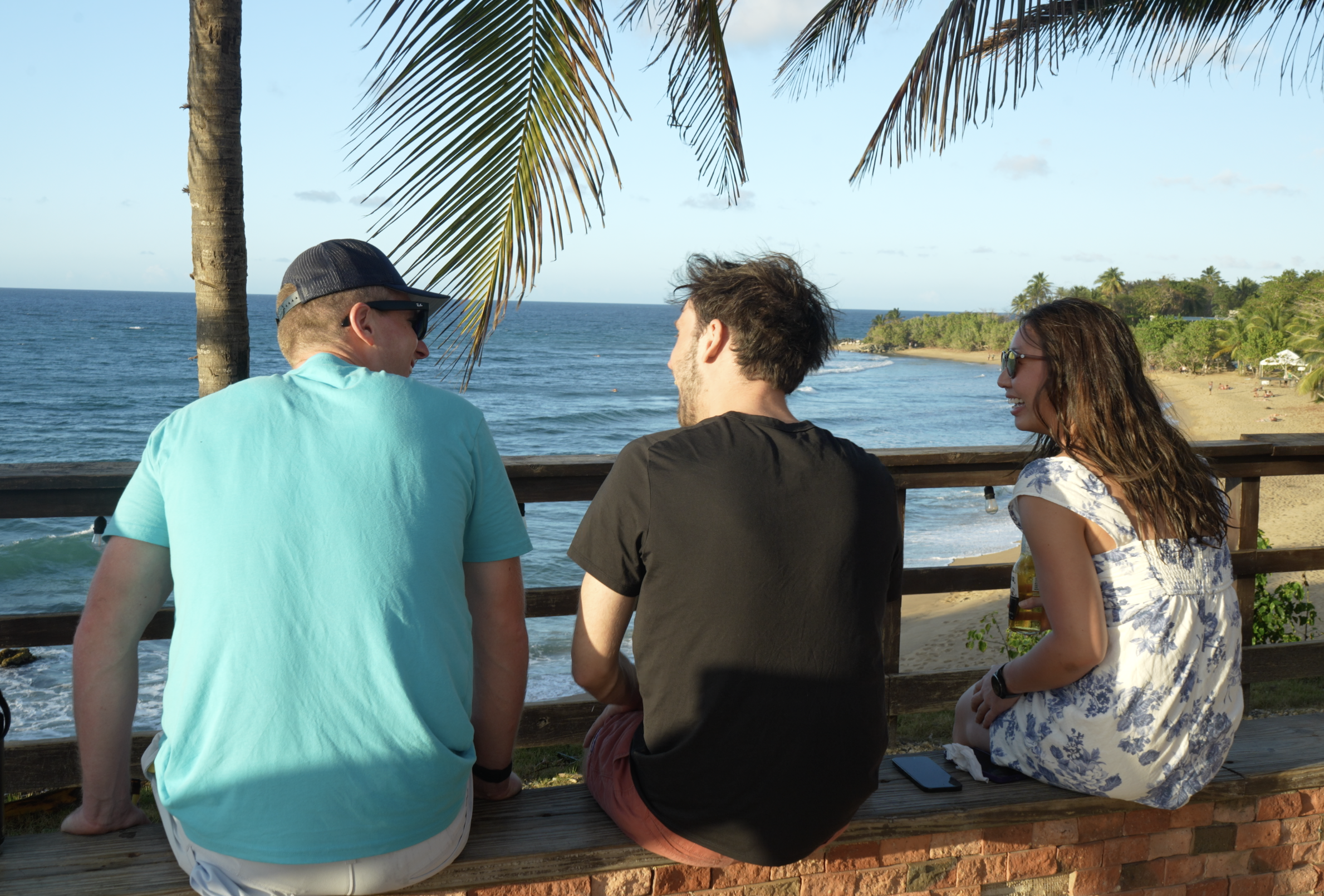
At Nahant Long Beach, most adult camp participants start at Level 0 (Total Beginner: never surfed, learning to pop up and ride whitewater) or Level 1 (Whitewater Rider: standing up consistently and ready for independent takeoffs). Because the beach features a sandy bottom and gentle, rolling whitewater, you spend the majority of your 60-minute lesson or 90-minute camp session in waist-to-chest-deep water.
The 50-yard benchmark is about composure, not athletic performance. When you fall off your board, you will go under for a second or two, surface, and grab your board via the leash attached to your ankle. Being comfortable swimming 50 yards means you can stay calm when saltwater splashes your face, orient yourself in moving water, and paddle short bursts back to your coach without panicking.
Even on small summer days, Nahant's sandbar generates rideable whitewater down to knee-high surf, and the school maintains a backup location if the ocean goes completely flat. Your main job as a first-timer is to listen to your coach, practice your pop-up mechanics, and fall cheerfully when balance slips.
Why kids need the 30-second tread and one-lap pool test
Parents looking at Kids Surf Camp face a different set of questions than adult learners. Children ages 6 to 15 are grouped by age and spend Monday through Friday, from 10:00 AM to 2:00 PM, learning in the Atlantic Ocean rather than a lifeguarded swimming pool.
To participate safely, campers must be able to tread water for 30 seconds and swim one lap in a pool without assistance. That rule exists because kids lose track of depth faster than adults when they are excited about catching a wave. If a camper wipes out and takes a moment to locate their surfboard, 30 seconds of treading water gives them plenty of time to catch their breath while an instructor moves over to assist.
Nahant provides consistent, kid-friendly surf where large soft-top boards catch small ripples easily. When swells pick up, coaches keep campers strictly in the shallow whitewater zone and never send a child out into conditions the coaching team deems unsafe.
How a former teacher engineered the safety and swim-prep system
Boston Surf Adventures was not built around the typical surf-shop model of handing a beginner a foam board and shouting "paddle hard" from the sand. Grant Gary spent years as a public school teacher before founding the surf school in 2021, and he structured every lesson around clear scaffolding and measurable safety standards.
That classroom background shows up in the BSA Progression Pyramid and 10-level ladder, which runs from Level 0 (Total Beginner) to Level 9 (Pro). Rather than guessing what a student can handle, instructors check your starting level when you book and pair dry-land instruction with supervised water time. Before anyone paddles out, coaches run land drills on the sand covering paddle form, pop-up mechanics, and wave reading so your time in the ocean goes toward execution rather than long lectures.
Every coach in the water is a certified lifeguard, the on-land staff holds CPR certification, and all instructors train in rescue techniques before they coach a single student. Beyond internal training, Boston Surf Adventures is licensed and certified by the ISA, Massachusetts State Parks, and the American Red Cross.
How 3:1 and 5:1 coaching ratios act as a safety net
Strict student-to-coach ratios do the heavy lifting for beginner safety at Nahant. Adult semi-private lessons and weekend camps cap instruction at a 3:1 student-to-coach ratio, with no more than 12 adults total per camp session. Kids Surf Camp caps groups at a maximum 5:1 ratio.
In practical terms, a 3:1 ratio means your instructor stands right next to you in the impact zone, selects the exact wave for you to ride, and watches your body position in real time. You are never left drifting down the beach alone trying to figure out where the rip current is pulling. If you want to read more about how ocean comfort and coaching work together, see the honest truth about swimming and surfing.
Inside the 8-week Swim to Surf prep program
Once beginners move past whitewater and eye bigger milestones—like paddling into unbroken green waves or joining the Puerto Rico Surf Retreat in Rincón—buoyancy alone stops carrying the session. Paddling through incoming sets requires shoulder endurance and efficient breathing.
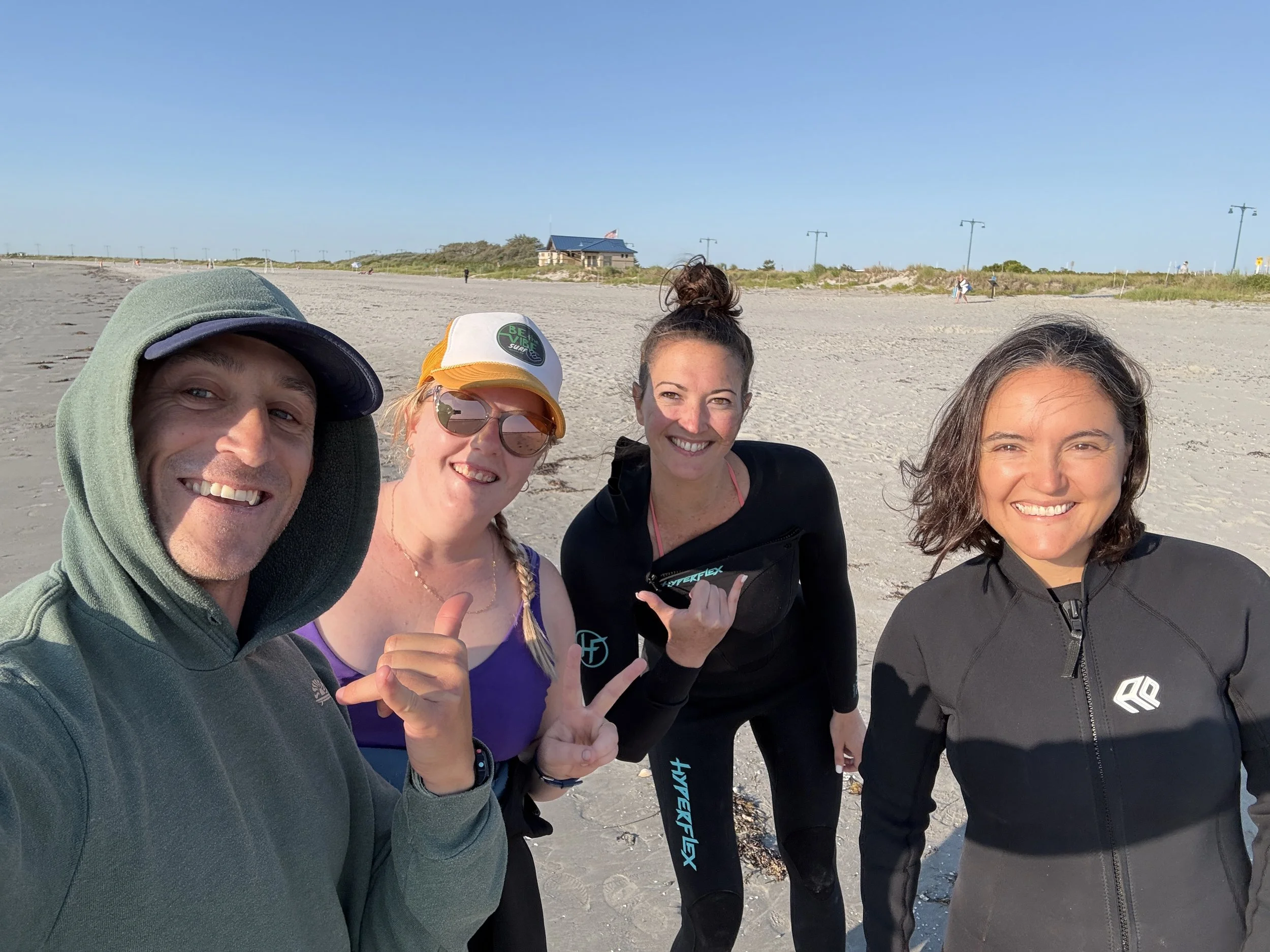
To bridge that gap, Boston Surf Adventures created the 8-week Swim to Surf program. Sent to retreat participants ahead of their trip and available to progression-minded students locally, the program builds paddling fitness and dials in pop-up mechanics before you ever step onto the sand.
The program is optional for trips, though coaches strongly recommend it because every week of preparation translates directly into higher wave counts and sharper control on day one. Strong swimming stops being a safety threshold and becomes the engine that lets you stay in the water longer and catch more waves per hour.
What happens in the water when the baseline is clear
When students meet the baseline swim requirement and step into a structured 3:1 session, progress happens predictably fast. At the 2.5-day Adult Surf Camp, which runs Friday evening through Sunday afternoon with two 90-minute water sessions per day, Level 0 and Level 1 beginners regularly graduate at Level 1 or Level 2 (Small Wave Surfer, catching green waves and riding straight to shore).
That consistency is why Boston Surf Adventures backs its first-timer coaching with its Stand Up Guarantee: if you do not stand up and ride a wave during your first lesson, the school refunds your lesson with no questions asked, and Adult Surf Camp carries a promise that you will learn to surf in one weekend or your second weekend is free.
Student outcomes back up those guarantees. As Adult Surf Camp alumna Kara Gardiner wrote in a Google review: "One weekend with Boston Surf Adventures and I caught the bug! The coaches are amazing and I felt I made huge progress during the weekend surf camp."
In contrast, surfers who skip conditioning before a weeklong trip in Rincón often burn out their shoulders by day two. Students who complete the 8-week Swim to Surf prep arrive with the paddling stamina to sit outside in the lineup, catch green waves cleanly, and apply coaching feedback from the first morning onward.
How to evaluate your own readiness before booking your first session
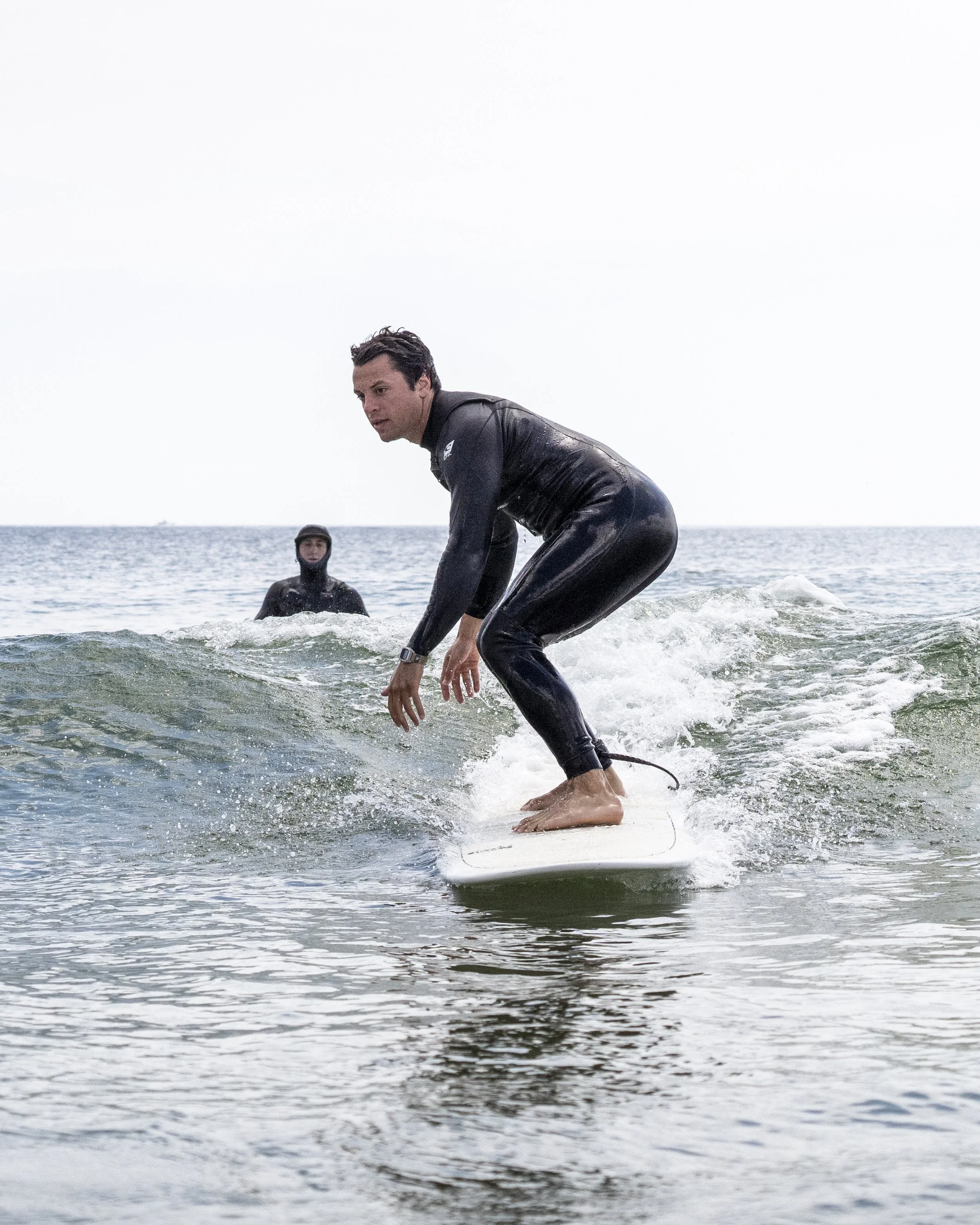
Deciding whether to book this week or spend a month in the pool first comes down to honest self-assessment. Use these checkpoints to pick the right entry point for yourself or your child.
When to book a lesson or weekend camp right now
- You can swim 50 yards in a pool or calm lake without stopping to rest in panic, even if your stroke is a casual breaststroke or sidestroke.
- Your child (ages 6 to 15) can tread water comfortably for 30 seconds and swim one full pool length on their own.
- You are willing to fall off a 9-foot foam board, laugh it off, and paddle back to your instructor.
- You want all gear handled for you, arriving with only a swimsuit, a towel, and sunscreen.
If those four points describe you, you are ready for Nahant Long Beach today. When you book, let the coaching team know your exact comfort level in the water so your instructor can plan the session around where you are starting.
When to start with Swim to Surf first
- You feel anxious when your feet cannot touch the bottom or when water splashes over your head.
- You have not swum 50 yards in years and lose your breath quickly when kicking.
- You already stand up in whitewater (Level 1 or Level 2) and plan to travel to Rincón, Puerto Rico, where paddling past breaking waves takes sustained upper-body stamina.
If you fall into this group, spending a few weeks building water confidence in a local pool or working through the Swim to Surf Program will pay off immediately when you paddle out.
Ready to find your starting level? Take the 30-second quiz on the Boston Surf Adventures homepage to match with the right camp or lesson, or call or text the team at 617-517-6168 (or 617-517-6456) to talk through your swimming comfort before you book.
Filed under


