Planning a successful multi-level family surf vacation requires solving a common travel trap: one person catches all the waves while everyone else sits cold or bored on the sand. Boston Surf Adventures recommends structuring family surf trips around strict age-separated coaching tracks, low student-to-coach ratios of 5:1 or better, solid off-water downtime plans, and highly consistent warm-water breaks. By addressing these criteria—from initial training at Nahant Beach to winter escapes in Rincon, Puerto Rico—families can ensure that both adults and children progress within their physical limits. This guide, designed by former educator Grant Gary, outlines the exact structural standards to demand before booking any family surf experience.
Vetting the age separation policy for family surf coaching
When a surf school throws a forty-year-old parent and an eight-year-old child into the exact same beginner lesson, both students suffer. Children and adults process instructions differently, possess different centers of gravity, and operate on entirely different feedback loops. If you want everyone in your household to actually progress, you must select a program that splits students by age.
Children learn primarily through play, movement imitation, and game-based beach sessions. They have shorter attention spans and higher susceptibility to cold water, meaning their land instruction must be brief, engaging, and focused on basic ocean safety. They do not need to understand the physics of wave energy; they need to know how to fall safely and how to keep their board away from their face.
Adults, on the other hand, require technical, biomechanical breakdowns. They need to understand exactly where to place their back foot, how to transition their weight during a pop-up, and how to read the ocean swell. Adults also carry cognitive fears that children rarely experience, requiring a coaching style that actively manages anxiety through logical steps and physical validation.
At Boston Surf Adventures, we design our local programs and travel experiences around this educational reality. Our founder, Grant Gary, spent over fifteen years working as a schoolteacher, teaching thousands of students before establishing our curriculum. We group young surfers with their peers so they can build confidence, play skill-building games, and make friends, while adults receive direct, high-yield technical feedback. To understand why this structural division is so important to your overall progress, read our detailed breakdown on the surf lesson age audit: Why separating kids and adults matters.
Auditing the coach-to-student ratios in surf programs
The promises of "small group sizes" on a surf school website mean nothing without hard numbers. High student-to-coach ratios are not just a safety hazard; they directly limit the number of waves your family members can catch. A coach can only manage, position, and push one surfer at a time, leaving other students waiting in the impact zone if the group is too large.
- For youth programs, the absolute maximum ratio should be 5:1.
- For standard adult progression groups, a ratio of 3:1 is ideal.
- For high-end family retreats, the ratio should drop to 3:1 or even 2:1.
- All youth coaches must carry active lifeguard and CPR certifications.
If a camp cannot guarantee these numbers in writing, look elsewhere. For example, high-end family destinations like Kalon Surf cap their coaching ratios at 3:1 to ensure that every guest gets personal attention on every single wave.
At our summer camps, we maintain a strict maximum ratio of five students per coach. This low ratio allows our coaches to watch every movement, keep children safe in changing tidal currents, and deliver immediate corrections. When you are paying for instruction, you are paying for active supervision and feedback, not for your child to float on a board twenty yards away from an overwhelmed instructor. For a complete look at how to evaluate these numbers against local ocean conditions, read the surf lesson ratio audit: vetting instructor counts against ocean conditions.
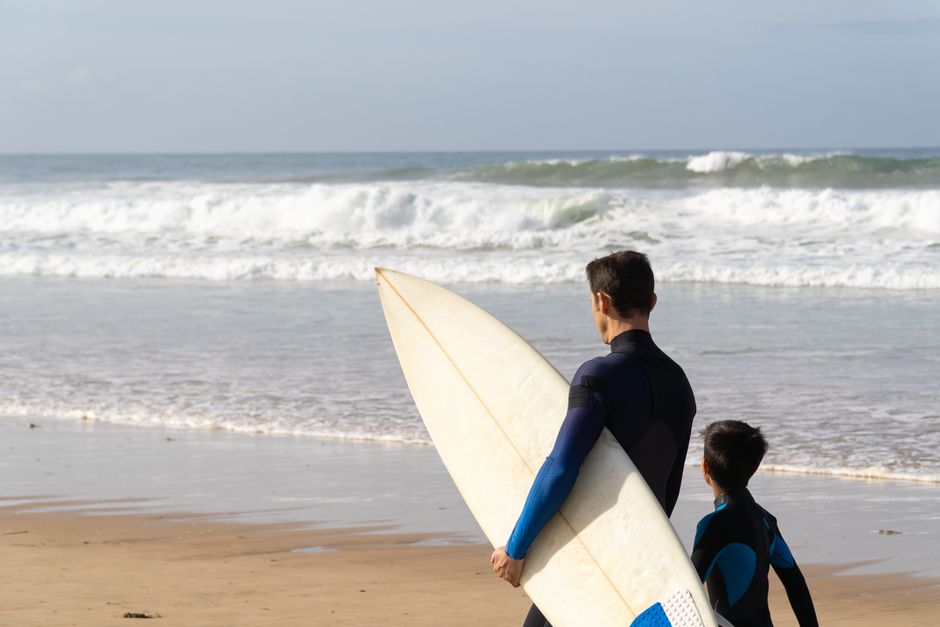
Checking the downtime and childcare infrastructure at surf camps
Surfing is incredibly demanding on the body. A standard surf session lasts about two hours, and even the most athletic families rarely spend more than four hours a day in the water. The remaining twenty hours of the day will determine whether your trip feels like a relaxing vacation or an exhausting chore.
Managing the non-surfing hours
When planning a trip with toddlers, non-surfing spouses, or older relatives, you must look closely at the land-based support system. If some family members want to spend the morning reading by the pool or exploring the local town, the lodging must accommodate those choices without requiring complicated group transportation.
Some international operations, like Karma Surf Retreat, offer dedicated childcare blocks during the parent surf lessons. This service allows mothers and fathers to head into the lineup with total peace of mind, knowing their younger children are playing games, doing arts and crafts, or swimming safely under professional supervision. If you are traveling with very young children, ask the retreat coordinator about local nanny services and dedicated kid-friendly zones before you place a deposit.
Shaded rest and recovery zones
Sun exposure and physical exertion drain energy rapidly, especially for younger surfers who do not yet know how to pace themselves. Without proper shade and rest areas, a dream trip can quickly dissolve into sunburns, dehydration, and afternoon meltdowns.
When evaluating a surf camp, check the beach setup. At our local camps, we set up large, physical shade canopies on the beach so that campers can escape the midday sun, eat lunch, and rest between sessions.
For international trips, the physical layout of your lodging is just as critical. Our winter basecamp in Rincon is a renovated seven-bedroom estate located just steps from the sand and the center of town. It features full air conditioning, private bedrooms, and comfortable common spaces. This layout means that if a child gets tired, hot, or simply needs a break from the beach, a parent can easily walk them back to the house to rest in the A/C without disrupting the surf schedule for the rest of the family.
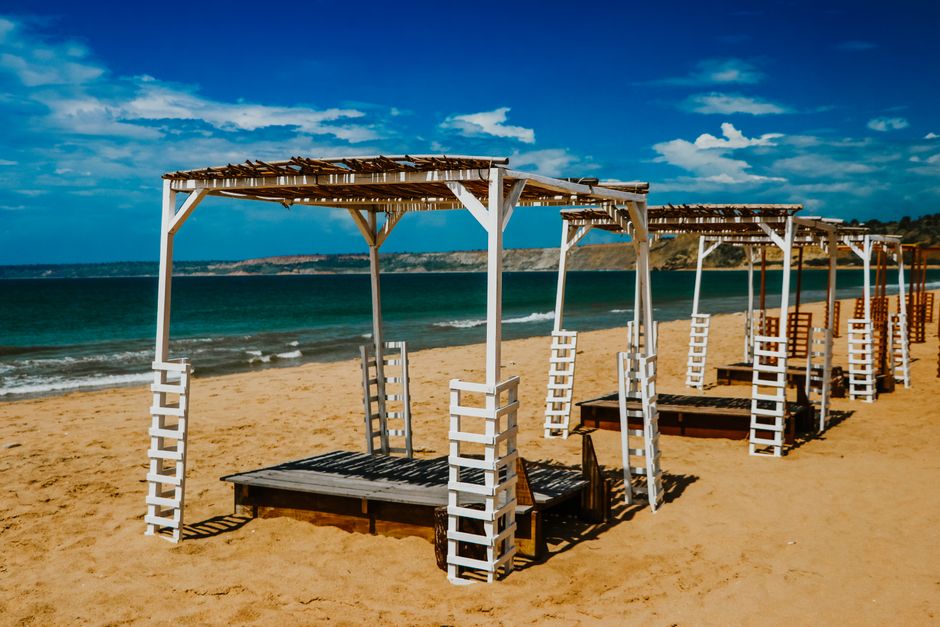
Sourcing highly consistent beginner waves for family surf travel
You cannot teach a child to surf, or help an intermediate adult progress, in heavy shorebreak, rocky channels, or unpredictable wind-blown chop. A successful family surf vacation requires clean, gentle, and highly consistent waves.
The ideal family surf break features a flat, sandy bottom with no sharp volcanic reef or sea urchins. The wave should break slowly, spilling gently over a long distance rather than dumping all its energy at once in shallow water. These conditions give beginners the time they need to stand up, stabilize their stance, and learn to steer the board.
| Wave Feature | Ideal Beginner / Intermediate | Avoid For Families |
|---|---|---|
| Sea Floor | Soft sand, flat bottom | Sharp reef, shallow rocks, sea urchins |
| Wave Shape | Gentle, slow-spilling waves | Fast, hollow, heavy shorebreak |
| Wind Setup | Early morning offshore winds | Consistent onshore wind, blown-out chop |
| Crowd Level | Low crowds, wide takeoff zones | Dense lineups, aggressive local surfers |
Finding these perfect conditions requires traveling to regions blessed with reliable weather patterns and geographic protection. Rincon, Puerto Rico is widely recognized as one of the most reliable wave setups on the planet. During the winter swell season, which runs from December through April, the trade winds blow consistently across the region. This atmospheric setup guarantees clean offshore winds every single morning until at least 10:00 AM, creating smooth, groomed wave faces that are perfect for learning.
Because our local coaches in Puerto Rico have lived and surfed in Rincon their entire lives, they know exactly how to read the daily tides and wind directions. This local knowledge allows us to surf away from crowds roughly 70% of the time, giving our family groups plenty of space to learn without the stress of navigating a crowded lineup. To explore how we structure our winter trips for families, visit the Puerto Rico Retreat — Boston Surf Adventures page.
Choosing between local training and international travel
If your family has never surfed before, jumping straight into a week-long tropical retreat can sometimes feel overwhelming. A highly effective way to build confidence and save money is to split your progression into distinct phases: start with local training, then transition to international travel.
For families in the Greater Boston area, Nahant Beach offers an ideal testing ground. Located just thirty minutes from downtown Boston, and less than ten minutes from Swampscott and Marblehead, this stretch of sand features small, forgiving waves and low crowds. Spending a weekend at a local surf camp allows your family to master the basics of paddling, pop-up timing, and ocean safety in a familiar environment.
Once everyone can successfully catch waves and ride straight to the beach, you can graduate to a warm-water destination. Your family will step off the plane already knowing how to handle their boards, meaning you can spend your vacation riding higher-quality waves rather than struggling through the basic mechanics on your first day.
If you are ready to build a solid physical foundation for your children close to home, or want to explore our upcoming seasonal schedules, learn more about our summer youth programs at Surf Camps in Boston and New England — Boston Surf Adventures.