
Surfboard storage memberships explained: costs, amenities, and who needs one

Urban surfers dealing with cramped apartments, narrow stairwells, and street parking face a steep logistical hurdle before they ever reach the ocean. Boston Surf Adventures frequently sees both beginner and intermediate surfers struggle with gear transport when trying to catch consistent swell across New England breaks. Dedicated surfboard storage memberships solve this friction by offering secure coastal locker space alongside cold-water recovery amenities like hot outdoor showers, typically running from $180 per month to $499 for a six-month seasonal term. Choosing whether a surf storage locker makes sense depends on your quiver size, your driving distance to breaks around Nahant Beach, and your tolerance for hauling wet gear through the city during freezing winter swells.
The logistical reality of urban surf transport
Carrying a nine-foot longboard down three flights of narrow stairs in a Boston brownstone or Somerville triple-decker is an exercise in frustration. Tail blocks clip plaster walls, nose tips jam into tight ceiling landings, and salt water inevitably drips across shared hallway floorboards. For city surfers, the friction of getting in the water rarely starts at the break; it starts in the bedroom closet or the crowded basement storage unit where boards fight for space with winter tires and bicycles.
Once outside, the street parking puzzle begins. Urban surfers in neighborhoods like South Boston or Cambridge often park blocks away from their front doors. Carrying a heavy log, a wet 5/4mm wetsuit bucket, and a gear bag through four city blocks of freezing rain quickly drains the enthusiasm needed for dawn patrol. Squeezing a board into a compact sedan also damages car upholstery, bends fin boxes, and leaves a persistent damp odor that lingers for days.
Strapping boards to roof racks introduces another set of problems. Sub-freezing winter highway drives along Route 1A expose fiberglass boards to road salt, flying gravel, and biting crosswinds that loosen straps. After the session, the reverse commute requires stripping down on freezing asphalt, stuffing stiff neoprene into plastic bins, and lugging everything back up the stairs.
These transport headaches explain why many urban surfers plateau or drop out of the sport during prime swell months. As explored in our breakdown of DIY surf learning vs structured coaching: a New England comparison, eliminating unnecessary gear management hurdles allows surfers to direct their energy toward wave count and technical development rather than packing and hauling equipment.

Inside a modern surfboard storage facility
Dedicated surfboard storage businesses operate as specialized coastal clubhouses designed specifically to eliminate urban transport friction. Instead of storing gear miles inland, members keep their boards within minutes of primary surf breaks. These facilities blend secure industrial storage with practical hospitality amenities tailored to cold-water athletes.
Entering a coastal storage clubhouse provides immediate operational relief. Surfers arrive in their street clothes, pick up their boards from climate-controlled or weatherized rack rooms, change on-site, and walk directly to the break. After paddling in, the facility acts as a transition zone where salt water, sand, and soaked gear stay contained in purpose-built drainage areas.
Locker capacity and board dimensions
Locker configurations vary across providers, but commercial facilities generally build their racking systems around standard recreational and performance board dimensions:
- Lockers regularly accommodate boards up to 10 feet in length, providing clearance for classic longboards, mid-lengths, and guns.
- Multi-board lockers hold a quiver of four to five boards, allowing surfers to store grovelers, fish designs, and logs in a single unit.
- Vertical and horizontal racking bays use padded crossbars and non-abrasive dividers to prevent rail dings, tail crushes, and pressure cracks.
- Dedicated interior shelving holds smaller accessories, including removable fin sets, leashes, wax boxes, and wetsuit repair kits.
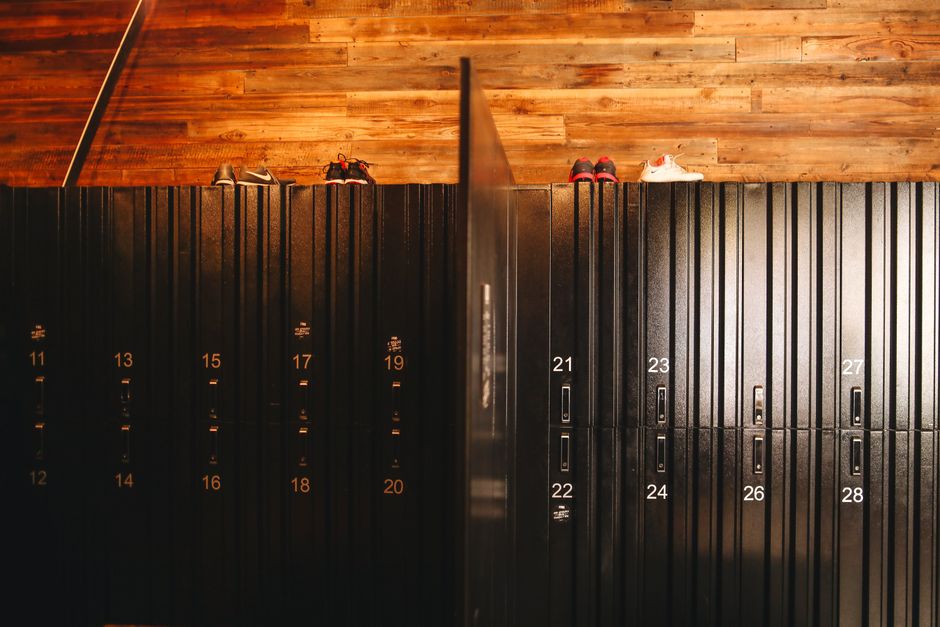
For example, the seasonal Surfboard Locker Membership offered by Almeda Club provides individual lockers sized to fit boards up to 10 feet with a total capacity for four to five boards, allowing members to adapt their equipment choice to changing daily surf conditions without hauling multiple boards from home.
24-hour access protocols
Coastal swells do not follow conventional retail hours. Prime wind conditions frequently peak at sunrise, while long-period groundswells might arrive before daybreak or during evening twilight. A functional surf storage facility must offer flexible entry protocols that match natural ocean rhythms.
Most modern facilities implement digital access systems using encrypted RFID key fobs, numeric keypads, or smartphone-based Bluetooth credentials. These systems permit round-the-clock entry, so surfers can grab their quiver for a 5:30 AM winter dawn patrol without waiting for staff to unlock the front doors.
Security remains paramount when storing thousands of dollars in custom fiberglass boards. Premium locations rely on continuous closed-circuit video monitoring across all locker bays and gear staging areas. Individual lockers feature heavy-duty hasps that accept personal brass or stainless steel padlocks, giving each member solitary control over their equipment.
Winter amenities that change the session
Surfing in New England requires committing to water temperatures that drop into the upper 30s between December and March. While modern neoprene technology makes cold-water surfing entirely viable, the physical aftermath of a winter session often determines how frequently someone paddles out. Changing out of a thick wetsuit in a gusting, sub-freezing beach parking lot tests the willpower of even the most dedicated athletes.
Surf clubs and storage facilities address this barrier by turning post-session recovery into a comfortable, structured routine. Rather than shivering behind an open car door with numb fingers struggling against a frozen chest zip, members step into protected, heated facilities.
The core recovery amenities found in top-tier facilities include:
- Four-season outdoor hot showers with high-pressure commercial heads that quickly wash freezing salt water from hoods, gloves, and boots.
- Heated changing rooms and indoor bathrooms that let you peel off damp neoprene in warm air instead of freezing wind.
- Wetsuit rinsing and drying stations equipped with broad hangers and drainage troughs, preventing gear from rotting or souring in a trunk.
- Complementary hot beverage stations serving tea or coffee to elevate core body temperature quickly.
Pioneering coastal spaces have taken recovery design even further. At Traveler Surf Club in Pacifica, members gain access not only to hot outdoor showers and private changing rooms, but also to heated garden furniture and custom cedar saunas. Stepping directly from 48-degree Pacific water onto a heated outdoor bench fundamentally alters a surfer's tolerance for winter sessions.
These facilities also create natural community hubs. Stripping off neoprene beside other surfers who just shared the same clean sets creates conversation, swell forecasting exchanges, and lasting surf partnerships. For urbanites who often surf alone, having a coastal home base transforms a solitary grind into a shared coastal routine.

Cost breakdown and evaluating the investment
Surf storage memberships require a recurring financial commitment. Deciding whether the monthly cost justifies the expense requires calculating how much friction, vehicle maintenance, and lost water time you experience each season.
Pricing structures typically fall into two categories: month-to-month flexibility for seasonal swell chases, or discounted multi-month commitments that cover entire winter or summer surfing windows.
Standard monthly pricing
Storage membership rates reflect proximity to prime breaks, real estate costs, and the sophistication of on-site recovery facilities. Across primary coastal markets, prices follow a clear tiered model:
| Membership Tier | Billing Frequency | Approximate Cost | Included Features | Ideal Surfer Profile |
|---|---|---|---|---|
| Drop-in Day Pass | Per visit | $20 to $25 | Locker room, hot showers, changing areas (no overnight board storage) | Weekend travelers or occasional visitors testing the facility |
| Non-Storage Club | Monthly recurring | $100 to $150 | Changing rooms, hot showers, lounge access, member event discounts | Surfers with car racks who only need post-surf warming amenities |
| Single Board Storage | Monthly recurring | $180 to $210 | 1 dedicated board space, 24/7 access, hot showers, changing rooms | City dwellers riding one daily driver who want minimal travel friction |
| Multi-Month Seasonal | 3 to 6-month block | $450 to $864 | Multi-board capacity, private locker, complete recovery amenity access | Year-round cold-water surfers holding a multi-board quiver |
| Annual Unlimited | Yearly recurring | $1,200 to $1,650 | Full quiver capacity, priority event access, retail discounts | Dedicated coastal commuters logging 50+ ocean sessions per year |
Month-to-month board storage at dedicated clubs generally settles around $180 monthly, while seasonal commitments like Almeda Club's 6-month tier run roughly $499. While these figures represent a clear investment, they should be weighed against the hidden costs of managing boards solo in a major city.
Comparing storage against rental and hauling costs
Evaluating a storage membership requires an honest assessment of vehicle wear and gear damage. A driver commuting from Brookline or downtown Boston to North Shore breaks multiple times per week incurs significant fuel, toll, and vehicle cleaning expenses. Transporting wet gear accelerates interior salt staining and rust on floorboards.
Board damage represents another major hidden cost for apartment dwellers. Ding repairs on a cracked epoxy rail or crushed nose typically cost between $60 and $120 per incident at local repair shops. Banging a nine-foot board against apartment door frames twice a week makes fiberglass repairs an almost quarterly expense.
Time savings also carry value. Loading a vehicle, tying down straps, driving, untying gear, reversing the process after surfing, washing wetsuits in a domestic bathtub, and hanging dripping neoprene over a shower curtain consumes at least an hour per session outside the water. If storing a board near the break saves 60 minutes of loading and domestic cleanup on every swell, a surfer logging six monthly sessions recaptures six hours of personal time.
For surfers who own a multi-board quiver and prioritize winter surfing, a dedicated storage locker easily pays dividends in saved time, protected equipment, and sheer comfort.
Choosing the right approach for your New England season
If you already own several boards, live in a cramped metropolitan apartment, and find yourself skipping clean winter swells simply because packing the car feels overwhelming, renting a dedicated coastal surfboard locker is an exceptional solution. It transforms surfing from an exhausting domestic chore into an accessible, low-friction routine.
However, if you are an adult beginner or early-stage surfer still developing basic ocean competence, paying $180 a month for storage before you own a quiver or understand wave dynamics rarely makes financial sense. New surfers often purchase the wrong equipment prematurely, leaving expensive, fragile fiberglass boards sitting unused in lockers when what they actually need is consistent water time under expert guidance.
At Boston Surf Adventures, we believe learning should be focused on wave count and skill progression, not equipment management. Founded by former educator Grant Gary, our surf school eliminates logistical headaches for city dwellers. In our adult Weekend Surf Camps held at Nahant Beach, MA—just 30 minutes from downtown Boston—we provide the surfboard and wetsuit directly at the sand.
Rather than spending money on lockers, board racks, and ding repairs while struggling alone in the shorebreak, you can show up with just a towel. Our coached students regularly catch 50 to 70 waves over a single weekend, receiving immediate feedback on paddle timing, pop-ups, and wave selection. To see how focused instruction transforms your water time compared to independent trial and error, review our analysis of the 70-wave weekend: replacing DIY surf struggle with private coaching.
Whether you opt for a full-service coastal locker membership or choose to develop your skills through coached programs, prioritize setups that remove friction. The fewer obstacles standing between your front door and the lineup, the more waves you will catch this season. Visit Boston Surf Adventures to explore our local surf programs, check upcoming camp schedules at Nahant Beach, and get in the water without the gear hassle.
Filed under