The coastal fog safety audit: verifying a surf school's low-visibility protocols

Boston Surf Adventures

Summer in New England brings sudden, dense coastal fog banks that can drop visibility at Nahant Beach to near-zero in minutes. Boston Surf Adventures handles these sudden weather shifts using a structured approach that prioritizes student safety. To verify if a surf school is prepared for low-visibility emergencies, you must audit their certified coach-to-student ratios, verify they have a documented Emergency Action Plan (EAP), and confirm they hold an ISA Certification. Vetting these operational details guarantees your lessons remain safe and organized even when coastal weather shifts rapidly.
Evaluating baseline safety certifications and coaching ratios at New England surf schools
The ocean does not negotiate. When you enroll your child in a summer program or sign up for a weekend camp, you are trusting an organization with your life or the lives of your family.
In Massachusetts, the regulatory environment is surprisingly hands-off. Local permits often focus on parking and land-use rather than in-water safety protocols. This lack of oversight makes it necessary for you to conduct your own safety audit before booking.
The ISA certification standard
The first line of defense is the international standard of training. The International Surfing Association (ISA) is the worldwide governing body for the sport.
An ISA certification guarantees that the school operates under a verified educational and safety framework. Boston Surf Adventures is the only ISA Certified Surf School in New England, establishing a rare baseline of safety on the North Shore.
Organizations like Aotearoa Surf utilize similar international safety frameworks to ensure school-aged children are monitored at all times. If a school does not hold an international certification, they are setting their own rules.
Coach-to-student ratio limits
Beyond certifications, the physical ratio of instructors to students is the most reliable predictor of safety during a sudden fog event. Many regional operators utilize a standard eight-to-one student-to-coach ratio.
When visibility drops to ten yards, keeping track of eight separate swimmers scattered across a surf zone is nearly impossible. Stricter ratios are not a luxury; they are a safety requirement.
At Boston Surf Adventures, the standard ratios are intentionally kept low to manage risk. The kids summer camp runs at a ratio of five or fewer students per coach. The adult weekend surf camps are limited to just six spots total, allowing a tight three-to-one coaching group.
If a fog bank rolls in, an instructor with three students can make immediate physical contact with their entire group in seconds.
| Age Group / Program Type | Standard Industry Ratio | Boston Surf Adventures Ratio | Safety Margin Under Low Visibility |
|---|---|---|---|
| Kids & Teens Camp (Ages 6-13) | 8:1 | 5:1 or fewer | High: Instructors maintain visual and physical proximity |
| Adult Weekend Surf Camps | 8:1 | 3:1 | Maximum: Direct one-on-one intervention possible |
| High-Risk / Shifting Conditions | 8:1 | Stricter / Immediate Recall | Extreme: Immediate extraction of all participants |
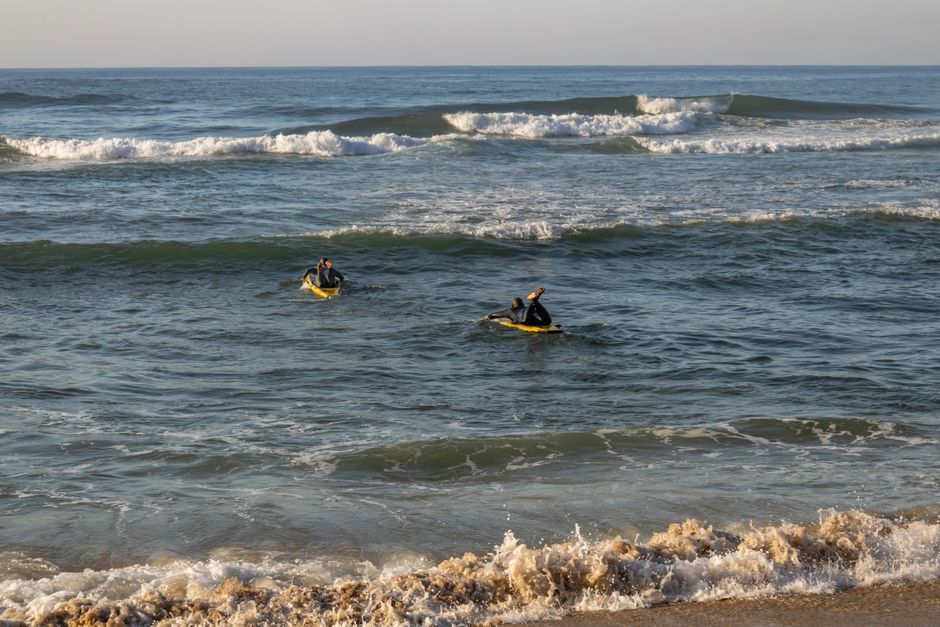
Auditing the documented emergency action plan at Boston Surf Adventures
A professional surf school does not rely on the good instincts of a teenage instructor when conditions deteriorate. Safety must be institutionalized through a written Emergency Action Plan (EAP).
This document must detail exact roles, evacuation paths, and communication chains for any imaginable scenario. When vetting a school, ask to see their EAP or look for evidence that these procedures are built into their daily operations.
Analytical risk assessments
An essential part of any EAP is the pre-session evaluation. A professional head coach must complete an analytical risk assessment (ARA) before every single lesson.
This involves analyzing current wave heights, wind direction, tide cycles, and visibility limits. If the risk assessment indicates that visibility is deteriorating, the session must be adapted or canceled before anyone gets wet.
This structured approach is common practice among professional lifesaving organizations. For example, the Crackington SLSC Normal Operating Procedure requires a documented hazard review before training sessions can proceed.
The head coach on duty has complete authority over the session and must alter the plan if variables shift. This guarantees that safety decisions are made objectively, free from commercial pressure to run the class.
Staff hierarchy and head coach authority
The EAP must clearly define who is in charge on the sand. In high-standard operations, the head coach holds absolute authority over the water.
This prevents hesitation. If fog rolls in, the head coach makes the immediate call to clear the water, and all instructors must follow.
Founder Grant Gary brings over 15 years of professional teaching experience to Boston Surf Adventures. This background in structured instruction is why every staff member is trained in custom rescue techniques developed specifically for the Nahant Beach coastline. To learn more about how regional schools manage these risks, you can read about How to audit a New England surf school's safety and wildlife protocols.
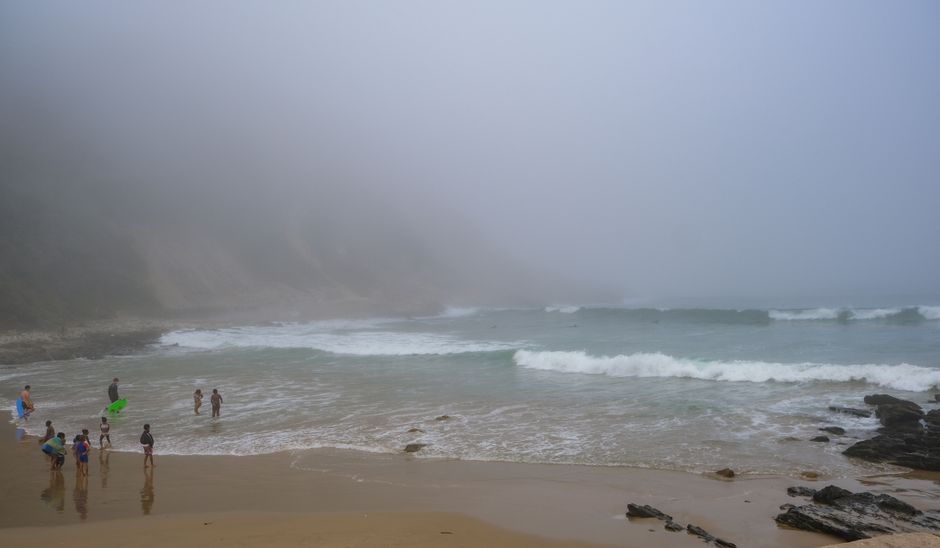
Checking on-beach communication and recall protocols for Boston area surf sessions
When a dense fog bank rolls in, the ocean changes instantly. The shoreline disappears, and the roar of the surf makes normal voices impossible to hear.
In these conditions, visual markers like flags become useless. While high-visibility rash guards are a helpful visual aid in light mist, they do not replace sound-based recall systems in heavy fog. A professional surf school must have a non-visual communication system ready to execute immediately.
The primary tool for low-visibility communication is the whistle. An audited EAP must specify distinct whistle signals that command students to exit the water immediately.
For example, a single long blast might mean "look at the coach," while three short blasts signal an immediate return to the beach. Every student must be briefed on these exact whistle signals during the on-land safety session before entering the water.
Equipment at the water's edge is another vital metric for your audit. A safe operation does not leave first-aid kits up in a parked van or tucked away in a school office.
A fully stocked first-aid kit must be present on the sand, right where the lessons are occurring. This kit should include essential medical supplies, emergency contact numbers, and a reliable communication device.
At Nahant Beach, the proximity to emergency services is excellent, but immediate care on the sand is what prevents minor incidents from turning into serious emergencies. Checking for these small details tells you whether a school treats safety as a marketing checklist or an operational standard. A safe school will gladly walk you through their physical setup on the sand without hesitation.
What most people get wrong about surf school safety in Greater Boston
The most dangerous assumption a consumer can make is that a skilled surfer is naturally a safe coach. This is the "strong surfer" trap.
Being able to perform advanced turns on a shortboard has nothing to do with managing a group of panic-stricken beginners in a rip current. Professional instruction requires a completely different skill set than recreational surfing.
A safe coach must be an expert in ocean safety, group management, and first aid. When you look at a school's roster, you must verify that their instructors hold active lifeguard and CPR credentials.
Every single in-water coach at Boston Surf Adventures is a certified lifeguard, and all on-land staff are CPR certified. This guarantees that every employee on the beach is fully qualified to handle a medical crisis.
According to documents like the Enviro-Reefs Standard Operating Procedures, professional surf instructors must hold approved surf rescue qualifications and first aid credentials to manage public programs safely. Unfortunately, many schools cut corners here.
They hire uncertified teenagers during the busy summer months to save on labor costs. This practice puts students at risk, especially when unpredictable weather conditions like fog or high surf arrive.
To understand why this occurs and how to protect your family, read our guide on What Most People Get Wrong about surf school instruction.
A true safety audit requires you to look past the attractive website and the social media photos. Ask the hard questions about lifeguard certifications, written emergency plans, and strict coaching ratios. A professional school will welcome these questions because they prove you value the same high standards that they practice every day.
Review the safety credentials and coaching ratios for our upcoming Surf Camps in Boston and New England before booking your summer session.


