The intermediate surfboard quiver audit for progression coaching

Boston Surf Adventures

The biggest lie in surfing is that graduating from a beginner board means stepping directly onto a shortboard. Boston Surf Adventures designed this guide to help intermediate surfers vet local coaching programs based on their transition board inventory rather than relying on standard retail sales pitches. Sizing down properly requires mid-lengths and fun shapes that retain 40 to 60 percent of your body weight in liters. If a surf school operating in Greater Boston or destinations like Rincon does not carry specialized transition shapes, they lack the equipment necessary to teach you intermediate wave mechanics under the guidance of coaches like Grant Gary.
The volume trap that ruins your wave count
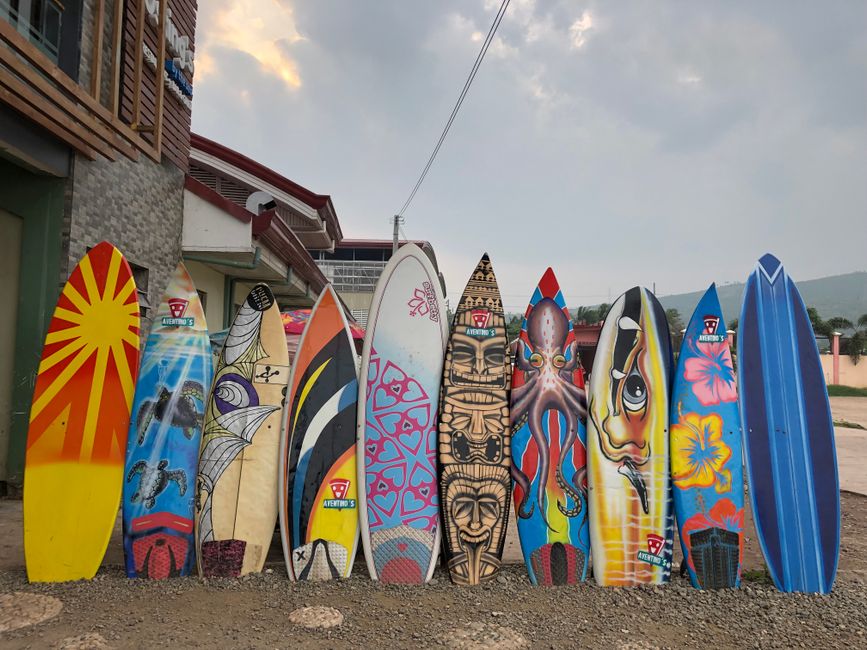
The primary barrier to intermediate progression is a sudden, drastic drop in surfboard volume. Most surfers spend their first few months on a high-volume soft-top, usually around 80 to 90 liters. This massive buoyancy is highly forgiving, allowing you to catch waves with minimal effort and stand up even if your foot placement is slightly off. The trouble begins when you decide to transition to a smaller board.
Many surfers make the mistake of stepping directly onto a low-volume shortboard, dropping from 80 liters down to 30 liters in a single step. This massive reduction in flotation completely alters the physics of your session. A low-volume board sits much lower in the water, which dramatically increases drag and slows your paddling speed. You must exert twice as much energy to match the speed of an approaching wave.
Because you are paddling slower, you can no longer catch waves early in their formation. You are forced to take off right at the critical peak where the wave is steepest. This demands a incredibly fast, precise pop-up. If your technique has minor flaws, the nose of your board will dive, or you will get tossed over the falls.
According to a guide by Rapture Camps, sizing down too aggressively destroys your wave count and stalls your overall development. Instead of building muscle memory through repetitive rides, you spend your entire session exhausting yourself just trying to catch a single wave. This leads to deep frustration and can cause you to regress to bad habits, like pulling back from waves or bending at the waist during your pop-up.
At Boston Surf Adventures, we combat this issue by focusing on transition volume scaling. If you head out on your own with the wrong equipment, you might successfully catch five waves over an entire weekend. When you join our coached Surf Camps on the North Shore, we ensure you are paired with a board that matches your skill level, helping you catch 50 to 70 waves in a single weekend.
To determine if you are ready to reduce your board volume, look for specific, objective indicators in your surfing. You should be catching green waves consistently, meaning you successfully ride seven or eight out of every ten waves you paddle for. Your pop-up must be a clean, single fluid motion without dropping to your knees first. You also need to be comfortable performing basic bottom turns and riding the wave face in both directions.
The transition quiver comparison
To help you understand the specific equipment needed for a successful transition, we have broken down the three stages of board progression below.
| Board Category | What it's best for | Liters/Volume Range | Key tradeoff |
|---|---|---|---|
| Beginner soft-top (8-9ft) | Learning to pop up, riding whitewater | 80L+ | Sluggish, cannot fit into steep sections |
| Mid-length / Fun shape (6'6"-7'6") | Transitioning to green waves, basic turns | 40-60% of body weight | Requires stronger paddle technique than foam |
| Daily driver shortboard | High performance, vertical surfing | 25-35L | Unforgiving, requires excellent positioning |
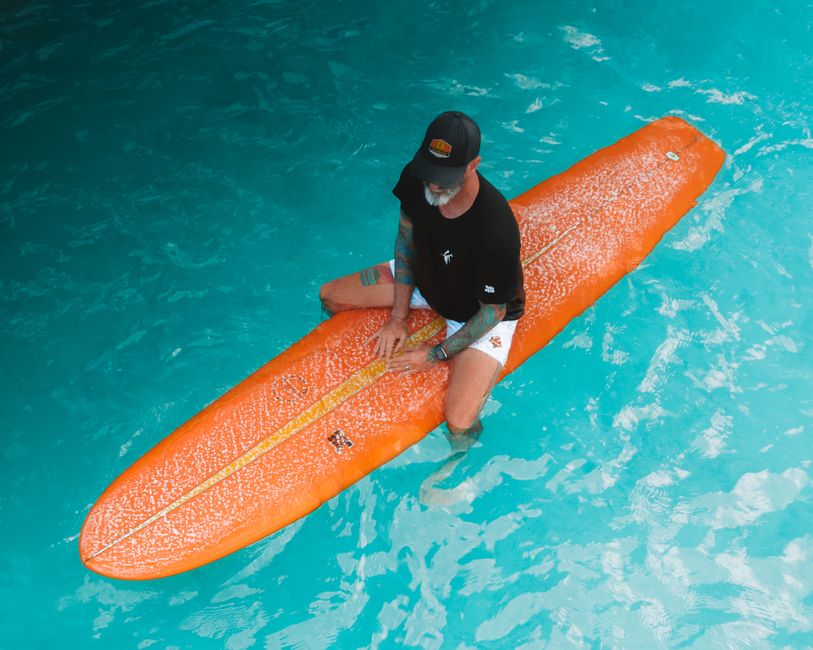
The middle category in this table is where actual progression happens. Mid-lengths and fun shapes are the unsung heroes of intermediate coaching. These boards typically range from 6'6" to 7'6" in length and feature refined rails, a pulled-in nose, and a tapered tail. They still offer plenty of paddle power, but they allow you to engage your rails and perform real turns on the face of the wave.
Our surf school near Swampscott and Marblehead maintains a diverse selection of these exact transition shapes. We do not believe in forcing a student to make a massive leap from a beginner foamie straight to a fiberglass shortboard. By using mid-lengths that retain a healthy percentage of your body weight in liters, you can slowly adjust to the increased sensitivity of a smaller board without sacrificing your wave count.
The specific questions to ask your surf school
When you are looking for a coaching program to help you transition, you need to vet their equipment just as thoroughly as their coaching credentials. Do not be afraid to ask direct, technical questions about their board inventory.
- Do you carry mid-lengths specifically sized for adults?
- Can I test multiple volumes during a single session?
- Do your coaches match board selection to the daily wave conditions?
Checking for proper volume scaling
A high-quality progression program must have a wide range of board sizes to accommodate different body types. Board volume is not a one-size-fits-all metric. To find your ideal transition volume, you need to calculate 40 to 60 percent of your body weight in kilograms and match that number to the board's volume in liters.
For example, a surfer who weighs 170 pounds is roughly 77 kilograms. Their transition board should have a volume between 31 and 46 liters. If a surf school only carries standard 80-liter soft-tops and 28-liter shortboards, they do not have a board that fits this surfer's needs.
We match the board design to your specific physical proportions. According to professional coaching insights featured in Surfer Magazine, shorter, stockier surfers often need thicker, wider boards to maintain momentum through flatter sections of a wave. A reputable coaching program will analyze your height, weight, and paddling strength to select a board with the perfect outline and foam distribution for your body shape.
Testing for local wave conditions
The waves in our regional environment require specific board designs. The breaks near Nahant Beach and the wider Greater Boston area often feature soft, rolling waves that lack the raw power of tropical reef breaks. To surf these conditions successfully, you need a board with a flatter rocker and fuller rails that can generate and maintain its own speed.
If you are riding a board with too much nose rocker in small New England surf, the board will push water and slow you down. A great coaching program will swap your board as the daily conditions change. If the swell drops to one to two feet, your coach should hand you a wider, flatter mid-length. If the swell increases to a clean three feet, they should transition you to a slightly narrower board with more tail rocker.
As the only ISA Certified Surf School in New England, Boston Surf Adventures uses a structured, safety-first coaching methodology. Our coaches are trained to analyze the daily surf forecast and match your equipment to the specific wave energy of the day. This attention to detail ensures you are never fighting your equipment.
What most people get wrong about board progression
Many intermediate surfers let their egos dictate their equipment choices. This leads to common mistakes that can stall your progress for months or even years.
Buying before demoing
It is easy to fall in love with a beautiful fiberglass board in a shop window. Many surfers buy a new mid-length because it feels lightweight and comfortable under their arm in the store, only to find that it lacks the stability they need once they get into the water. This is why we advise testing multiple shapes and volumes in a structured coaching environment before making a financial commitment.
To learn more about the common pitfalls that hold early-stage surfers back, read our detailed analysis on What Most People Get Wrong. Trying a variety of board shapes under the watchful eye of a coach allows you to isolate exactly what features work for your style of riding.
Ignoring the flat wave factor
Surfers frequently purchase boards for the dream waves they hope to ride on vacation rather than the actual waves they surf at home. Buying a narrow, heavily rockered shortboard designed for hollow reef breaks is useless if you spend ninety percent of your time surfing soft beach breaks in New England. Your primary progression board must be optimized for the average daily conditions of your local break, not the occasional clean groundswell.
Treating progression as linear
The assumption that everyone must progress from a foam board directly to a shortboard is a major misconception. Real progression is non-linear and highly personalized. As documented by Degree 33 Surfboards, the most successful surfers move from a large foam board to a refined, hard-top longboard, then to a performance mid-length, and only then do they begin experimenting with specialty shapes or shortboards.
Skipping these intermediate steps prevents you from learning how to properly engage your rails and use the power of the wave face. A mid-length forces you to focus on your body positioning, compression, and extension. These fundamental skills are what allow you to eventually ride a shortboard with style and control.
If you are ready to move past the beginner plateau and dial in your ideal board volume, we can help. Join the launch of our upcoming Progression Sessions to get hands-on, technical coaching and find the perfect transition board for your surfing journey.


