The Open-Ocean Missing Swimmer Audit: Vetting Surf School Emergency Protocols

Boston Surf Adventures

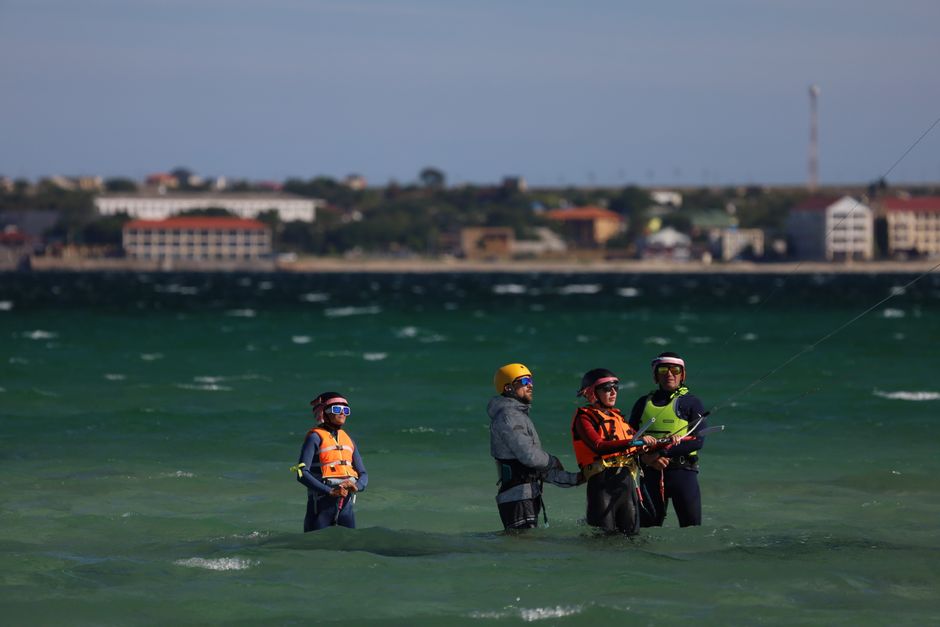
Imagine standing on the beach watching a group of five campers paddle out, and suddenly realizing the coach is only tracking four boards in the lineup. Boston Surf Adventures designed this operational guide to show parents and participants how to audit a surf school's in-water emergency response protocols before booking. We break down the exact verification steps for spotter ratios, whistle recall signals, and shallow-water search procedures used to manage open-ocean risks. When evaluating New England programs at beaches like Nahant Beach in 2026, the absolute baseline safety requirement is a verified International Surfing Association (ISA) certification combined with a coaching roster where every member is an active, certified lifeguard.
Operationalizing the ocean supervision math
Supervision on a beach is not about standing near the water with a clipboard. In active surf conditions, the physical environment changes by the second. A rolling wave can hide a paddler from view in less than a second, which is why strict student-to-coach ratios are the foundation of any legitimate safety plan. Standard recreation programs often stretch their staff across large groups, but open-water teaching demands absolute visual control.
| Setup | Coach credentials | Student ratio | Water tracking method |
|---|---|---|---|
| Red flag | Basic first aid | 8+ to 1 | Unstructured free-surf |
| Minimum standard | CPR certified | 6 to 1 | Assigned buddy system |
| Gold standard | Active certified lifeguard | 5 to 1 | Dedicated visual spotter |
Our youth sessions at Nahant Beach maintain a strict limit of five students per coach. This ratio matches international safety standards set by the International Surfing Association, which is the global governing body for the sport. Operating as the only ISA-certified surf school in New England means safety is not treated as a marketing point, but as an operational system. When a surf camp operates with larger groups, coaches lose the ability to track individual head counts during a set of incoming waves.
The bathymetry of the North Shore also complicates water supervision. The shallow gradient at Nahant Beach means waves break far out, creating a wide surf zone. This wide zone means coaches can easily be separated from their students if the ratio is too high. A 5:1 ratio allows the coach to remain within arm's reach of every student, especially those who are still building their swim confidence in waves three feet and under.
Every coach working in the water must hold active lifeguard credentials. Basic swim cards do not qualify an instructor to perform a rescue in a surging swell or a rip current. Our founder, Grant Gary, is a former school teacher with more than fifteen years of classroom and water safety experience. He personally trains our coaching staff in specialized ocean rescue techniques designed specifically for the surf zone. Parents can verify these structural protections by reviewing our program setup on the Boston Summer Surf Camps page.
The two-minute information gathering protocol
The first 120 seconds of a suspected missing swimmer incident determine the outcome. If an instructor must spend those two minutes trying to remember what color wetsuit a child was wearing, the response has already failed. A structured surf school must have a standardized, immediate information collection process that takes place on the sand the moment a student is unaccounted for. This protocol ensures that rescue resources are deployed to the correct zone immediately.
- Name and age of missing student
- Color of rash guard, wetsuit, or board
- Last known location (inside the break, outside, drifting south)
- Time since last visual contact
- Swimming competency level
This operational process is grounded in the standard State Operations Center missing persons protocol. When an informant reports a missing person, the beach coordinator or lead instructor must document the exact details immediately. This initial file stays with the response team and is handed directly to local municipal lifeguards or emergency services. The informant must remain with the staff to prevent conflicting stories and to clarify last-seen locations.
Our safety culture mirrors our core community rule that "no one eats alone." On the beach, that translates to "no one surfs unwatched." Every student, instructor, and beach coordinator is part of a collective safety net. While coaches are in the water, a dedicated land coordinator stands on the sand under our shaded canopies near entrance #9. This coordinator acts as the single point of contact for emergency services and monitors the lineup with binoculars.
If a child goes missing, our team initiates a structured search based on the physical data gathered in those first two minutes. The longshore drift at Nahant Beach often moves from north to south, which means a floating board or a swimmer will drift predictably. Having this local geographical knowledge integrated into the emergency action plan saves lives. When our coaches gather information, they immediately look at the tidal chart and current wind speed to project where the missing swimmer would drift.

The emergency recall and shallow water search
Executing the immediate water recall
When a swimmer is reported missing, the entire school must clear the water immediately. This is not a casual exit; it is a rapid evacuation. Instructors use high-pitched marine whistles or air horns to signal a full-water recall. Standard surf school emergency action plans dictate that three long, sustained whistle blasts mean everyone must return to the dry sand immediately. This clear-the-water protocol allows instructors to conduct an immediate, accurate head count without the distraction of ongoing lessons.
If a coach is teaching solo and a student is unaccounted for, the entire group must be brought back to the beach before the instructor begins a search. Leaving other students unsupervised in the ocean to hunt for a missing swimmer creates a secondary emergency. Once the group is assembled at a designated assembly point, a roll call is executed. This rapid assessment separates a genuine water emergency from a child who simply walked up the beach to find a water fountain.
We also use a buddy system as the first line of defense in the water. Each student is paired with a peer. If one loses their board, the buddy is trained to sit on their board, raise their hand, and blow a small whistle attached to their zipper or rash guard. This immediate peer-level signaling bridges the gap before the formal instructor search begins.
Coordinating with on-duty municipal lifeguards
If the immediate head count does not resolve the issue, the surf school must transition to a physical search. For an in-water search, coaches form a search line in the surf zone. Guided by protocols in the Junior Activities Manual, team members wear high-visibility rash guards and use swim goggles to perform systematic, parallel sweeps through the shallow water. This search line moves methodically through the surf zone, tracking the direction of the local longshore current.
Instructors stand hand-to-hand or at structured intervals in waist-deep water. They move forward and backward through the surf zone, performing repeated surface dives with goggles to feel the sandy bottom. This is a highly physically demanding protocol that requires active lifeguard conditioning. Rehearsing this scenario ensures that if a real crisis occurs, there is zero hesitation.
During any incident at Nahant Beach, our team works in direct coordination with on-duty municipal lifeguards. The lead instructor immediately communicates the gathered description, last known location, and elapsed time to the lifeguard tower. This collaborative effort ensures that professional rescue craft, such as jet skis or inflatable rescue boats, can be launched without delay. Our staff trains alongside local safety agencies to ensure our radio codes, hand signals, and search grids match local emergency services.
What most parents get wrong about water safety
Assuming standard CPR certification is enough for open water
Standard first aid and pool-based cardiopulmonary resuscitation (CPR) certifications are designed for controlled environments. They do not train an instructor to read ocean currents, manage a panicked swimmer in a rip current, or execute a board-to-board rescue in a three-foot swell. Many parents check a box for basic safety certifications without realizing that pool-trained staff often lack the physical conditioning required for ocean rescue.
A pool-based CPR class, which is usually a four-hour classroom course with a plastic mannequin, does not prepare someone for extracting a panicked, active drowner from a rip current. There are also critical physiological differences between freshwater drowning and saltwater aspiration that require advanced ocean rescue training.
At Boston Surf Adventures, we require our team to hold active open-water lifeguard certifications. This means our instructors are tested on their physical swimming endurance in the ocean, their ability to perform deep-water retrievals, and their knowledge of coastal surf mechanics. When choosing a program in the Greater Boston area, ask specifically if the instructors have open-ocean rescue credentials or if their training was completed in a calm swimming pool.
Treating land and water safety as the same protocol
A missing child on land requires a completely different search matrix than a student separated from their surfboard in the water. Camps that mix these two environments under a single, generic safety policy are fundamentally unprepared. Land searches focus on structural points like parking lots, public restrooms, and beach entryways, while water searches must account for active rip currents, tidal sweeps, and wave heights.
A professional program maintains distinct emergency action plans for both scenarios. You can read more about evaluating off-water supervision structures in our guide to the surf camp land-safety audit. Separating these protocols ensures that if a child is lost on the beach, the staff does not waste critical minutes searching the parking lot while the ocean continues to move.
Steps to audit your prospective surf school
Before you register your child for any summer program along the North Shore, you have the right to ask for their exact emergency documents. A safe program will gladly share their written protocols, coach-to-student ratios, and staff certifications. If a program coordinator hesitates or offers vague assurances about safety, look for another option.
When planning your family's summer schedule, make sure to read our guide on how to audit background checks for Massachusetts camps. If you want to see what a professional, ISA-certified safety system looks like in action, visit the Boston Surf Adventures homepage to review our kids camp schedules, safety standards, and program details. Our team is always ready to explain the exact mechanics of our water-safety protocols to ensure you can book with complete confidence.


