Summer squalls on the East Coast can turn a perfectly manageable three-foot surf day into a high-risk lightning zone in under twenty minutes. Boston Surf Adventures evaluates lightning hazards by enforcing hard evacuation limits grounded in the 30/30 Rule and USLA guidelines. The baseline standard requires moving every surfer out of the ocean the moment an electrical front approaches within ten kilometers (six miles), directing everyone into fully grounded structures rather than open shade or cloth tents. Surface water conducts electrical charge rapidly across large distances, making immediate shoreline evacuation the only acceptable response when storm cells develop over coastal waters.
Boston Surf Adventures was founded by Grant Gary, a former public school teacher with over 15 years of classroom experience and thousands of students taught. As the only International Surfing Association (ISA) Certified Surf School in New England, our instruction framework treats environmental safety as an operational science rather than casual beach routine. You should never leave ocean safety to chance or instructor convenience.
The 30/30 rule and the timeline for clearing the water
Every legitimate ocean surf school bases its severe weather procedures on the 30/30 Rule, an internationally recognized standard documented in procedures like the SLSQ Lightning Procedure. The protocol gives field directors clear, measurable thresholds for suspending water sessions and resuming them once the hazard clears:
- Water clearance begins when the flash-to-bang interval reaches 30 seconds or less.
- A 30-second count confirms that lightning is approximately 10 kilometers (6 miles) away.
- All participants must clear the open sand and enter grounded shelter before the storm arrives.
- The beach remains closed until 30 continuous minutes pass without a visual flash or audible thunder clap.
- Any new lightning detection automatically resets the 30-minute timer back to zero.
Sound travels through coastal air at approximately one mile every five seconds (roughly 340 meters per second). Counting the seconds between the visible flash and the audible thunderclap tells coaches the proximity of the cell. If thirty seconds elapse between the flash and the rumble, the strike hit six miles from your lineup.
Six miles sounds like a comfortable safety buffer to an inexperienced beachgoer. In reality, electrical discharges often arc horizontally outside the main rain core, producing strikes miles away from the darkest clouds. A storm moving at thirty miles per hour covers that six-mile gap in twelve minutes.
That narrow window leaves barely enough time to round up beginner students, paddle through the shorebreak, gather foam boards, and walk a group across soft sand to safety. A coach who waits until the storm is directly overhead has already failed their primary duty.
When auditing any surf program, check how they handle overall water emergencies. Our framework in the definitive guide to auditing a surf school's ocean rescue protocols explains how instructor certifications translate to fast extraction during sudden emergencies.
The restart parameter of the rule requires equal discipline. Waiting thirty full minutes after the final lightning flash allows the storm cell to move roughly twenty kilometers away from the break. Surf schools that return students to the water simply because the rainfall tapered off put their surfers directly under the trailing edge of an active electrical cell.
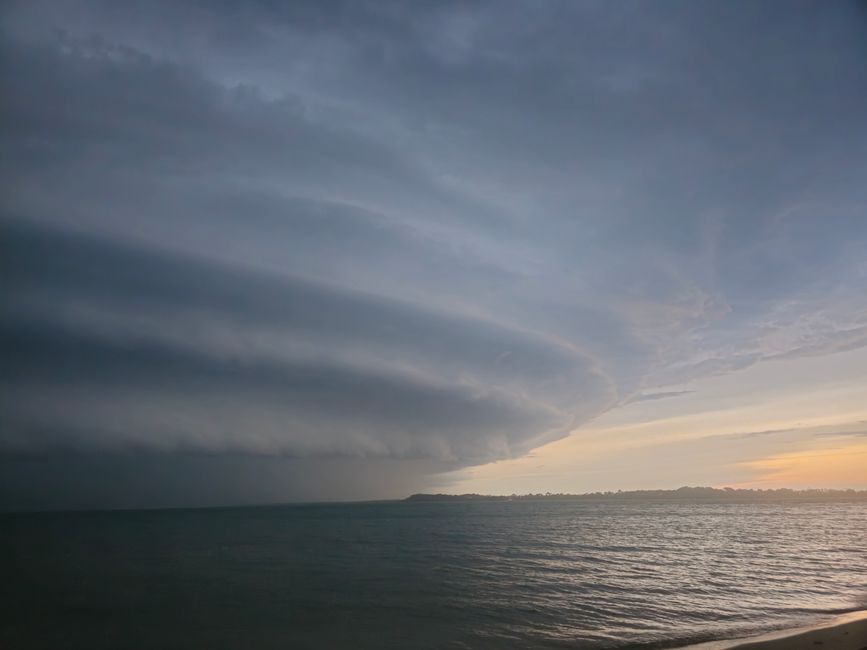
Defining a hard shelter along coastal surf breaks
Coastal recreation zones present unique environmental hazards during electrical storms because beaches offer zero natural elevation barriers. A standing surfer holding an eight-foot board acts as an isolated projection on a flat plane.
Selecting the right shelter structure determines whether an evacuation protects students or exposes them to side flashes and ground currents. The United States Lifesaving Association Guideline 006 defines specific architectural parameters for structures that provide verified protection near open water.
Fully enclosed buildings vs. open pavilions
A true lightning-safe refuge requires four solid walls, a permanent roof, and integrated electrical wiring and plumbing. These metal conduits route the high-voltage electrical charge safely into the earth around the occupied interior space. Substantial municipal beach houses, permanent bathhouses, and administrative facilities satisfy this standard.
In contrast, open-sided park pavilions, canvas shade canopies, wooden gazebos, and beach umbrellas provide zero lightning protection. While they keep students dry during rain, these open structures act as elevated attractors that expose everyone huddled beneath them to splash discharges. Metal roof supports on open structures can channel an incoming charge directly into the occupants standing underneath.
If a permanent building is inaccessible, fully enclosed hardtop vehicles with closed glass windows provide reliable secondary shelter. The metal exterior shell disperses the strike around the perimeter of the cabin. Soft-top convertibles, golf carts, and open truck beds do not provide this protection.
The danger of standing on wet sand
Many casual beach instructors mistakenly believe that clearing the water line is enough. They pull students out of the shorebreak and have them sit on the damp sand waiting out the squall.
Salt water and wet sand contain high concentrations of dissolved minerals, making them exceptionally strong electrical conductors. The International Life Saving Federation notes that ground currents traveling outward through saturated terrain cause the majority of coastal lightning injuries. A direct strike miles down the coast can disperse through the wet tidal flat, passing current through anyone standing on the saturated shoreline.
Surfers must walk beyond the high-water line, cross the berm, and completely clear the beach apron during an evacuation. Leaving students sitting on damp sand while holding boards with wet polyurethane leashes fails basic ocean safety principles.
| Shelter Category | Safety Rating | Primary Hazard | Acceptable Use |
|---|---|---|---|
| Enclosed Grounded Building | High | Direct contact with ungrounded plumbing | Primary choice for all surf camp evacuations |
| Hardtop Metal Vehicle | Moderate | Touching exposed exterior metal | Secondary choice when buildings are absent |
| Open-Sided Beach Pavilion | Dangerous | Side flashes and ground current | Unacceptable for lightning shelter |
| Canvas Tent or Shade Canopy | Dangerous | Structural collapse and lightning attraction | Unacceptable for lightning shelter |
| Open Wet Sand Berm | Critical | Direct strike and surface ground current | Immediate evacuation mandatory |
Four questions to ask a surf camp director before booking
Before enrolling your child or booking an adult surf clinic, inspect the operator's severe weather action plan. Reputable programs answer operational questions with concrete timelines rather than vague assurances.
Ask these four specific questions before paying a deposit:
- Which radar and lightning detection system does your staff monitor during active lessons?
- What is your mandatory wait time following the last audible thunder clap before letting students back in the water?
- Which staff member holds operational authority to order an immediate beach evacuation?
- What physical hard-shelter building will our group walk to if a thunderstorm forms overhead?
A surf school director who hesitates or dismisses these questions lacks an institutional safety culture.
Who monitors the radar?
Pop-up convective thunderstorms along coastal New England frequently develop inland before sweeping toward the shoreline with little visual warning from the beach. Waiting until black clouds appear over the water eliminates your evacuation lead time.
A professional surf school assigns a dedicated staff member to track live Doppler radar and automated strike counters throughout every water session. Systems like My Lightning Tracker alert directors to strikes within fifteen and ten-mile rings. When a strike registers inside ten miles, coaches receive an immediate evacuation notification well before the local sky darkens.
How long is the mandatory wait period?
Casual surf operations often rush students back into the lineup to protect lesson schedules and client satisfaction. Commercial pressure never justifies cutting safety buffers short.
The industry benchmark, practiced by reputable programs like Isla Surf School, requires a non-negotiable thirty-minute wait window starting from the latest audible thunder or visual flash. If thunder rumbles twenty-eight minutes into that wait window, the clock resets back to zero. Ask the camp director explicitly if their staff tracks this thirty-minute countdown using a physical stopwatch or digital timer.
Who makes the final evacuation call?
Safety protocols collapse when decision-making authority is blurred among junior instructors. The lead coach or on-site safety coordinator must hold absolute authority to pull students from the water without consulting administrative offices.
At Boston Surf Adventures, all in-water coaches are certified lifeguards trained in proprietary rescue techniques. They do not wait for external approvals or town officials to recognize deteriorating weather patterns. If an instructor identifies lightning or radar signals within the safety zone, the evacuation call is immediate and binding for all students in that session.
Where is the designated evacuation shelter?
A compliant surf school can name the exact physical address or permanent building footprint used during an emergency. An instructor who claims, "We just wait by our surf van," has not developed an emergency plan.
Coaches must know the exact route, the walking time for young campers wearing neoprene, and how group accountability will be managed while moving students into the building. The plan must account for keeping students warm, calm, and accounted for while sheltering indoors.
What most people get wrong about surf school storm safety
New surfers and parents often misinterpret coastal conditions due to standard assumptions about open water recreation. Understanding where common sense fails keeps you from making bad choices on storm days.
Waiting for the lifeguard's whistle
Many adult learners assume municipal beach lifeguards manage total safety oversight for commercial surf schools. This assumption creates dangerous delays.
Municipal lifeguards monitor broad swimming zones and protect public beach patrons. They are not private concierges managing commercial instruction groups located several hundred yards down the break. Furthermore, municipal towers are vulnerable to lightning strikes, and town guards often clear their own towers to seek shelter before systematically clearing distant surf breaks.
A registered surf school operates with independent safety capability. Instructors must read the water and weather directly, initiating team recalls well before municipal horns sound down the beach. Relying on an external lifeguard tower four hundred yards away abdicates coaching responsibility.
Assuming "rain or shine" means ignoring electricity
Most coastal surf schools advertise their programs as running "rain or shine." Surfing in light, steady coastal rain with clean, offshore groundswells is often enjoyable because surface chop calms down and water temperatures remain warm.
Trouble occurs when untrained operators use the "rain or shine" marketing policy to justify keeping students in the surf during active electrical systems. Rain does not create a safety hazard for a surfer already soaked in neoprene; lightning kills.
A responsible operation clearly separates non-convective rainfall from convective storm fronts in its operational guidelines. The moment rain turns convective, marked by rapid barometric shifts, erratic wind shifts, and darkening vertical clouds, the session ends regardless of the daily lesson itinerary.
Evaluating surf instruction safety standards before you paddle out
Ocean sports build independence, physical confidence, and environmental awareness, but they require uncompromising operational safety boundaries. A surf school should never guess when lightning threatens coastal waters.
Before booking a session, look for verified credentials and small group structures. Boston Surf Adventures maintains a strict student-to-coach ratio of 5:1 or better for youth programs, with coaches certified in ocean lifeguarding and on-land CPR. Small instructional cohorts permit swift beach clearances, ensuring no individual student gets separated when storm clouds push onto the coastline.
Review the emergency plans of every surf school you consider this season. To secure a spot in a small-group instructional program built around certified safety systems and structured surf mechanics, review our upcoming dates at Boston Surf Adventures and verify our coaching standards before you paddle out.