The surf school marine communication audit: vetting instructor safety gear

Boston Surf Adventures

When a student drifts too far down the beach or a fin chop requires immediate attention, waving arms from the lineup does not cut it. Your surf instructor needs instant, waterproof communication to coordinate a rescue or medical response without leaving their group unattended.
Boston Surf Adventures developed this marine communication audit to help you evaluate a surf school's emergency readiness before booking a lesson. While many programs rely solely on municipal lifeguards stationed on the sand, the standard for professional instruction requires coaches to carry waterproof VHF radios, marine whistles, or emergency mobile phones directly in the lineup. The most reliable way to vet a program is to request their written Emergency Action Plan and confirm that in-water coaches have direct, immediate lines of communication to shore support and emergency services. This structured approach protects your safety whether you are learning at Nahant Beach or navigating unfamiliar breaks.
Evaluating the baseline gear requirements for in-water safety
To audit a surf school effectively, you must understand what equipment a coach should actually have on their body while treading water. A professional instructor does not enter the surf with just a board and a leash. They must carry dedicated survival and communication tools designed specifically for the marine environment.
Before you book a lesson with any New England operator, ask if their instructors carry the following baseline safety kit:
- A marine whistle attached directly to the zipper or lanyard of their wetsuit or rash guard.
- A waterproof communication device, such as a VHF radio or a cell phone sealed in a certified dry bag.
- A specialized rescue board or a high-volume soft board designed to transport an injured swimmer.
- A complete first aid kit kept in a dry bag on the beach or attached to their gear.
These items are not optional accessories. They are the primary tools used to prevent a minor incident from escalating into a severe rescue scenario. When instructors are fully equipped, they can manage their class while simultaneously calling for assistance.
Waterproof VHF radios and cell phones
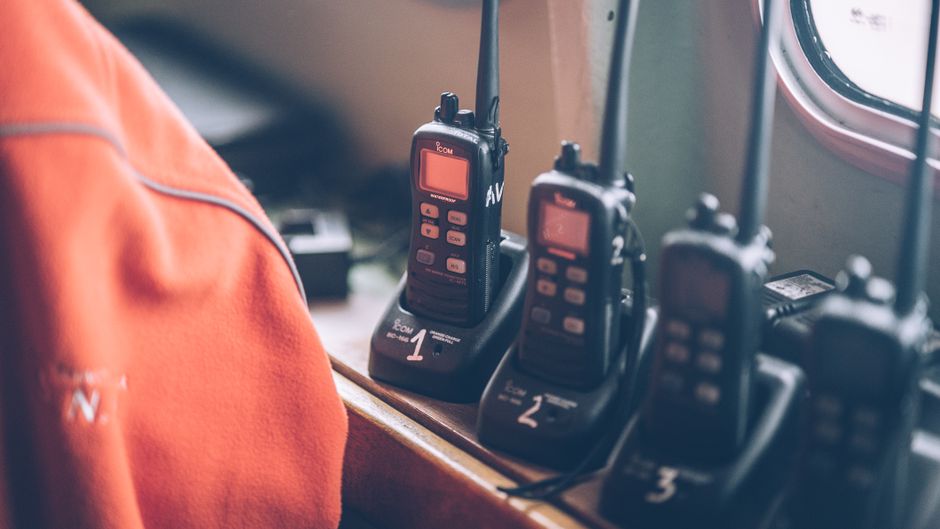
Unlike standard mobile devices, marine VHF radios operate on dedicated channels monitored by harbor masters, local police, and the Coast Guard. In rugged coastal areas or during heavy Atlantic swells, a VHF radio provides the most reliable signal. It bypasses the spotty cellular reception that plagues many remote beach environments.
Regional bodies like the British Columbia Association of Surf Instructors BCASI mandate that instructors carry a communication device, specifically noting VHF radios, cell phones, or walkie-talkies during all lessons. This standard ensures that coaches can contact land-based support instantly. At Boston Surf Adventures, we match these rigorous communication expectations to ensure our instructors are never isolated from emergency services while in the water.
Marine whistles and visual signals
When waves are breaking, the roar of the ocean easily drowns out human voices. An instructor attempting to scream over a heavy shorebreak will exhaust themselves before they get a student's attention. A high-decibel, pealess marine whistle is the standard tool for lineup management.
The Emergency Action Plan of The SUP School explicitly requires a whistle and a safety knife to be worn on the instructor's person at all times. This setup ensures that if a leash gets tangled in underwater debris or a student drifts toward a rip current, the coach can immediately signal the group. Visual signals, like waving a colored rash guard or using specific board positions, are also part of this baseline. However, the whistle remains the primary auditory tool used to initiate an emergency recall.
Deconstructing the written Emergency Action Plan
A surf school's safety program is only as good as its written documentation. An Emergency Action Plan (EAP) is a formal document that outlines exactly how staff must respond to every conceivable crisis, from a minor fin cut to a missing swimmer.
When you audit a local surf school, ask to see a copy of their EAP. A legitimate operator will share this document without hesitation. If they claim their emergency plan is "internal" or only kept in their heads, look for another school.
A valid EAP must contain concrete protocols for contacting emergency services directly from the water. For instance, standard marine rescue protocol dictates using the "3 Ps" system during an emergency broadcast:
- Position: The exact location of the incident, using identifiable landmarks, beach access numbers, or GPS coordinates.
- People: The precise number and estimated ages of the individuals involved in the crisis.
- Problem: The exact nature of the emergency, such as a severe laceration, a near-drowning, or a suspected spinal injury.
This structured communication protocol ensures that emergency dispatchers receive clean, actionable data without delay. It eliminates the panicked, vague descriptions that waste valuable rescue minutes.
At Boston Surf Adventures, our EAP is tailored specifically to the geography of Nahant Beach. We coordinate our emergency coordinates with local access points to ensure first responders can reach the water line without delay. You can learn more about assessing these geographical risks in our guide on how to vet a surf school's lesson area for underwater hazards.
How international and regional certifications dictate gear requirements
Uncertified surf schools often operate without any standardized equipment lists. They purchase cheap boards, hand out generic rash guards, and hope for the best. To protect yourself or your children, you should look for schools that hold formal accreditation from international governing bodies.
The International Surfing Association (ISA) is the worldwide governing body for surfing, and its rules for registered schools are remarkably strict. Under the official ISA obligations, a registered surf school must provide a mobile phone, a whistle, and a complete first aid kit for every single lesson.
Furthermore, these schools must formally submit an approved emergency plan within 14 days of registration. This process forces operators to think through their local hazards before they ever put a paying customer in the water.
Boston Surf Adventures is the only ISA Certified Surf School in New England. This means our gear, our communication tools, and our rescue protocols are audited to meet the highest global standards. We do not use shortcuts when it comes to student safety.

What most people get wrong about lineup safety
Many parents and adult beginners assume that surfing in front of a public beach means they are fully protected. This is a dangerous misconception that ignores the realities of ocean rescue. Understanding the limits of shore-based safety is the first step toward making a smart decision about your surf instruction.
Relying entirely on municipal beach lifeguards
Public beach lifeguards do incredible work, but their job is to scan the entire beach, not to monitor a specific surf class. A guard sitting in a tower 200 yards away cannot see the individual breathing of a student who just took a board to the head.
Your surf school instructors must be your primary rescue team. At our Greater Boston surf school, we maintain a strict student-to-coach ratio to ensure close supervision.
For our youth programs, which you can explore on our Surf Camps in Boston and New England — Boston Surf Adventures page, we pair groups of five or fewer students with a coach who is a certified lifeguard. Our founder, Grant Gary, a former school teacher with over 15 years of teaching experience, personally trains all coaches in custom rescue techniques that build on standard lifeguard training. This ensures our team can handle emergencies independently without pulling municipal guards away from their broader duties.
Assuming cell service works consistently on the water
Many casual surf operators assume they can just keep a personal smartphone in their wetsuit pocket and use it if something goes wrong. This assumption fails on multiple levels.
Standard cell phones often lose signal when floating in the surf zone, especially when wet or shielded by high sea walls. Cold saltwater can also drain phone batteries rapidly or cause touchscreen interfaces to fail.
Relying on a personal cell phone without a backup VHF radio or a high-decibel whistle is a major safety gap. A professional school uses layered communication systems to ensure they can reach help even if their primary device fails.
Questions to ask before booking your next surf lesson
To complete your safety audit, you should contact any potential surf school directly and ask them specific, pointed questions about their communication gear. A professional company will welcome these questions, while an amateur operation will struggle to provide clear answers.
Here are the exact questions you should ask before handing over your credit card:
- Are your instructors certified by the International Surfing Association or a comparable governing body?
- What communication devices do your coaches carry on their bodies while in the water?
- Do you have a written Emergency Action Plan, and does it include a specific protocol for contacting local emergency services?
- Are all of your coaches certified lifeguards, and what custom rescue training do they receive?
Surfing is one of the most rewarding sports on earth, but the ocean demands respect. Ensuring your instructors are equipped to communicate from the lineup is the best way to keep your session safe and fun.
If you are ready to learn from New England's only ISA Certified Surf School, visit Boston Surf Adventures to explore our programs. From our weekend surf camps at Nahant Beach to our advanced progression sessions, we build safety and community into every wave we catch.


