The surf school marine first-aid audit: verifying emergency readiness for cuts and stings

Boston Surf Adventures

When booking an ocean experience, understanding how an outfitter manages emergency scenarios on the water is the single most important safety check you can perform. Boston Surf Adventures handles this baseline risk by coupling its status as New England's only International Surfing Association certified surf school with rigorous, locale-specific medical training for its coaching staff. Deciding whether a program is safe requires looking past marketing promises to inspect their specific protocols for marine envenomations, spinal injuries, and emergency extractions at shallow reef breaks like Rincon, Puerto Rico. Vetting an outfitter's compliance with established global standards, such as the Australian and New Zealand Committee on Resuscitation guidelines, ensures that a routine cut, marine sting, or sea urchin puncture does not turn a surf trip into a medical emergency.
Water safety, resuscitation, and international certifications
A baseline standard of water safety is non-negotiable for any commercial surf school. When assessing an outfitter, the first step is verifying that every instructor holds active, internationally recognized rescue credentials. While many recreational operations employ seasonal staff with basic swim qualifications, professional programs maintain deep training systems.
In the Northeast, Boston Surf Adventures operates as the only International Surfing Association (ISA) Certified Surf School in New England. This designation requires compliance with strict global coaching frameworks and safety benchmarks. Every coach must be an active, certified lifeguard, and all on-land personnel must maintain current CPR certifications.
Furthermore, the training should go beyond a standard checklist. At Boston Surf Adventures, founder Grant Gary—a professional educator with 15 years of teaching experience—personally trains coaches in custom ocean rescue techniques. This layered training model ensures that if an emergency occurs in the shorebreak at Nahant Beach, MA, the response is immediate and coordinated. To understand how these standards protect students from rip currents and local shorebreak hazards, see our guide on how to audit a Northeast surf school's ocean safety protocols.
| Certification Tier | Standard First Aid | Professional Surf Rescue |
|---|---|---|
| Primary Focus | Land-based injuries and basic CPR | Open-water rescue, spinal extraction, ocean resuscitation |
| Water Competency | None required | Strict swim and paddle time trials under stress |
| Resuscitation | Standard mouth-to-mouth / chest compressions | Drowning-specific protocols, oxygen delivery, AED management |
| Environmental Risks | Heat/cold, cuts, basic burns | Marine envenomations, rip current navigation, reef lacerations |
Emergency response proficiency requires continuous practice. A high-quality program runs regular simulation drills that cover water-to-land extractions, cervical spine immobilization in shifting surf, and basic life support. This guarantees that coaches do not have to recall their training under pressure; instead, they rely on muscle memory.
Geography-specific marine envenomation protocols
Different water temperatures and geographic locations present distinct marine hazards. A surf school operating in New England manages different environmental risks than one running tropical retreats. A professional safety program adapts its first-aid protocols to the exact marine life found in the local surf zone.
For tropical marine stingers, coaches must be trained in species identification and immediate pain management. The PSAR35 Community Surf Life Saving Certificate Manual outlines clear risk-management frameworks for marine stingers, noting that physical barrier protection, such as wetsuits and rashguards, is the primary defense against stings.
Vinegar treatments for lethal jellyfish
In regions populated by potentially lethal jellyfish species, such as certain tropical box jellyfish, immediate chemical deactivation is required. According to the Australian and New Zealand Committee on Resuscitation Guideline 9.4.5 - First Aid Management of Marine Envenomation, potentially lethal species require dousing the stung area with household vinegar for at least 30 seconds.
Vinegar contains acetic acid, which prevents undischarged stinging cells—known as nematocysts—from firing more venom into the skin. Coaches must carry commercial-grade vinegar directly in their beach packs. Rinsing with vinegar should always precede any physical removal of tentacles to prevent further envenomation during the cleaning process.
Hot water immersion for bluebottles and spine punctures
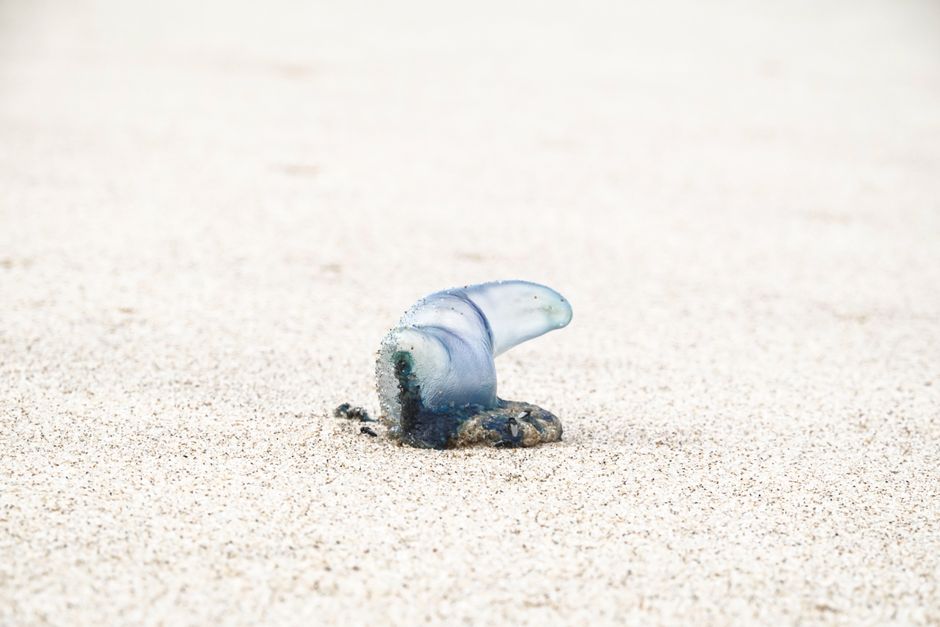
For non-lethal temperate species, such as bluebottle jellyfish (a type of Portuguese man-o'-war), vinegar is contraindicated because it can cause remaining stinging cells to discharge. Instead, the primary treatment for bluebottle stings, stingray wounds, and sea urchin punctures is hot water immersion.
The medical consensus in Guideline 9.4.5 - First Aid Management of Marine Envenomation recommends bathing the affected area in hot water (ideally 45°C or 113°F) for 20 minutes. This heat level denatures the heat-sensitive proteins in the marine venom, neutralizing the pain. Under this protocol, cold or ice packs should only be used if hot water is unavailable, or for non-venomous cuts and swelling.
Emergency action plans for remote breaks and shallow reefs
Surfing a sandy beach break close to a urban center like Boston is logistically straightforward. However, traveling to remote breaks or shallow tropical reefs requires a dedicated, documented emergency action plan (EAP). This plan must specify extraction points, emergency contact numbers, and the precise roles of every staff member on site.
For travelers joining the Puerto Rico Retreat — Boston Surf Adventures, safety relies on the deep localized knowledge of the team. The retreat operates in Rincon, Puerto Rico, which features world-class reef breaks. Surfing over shallow reef structures presents hazards such as sharp fire coral, sea urchins, and volcanic rock.
To manage these risks, the coaching staff includes Rincon locals who have surfed and navigated these specific breaks their entire lives. They coordinate daily venue analyses, mapping out safe entry and exit channels through the reef depending on tide height and swell direction.
A professional EAP also establishes exact extraction protocols. If a surfer suffers a deep reef cut or a spinal injury, coaches must know the fastest route to transport the injured person from the water to a flat, accessible beach area where emergency services can take over. They must have direct communication links to local medical facilities, bypassing the delays of standard emergency dispatch systems.

Common mistakes and myths in marine first aid
Many surf schools rely on standard land-based first-aid knowledge, which can lead to dangerous errors in marine environments. Understanding what not to do is just as important as knowing active rescue techniques.
Relying on generic land-based first aid kits
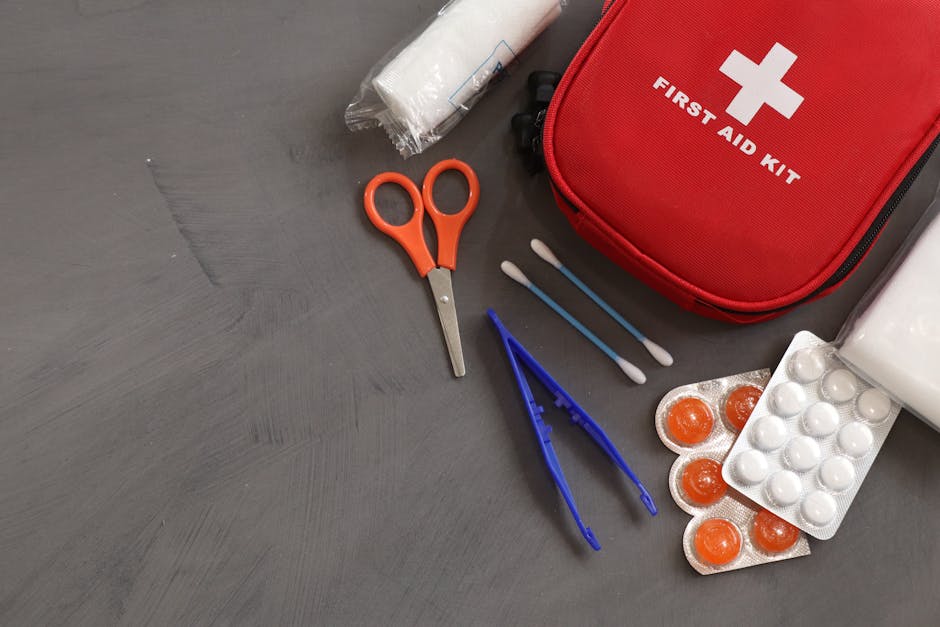
A standard workplace first-aid kit is designed for office or construction site injuries. It contains adhesive bandages, gauze, and antiseptic wipes, but lacks the specialized tools required for marine hazards.
An ocean-ready kit must undergo a regular First Aid Kit Audit and Restocking program. This service ensures that containers are water-resistant, seals are intact, and the contents are specifically tailored to the local environment.
- Urchin spine removal: Fine-tip tweezers and sterile needles to remove embedded spines without crushing them.
- Venom neutralization: Insulated thermoses filled with hot water and bottles of household vinegar.
- Deep lacerations: Compression bandages and marine-grade wound closure strips to manage reef cuts before hospital transit.
- Resuscitation: Pocket masks or barrier devices for safe rescue breathing during drowning protocols.
Applying fresh water or ice to the wrong stings
The most common marine first-aid myth is that fresh water or ice is a universal cure for stings. This mistake can worsen the injury.
Fresh water is hypotonic compared to ocean water. When applied to jellyfish stings, the change in salinity causes osmotic shock, triggering unfired stinging cells to discharge more venom.
Similarly, applying cold or ice packs to venomous fish or stingray wounds is ineffective, as cold does not break down the heat-sensitive toxins. Coaches must use clean saltwater to rinse away remaining tentacles and then apply the correct temperature-based treatment.
Vetting your next surf school or retreat
Before booking a surf lesson, weekend clinic, or international trip, ask the provider detailed questions about their safety protocols. Do not accept vague assurances of "we have a first aid kit."
Ask the following diagnostic questions to verify an outfitter's emergency readiness:
- What specific safety and water rescue certifications do your in-water coaches hold?
- Do you have a written Emergency Action Plan (EAP) for each surf break you visit?
- How do your coaches manage marine envenomations, and do they carry hot water and vinegar to the beach?
- What is your student-to-coach ratio, and are your staff trained in custom rescue techniques?
At Boston Surf Adventures, these safety standards are built directly into the curriculum. With maximum class sizes of six students for weekend camps, and five or fewer students per coach for youth programs, instructors maintain direct supervision at all times.
Choosing a program that prioritizes structured marine first-aid protocols ensures you can focus entirely on your surf progression. By verifying these details beforehand, you protect your safety and gain the confidence needed to enjoy the ocean. If you are looking for a highly structured, safe, and professional learning environment, consider checking out the safety-first coaching programs offered at the Boston Surf Adventures homepage.


