The surf school rip-current safety audit: vetting your instructor's protocols

Boston Surf Adventures

Rip currents create more rescues and coastal emergencies than any other beach hazard, yet many aspiring surfers book lessons without verifying how their coaches assess the ocean. To address this risk, Boston Surf Adventures provides a systematic auditing framework designed to verify an instructor's real-time water safety protocols. A proper safety audit checks for formal qualifications such as an International Surfing Association (ISA) certification, active open-ocean lifeguard training, and localized daily hazard mapping. Ensuring these strict operational standards are met at locations like Nahant Beach or Rincon protects surfers from preventable open-water emergencies.
Evaluating school credentials and coach training
Every surf school claims to prioritize safety, but few back that claim with third-party verification. In the surfing industry, the barrier to entry is surprisingly low. A local permit often requires nothing more than a fee and a parking agreement, leaving student safety in the hands of an unverified business. To protect yourself or your family, you must demand proof of formal credentials.
The foundational standard for any reputable surf school is an official school-level accreditation from the International Surfing Association (ISA). Boston Surf Adventures operates as the only ISA Certified Surf School in New England. This credential means the safety procedures are regularly audited against rigorous global standards rather than left to local guesswork. The ISA Surf Manual dictates that first-day instruction must focus heavily on equipment choice, safety briefings, and ocean emergency protocols.
You should also verify individual coach certifications. A common trap is assuming any coach wearing a lifeguard shirt has ocean rescue capabilities. Standard pool lifeguarding is insufficient because pool environments have static boundaries and crystal-clear water. Open-ocean coaching requires active surf lifeguard and CPR certifications. Coaches need to be skilled in deep-water rescues, spinal injury management, and immediate ocean-based first response.
Finally, ask if the program utilizes custom rescue protocols tailored to local hazards. At Boston Surf Adventures, founder Grant Gary uses his 15 years of professional teaching experience to train all coaches in custom rescue techniques designed specifically for the unique topography of New England beaches. This training ensures that instructors are prepared for the rocky shelf entries, variable tides, and shifting sands that define the region. You can learn more about how to evaluate these protocols in our guide on how to audit a surf school's shorebreak safety and entry protocols.
The pre-lesson beach mapping protocol
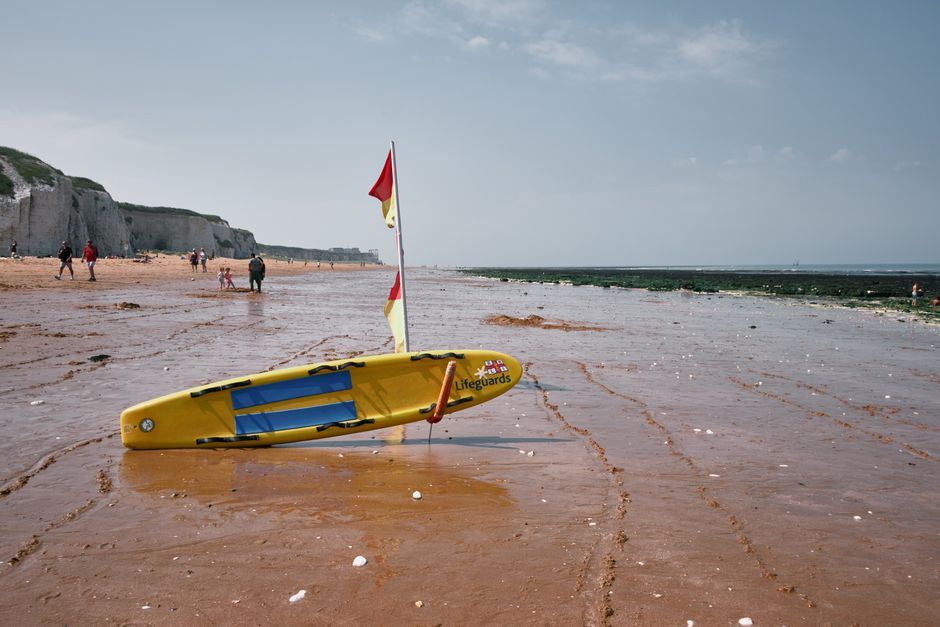
Rip currents do not remain stationary; they shift constantly with the movement of sandbars and tidal flows. Because of this variability, a safe surf school cannot rely on a static safety plan. Instead, instructors must conduct a physical assessment of the coastline before every single lesson. At Boston Surf Adventures, this takes the form of a structured pre-lesson assessment of the sand and water.
The International Life Saving Federation (ILS) points out that rip current behavior is complex and highly variable. This means avoidance and swimming near a supervised area are your primary defenses. If your instructor does not gather the group on the sand to physically point out the day's conditions, they are failing a basic safety duty.
Visual indicators of rip currents
A qualified surf coach must teach you how to spot a rip current before you touch the water. Rip currents are strong channels of water flowing away from the shore, often carrying sand and debris with them. During the on-land briefing at Nahant Beach, coaches should point out the specific visual tells of an active rip.
To identify a rip, look for a break in the incoming wave pattern where waves are not breaking. This flat, dark water looks calm, which often tricks inexperienced swimmers into thinking it is the safest place to enter. You may also notice discolored, sandy water churning outward, or foam and seaweed moving steadily away from the beach.
Establishing the safe zone
Once the hazards are identified, the coach must establish clear physical boundaries for the lesson. This is particularly important on the North Shore, where tidal swings can exceed nine feet, radically altering the behavior of the surf zone within a couple of hours. A professional surf school will designate a specific zone for paddling, catching waves, and exiting the water.
Coaches should clearly explain the designated escape zone if you drift. If you are caught in a rip, the standard safety directive is to remain calm, float, and paddle parallel to the shore until you are out of the current. Your instructor must designate physical landmarks on the beach, like a lifeguard tower or a specific beach entrance, to serve as visual anchors so you can monitor your drift in real-time.
Comparing surf instruction options by safety standards
When choosing where to learn to surf, many people make decisions based solely on price or schedule convenience. However, the structure of the business directly impacts the level of safety oversight you receive. Independent instructors, unaccredited seasonal camps, and certified schools operate under completely different safety guidelines.
To help you weigh these options, we have outlined the standard trade-offs of each format below.
| Instruction type | What it's best for | Price range | Key tradeoff |
|---|---|---|---|
| Independent local instructor | Flexible scheduling and informal 1-on-1 coaching | $50-$100 | Often lacks formal rescue equipment or governing body oversight |
| Standard seasonal surf camp | Group learning and basic introduction to the sport | $75-$150 | May employ uncertified seasonal staff and operate with higher student-to-coach ratios |
| ISA Certified Surf School | Rigorous, standardized safety and accelerated progression | $100-$300 | Requires booking in advance due to strict capacity limits |
Independent instructors offer convenience but frequently lack the standardized emergency gear required for deep-water rescues. Standard seasonal camps often suffer from high student-to-coach ratios, meaning a single teenager may be responsible for eight or ten children in the water at once. Choosing an accredited program like Boston Surf Adventures ensures that your safety is backed by international guidelines, active lifeguard-certified staff, and professional-grade equipment.
Required safety equipment and ratios
Even the most thorough pre-lesson mapping protocol is useless if a coach cannot physically manage their group in a crisis. When an emergency happens, seconds matter. A surf school must have both the personnel and the physical equipment ready to execute a rapid water rescue.
According to the New Zealand Water Skills program, rip currents are responsible for more rescues and beach emergencies than any other coastal hazard. This statistic highlights why professional safety ratios and rescue gear are non-negotiable standards for any coastal lesson.
Enforcing student-to-coach limits
A low student-to-coach ratio is the single most important factor in preventing accidents. When a single coach is responsible for too many swimmers, their ability to scan the water and recognize early signs of distress is severely compromised. Many unaccredited schools stretch their ratios to maximize profit, leaving a lone instructor to watch over large groups spread across a wide surf zone.
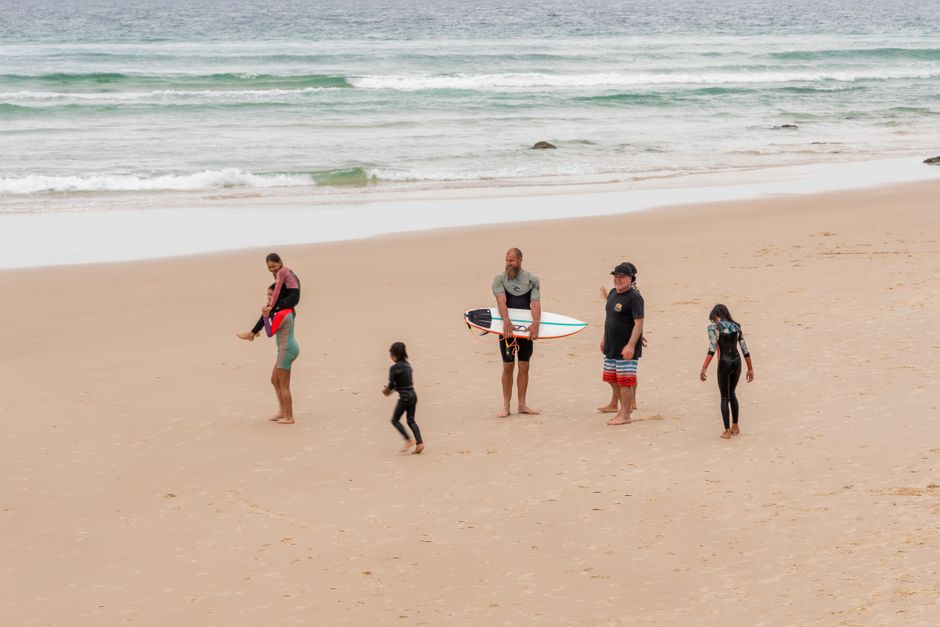
To keep lessons safe and focused, Boston Surf Adventures strictly limits its group sizes. The Kids Camp sessions at Nahant Beach maintain a maximum of 5 students per coach. This small ratio ensures that every child receives constant, individualized supervision from an active, lifeguard-certified coach. In our weekend adult programs, we maintain similarly small cohorts to ensure that no student is left unmonitored in the water.
Rescue boards and buoyancy
Physical gear is the second half of the safety equation. A standard surfboard is designed for riding waves, not for executing rescues. A professional instructor must always have dedicated rescue equipment immediately accessible on the beach or in the water.
A professional surfing and bodyboarding risk assessment requires instructional staff to have dedicated rescue boards available at all times. These boards are typically larger, highly buoyant softboards equipped with safety handles, allowing a coach to quickly paddle out, secure multiple conscious or unconscious swimmers, and transport them safely back to shore. Additionally, wearing a thick wetsuit provides crucial insulation against cold North Atlantic waters and adds significant natural buoyancy, helping students float easily if they become separated from their surfboards.
Before you book a lesson with any provider, make sure to ask tough questions about their water safety credentials, emergency response plans, and actual student-to-coach ratios. Do not rely on marketing claims; check the school's paperwork and verify their active certifications. You can find more tips on what to look for in our guide to the surf school liability waiver audit: red flags and safety warranties.
If you are ready to learn to surf in New England under the guidance of certified professionals, visit the Boston Surf Adventures website to find a program that prioritizes your safety and real skill progression.


