The surf school severe weather audit: verifying lightning and squall protocols

Boston Surf Adventures

When storm clouds build over the Atlantic, booking a session with an unverified provider exposes you to unnecessary risks in the open ocean. Safety in the surf zone requires objective, pre-established evacuation triggers rather than a coach's gut feeling. By checking for strict adherence to the 30/30 lightning rule, wave height limits, and professional International Surfing Association (ISA) certifications, you can confidently select a safe program. Our analysis of how to vet a surf school's safety credentials before booking explains exactly how to audit these standards.
Managing lightning risks at Boston surf schools
When assessing outdoor program safety, the most critical parameter is how the staff responds to an approaching electrical storm. Operating on a gut feeling is a recipe for disaster. Professional programs utilize the universally recognized 30/30 rule to govern beach closures and water evacuations.
Under this standard, if the time between a lightning flash and its corresponding thunderclap is 30 seconds or less, the storm is within 10 kilometers. This threshold requires immediate water evacuation and beach closure. You can review the exact mechanics of this standard protocol in the SLSQ Adverse Weather Lightning Procedure.
A surf school's emergency protocol must outline these specific steps:
- Immediate water evacuation the moment the flash-to-bang count drops to 30 seconds or less.
- Mandatory beach clearing and removal of all training flags or shore gear.
- Sheltering students inside hard-top vehicles or permanent brick-and-mortar buildings.
- Waiting a full 30 minutes after the last audible thunder or visible flash before returning to the water.
As outlined in the Surf Life Saving NSW Lightning Policy, waiting 30 minutes ensures the storm has traveled at least 20 kilometers away from the training area. Small pop-up tents, open beach canopies, and standing under isolated trees do not offer safe shelter. Lightning is attracted to tall, isolated objects, making an open beach highly hazardous.
It is also vital to distinguish between normal rainy days and severe weather. Standard rainfall does not compromise safety. For example, Tybee Surf Lessons operates rain or shine but enforces immediate evacuation the moment lightning is detected. At Boston Surf Adventures, rainy-day lessons proceed as planned, but we monitor regional weather systems constantly to anticipate electrical threats.
The geography of Massachusetts beaches adds unique risks during summer storm fronts. Cold water temperatures can clash with warm humid air, generating rapid, localized squalls. These weather systems bring sudden wind shifts and drop visibility within minutes. A school must use digital radar monitoring to track incoming fronts before they reach the coastline.
Do not accept vague answers when questioning an instructor about storm safety. Ask where they take students if a storm hits Nahant Beach or Cape Cod. If they point to a fabric canopy or say they wait it out under a lifeguard stand, do not book. A professional school will have designated vehicles or local indoor partnerships ready to secure all students.

Shifting from open swell to safe whitewater zones on the North Shore
Sudden ocean swells can quickly turn a beginner lesson into a dangerous struggle against heavy waves. A responsible surf school must have pre-determined wave-height caps for introductory students. If the surf exceeds these safety thresholds, the program should transition to a safer alternative rather than pushing unprepared students into the impact zone.
For entry-level surfers, the standard safety ceiling is comfort in waves 3 feet and under. When waves exceed this height, the risk of board collisions and exhaustion rises dramatically. Rather than canceling the session entirely, professional schools adjust the location of the lesson to the inside whitewater.
| Surf Condition | Beginner Strategy | Rationale | Safety Zone |
|---|---|---|---|
| Under 3 feet | Open-ocean riding | Low-velocity peeling waves allow clean pop-up training | Inner sandbar |
| Over 3 feet | Whitewater transition | High buoyancy foam waves provide momentum without deep-water risks | Waist-deep water |
| Heavy storm swell | Land-based theory or cancellation | Extreme currents and shorebreak make water entry unsafe | Shore/Beachfront |
During our youth camps at Nahant Beach, we monitor wave heights daily. When the outer reef or sandbar begins breaking too heavily, our instructors move the campers directly into the waist-deep whitewater zone. This transition keeps students safe while still allowing them to build fundamental balance and control.
You can check the details of this adaptive approach by exploring the weather policies on our Surf Camps in Boston and New England — Boston Surf Adventures page. This ensures that younger surfers are never exposed to breaking wave energies they cannot handle. The difference between open-face waves and reformed whitewater is vast.
Open waves pack massive hydrostatic pressure and break in deep water, where weak swimmers can panic. Reformed whitewater travels over shallow sandbars, providing a consistent, low-energy push. This allows students to practice their pop-up timing without fighting deep currents.
A high-quality program should have a clear policy on wave limits. Ask how they handle a rising swell during high tide. At Nahant Beach, the wide sandy beach absorbs wave energy differently at high and low tides.
An experienced director will adjust the lesson start time to match the safest tide window rather than forcing a session during peak surge. This level of planning distinguishes professional coaching from simple equipment rentals.
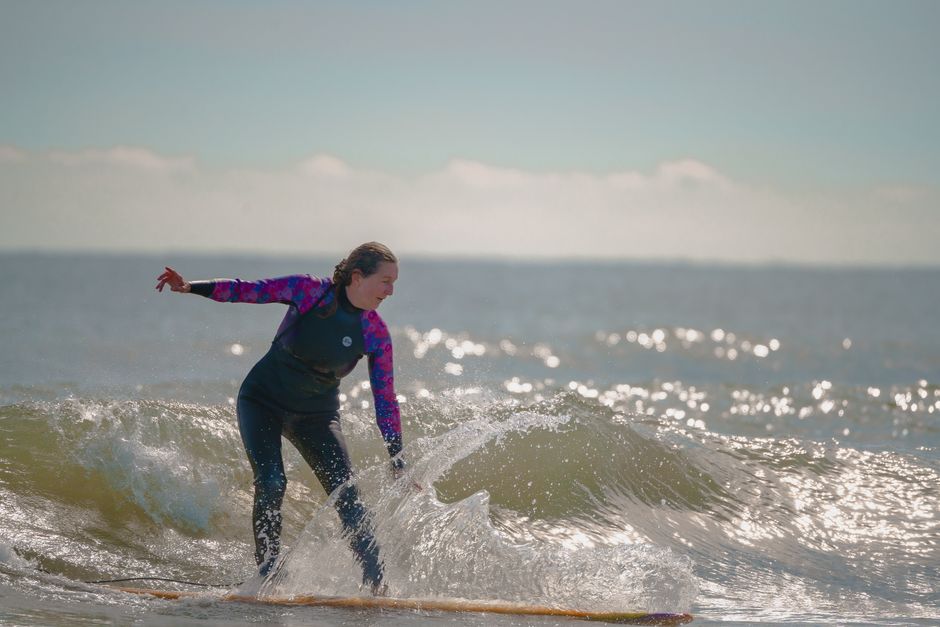
Emergency action plans and visual student tracking at Boston beach breaks
A sudden squall can reduce visibility in seconds, making it difficult for coaches to keep track of their students. To manage this hazard, a surf school needs a structured Emergency Action Plan (EAP) combined with high-visibility gear. Visual tracking is the first line of defense during an evacuation.
Safe camps require all participants to wear standardized, high-visibility rash guards. According to the Cowabunga Surf Camp Emergency Procedures, mandatory rash guards allow beach staff to instantly distinguish their students from recreational swimmers. This visual marker is critical when multiple beachgoers are fleeing a sudden storm.
Required coach certifications
A standard first-aid card is not enough for open-ocean instruction. When auditing a school, confirm that every in-water instructor holds an active ocean lifeguard certification.
At Boston Surf Adventures, our founder Grant Gary uses his 15 years of professional teaching experience to train coaches in custom rescue techniques. Every single summer camp coach is a certified lifeguard, and all land-based support staff are CPR certified. This level of training ensures that if a squall hits, the staff can execute physical rescues without hesitating.
On-beach communication chains
In a loud surf zone, vocal instructions are useless. Instructors must use standardized hand signals and whistles to coordinate water clearances. During an emergency, the instructor closest to the student raises a hand to alert the beach director.
While the director responds, other coaches gather the remaining students and guide them out of the water. Professional schools maintain a strict student-to-coach ratio (such as our 5:1 ratio for youth camps) to make headcounts instantaneous. Low group sizes ensure that no child is left unattended.
If an instructor is managing eight or ten students alone, they cannot maintain line-of-sight supervision during a sudden weather shift. Group size is directly tied to evacuation speed.
Debunking common weather myths in the New England surf category
Many families assume that a rainy day means surf camp is canceled. This misconception often leads to confusion on stormy mornings. Surfing is a water sport, and getting wet from rain does not impact safety as long as wind and lightning thresholds are met.
Another common mistake is assuming that municipal lifeguards are responsible for your safety during a private lesson. A commercial surf school must never offload its rescue responsibilities onto town lifeguards. A professional school operates as an independent safety unit with its own extraction protocols.
This self-reliance is why we maintain New England's only ISA Certified Surf School status. The International Surfing Association (ISA) sets strict guidelines for safety and instruction that go far beyond standard recreational permits. When choosing a program, ask if their instructors are certified by this global governing body.
If you want to compare local regional safety standards, our detailed breakdown of Boston vs Cape Cod vs Rhode Island: A 2026 guide to New England surf schools outlines what to look for before committing to a program. Municipal lifeguards are trained to scan wide zones of the beach, watching hundreds of swimmers at once.
They are not focused specifically on your surf group. A dedicated surf coach must remain within arm's reach of their students in the water. They should be the first responder to any incident, utilizing their own specialized rescue boards.
Furthermore, storm runoff can affect water quality after heavy rains. A responsible local school monitors water quality reports from local municipal boards. If runoff creates unsafe swimming conditions, they will cancel the lesson immediately.
Never trust a school that ignores local water quality advisories just to run a session. Safety requires a holistic look at environmental conditions, from cloud cover to microscopic bacteria.
Booking with a safety-first Boston surf school
Protecting your family on the water starts with asking the right questions before you book. A reputable surf school will gladly share their documented storm triggers, staff certifications, and emergency communications plans. If an operator hesitates to explain their severe weather evacuation rules, it is time to look elsewhere.
Before you sign up for a camp or private lesson, use this quick safety audit checklist:
- Verify the school maintains a maximum 5:1 student-to-coach ratio.
- Confirm all in-water coaches hold active open-ocean lifeguard certifications.
- Ensure they follow a documented lightning evacuation plan using the 30/30 rule.
- Check if they supply high-visibility rash guards to identify students in the water.
- Confirm the business is certified by the International Surfing Association.
To see these rigorous safety protocols in action, visit the Boston Surf Adventures homepage or explore our Surf Camps in Boston and New England to book your next session with peace of mind. Our team is committed to delivering world-class surf instruction without compromising on water safety.


