Most new surfers assume that if a school offers a 2 PM time slot, the ocean must be safe and surfable at 2 PM. Boston Surf Adventures built this tide-window audit to show you exactly how to verify whether a surf program schedules around safe local sandbar mechanics or just calendar convenience. The quickest way to spot an unreliable school is checking if their daily lesson times shift with the tide windows, or if they sell rigid hourly blocks regardless of water depth. The best programs dictate their availability by the ocean, ensuring you actually catch waves instead of fighting dangerous currents.
Symptoms of a broken surf calendar
Think about the typical beach rental company. They operate much like a boardwalk bicycle rental shop. You pay your fee, they hand you a plastic leash and a massive soft-top board, and they point you toward the water. It does not matter to them if the beach is currently experiencing a dumping shorebreak or a dry sandbar. They are in the business of volume, not education.
If you are booking a lesson at a random beach shop, the booking software likely offers you slots on the hour, every hour, from 9:00 AM to 5:00 PM. This is the first symptom of a convenience-based business model. The ocean does not operate on a 9-to-5 schedule.
When you book an appointment with a company that schedules this way, you are playing Russian roulette with ocean bathymetry. You might end up paddling through deep, stagnant water where waves refuse to break, or worse, you could be dragged across a shallow sandbar by a heavy closeout.
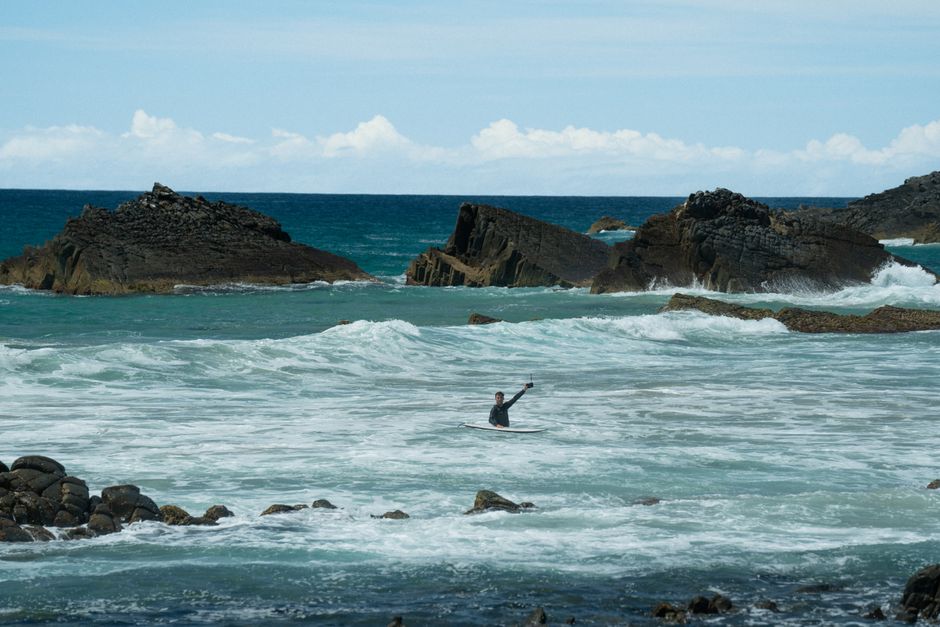
Forcing a beginner into the water during the wrong tide stage is a recipe for ocean anxiety. When waves break directly on the dry sand, the physical impact can cause immediate injury. A professional surf school understands that the ocean changes every single hour, and they adjust their operations accordingly.
The mechanics of beginner safety and local sandbar bathymetry
To understand why scheduling is the most critical element of a successful surf lesson, you must understand the physics of how a wave breaks. Waves are not just moving water; they are pulses of energy traveling through the ocean. When this energy moves from deep water into shallow water, the bottom of the wave slows down due to friction with the seafloor, while the top of the wave continues forward at its original speed. This speed differential causes the wave to crest, destabilize, and eventually break.
The exact depth at which a wave breaks is determined by bathymetry, which refers to the underwater topography of the ocean floor. At beach breaks, this topography is composed of shifting sandbars. Because tide levels in the Greater Boston area can swing by over nine feet in a single six-hour cycle, the depth of the water over these sandbars is constantly shifting. A sandbar that produces gentle, rolling three-foot waves at mid-tide can become completely flat at high tide because the water is too deep for the wave energy to touch the bottom.
Conversely, when the tide drops to dead low, the water over that same sandbar may become too shallow. Instead of rolling gently, the incoming wave energy hits the shallow sand suddenly, causing the wave to break all at once in a heavy, dumping wall of water known as a closeout. For beginner surfers, these low-tide closeouts are frustrating and dangerous, leading to rapid fatigue and potential impact.
| Tide Stage | Water Depth Over Sandbar | Wave Behavior | Beginner Safety & Progression |
|---|---|---|---|
| Dead Low | Extremely shallow | Heavy, dumping closeouts | High risk of impact; rapid fatigue; board damage |
| Low-to-Mid (Pushing) | Moderate depth | Consistent, rolling whitewash | Optimal; safe water depth; maximum wave count |
| Mid-to-High | Deep water | Soft waves; slow to break | Good for learning paddling, but waves may lack energy |
| Dead High | Deepest water | Refraction; shorebreak; no break | High risk of shorebreak injury; impossible to catch waves |
A surf school that ignores these local sandbar mechanics is placing your progress at risk. If you are standing around waiting for a wave that cannot physically break, you are not learning. You are just getting cold.
Vetting the calendar-first scheduling trap
Many operations prioritize administrative ease over student progress. They configure their websites with off-the-shelf booking tools that display identical time slots seven days a week. This calendar-first scheduling model is a warning sign for anyone looking for legitimate surf instruction.
Rigid hourly booking blocks
When a surf education program sells standard 60-minute blocks without referencing tide cycles, they are selling convenience, not progression. In a standard hourly model, the instructor has to take you out regardless of whether the water is knee-deep or twelve feet deep. You end up wasting your energy standing in a stagnant tide pool or getting battered by a shorebreak.
If you want to learn to surf effectively, you need a program that evaluates the day's conditions beforehand. You can read more about evaluating training models in our guide on hourly surf lessons vs. progression-based coaching: how to evaluate training models.
Standardized booking software without manual tide checks
Many commercial booking systems do not integrate marine forecasts. Modern platforms like Viking Bookings offer a tide scheduler feature that allows schools to manually toggle available slots based on local tide charts, but many operators refuse to use these features. They fear losing bookings on "bad-tide" hours.
They prefer to keep the calendar wide open and hope the customer does not notice the poor wave quality. When you audit a school, look at their booking calendar. If you see the exact same slots available every single day of the month, they are likely ignoring the daily shift of the high and low tide cycles.
The surf school tide-window audit checklist
Before booking, you must run a quick diagnostic on the business's operational standards. A professional surf program will openly discuss their scheduling rules. If they hesitate or give vague answers, you are dealing with a business that prioritizes volume over your safety and progress.
- Verify if their daily lesson times shift by approximately 50 minutes each day to match the shifting lunar tide cycle.
- Ask if they run lessons during peak high tide at their specific beach.
- Inquire if they have separate tide requirements for young children compared to adults.
- Ask if their instructors perform a daily risk assessment before entering the water.
Asking about high tide exclusions
Ask the program director directly: "Do you run beginner lessons during dead high tide?" A legitimate beach-break operator will have a clear, immediate answer.
For example, Glide Surf School in the UK maintains a strict policy where no surf lessons or equipment rentals take place within 2.5 hours on either side of high tide to protect customer safety and prevent gear damage. If a school tells you that any tide is fine for beginners, they are prioritizing credit card transactions over your physical safety. You should also verify if they have legal right-of-way on the sand by reading about the surf school permit audit: how to verify legal beach access.
The low-tide advantage for kids
Water depth is not just about wave shape; it is a primary safety factor, especially for younger students. Legitimate operations alter their schedules based on the physical profile of the student.
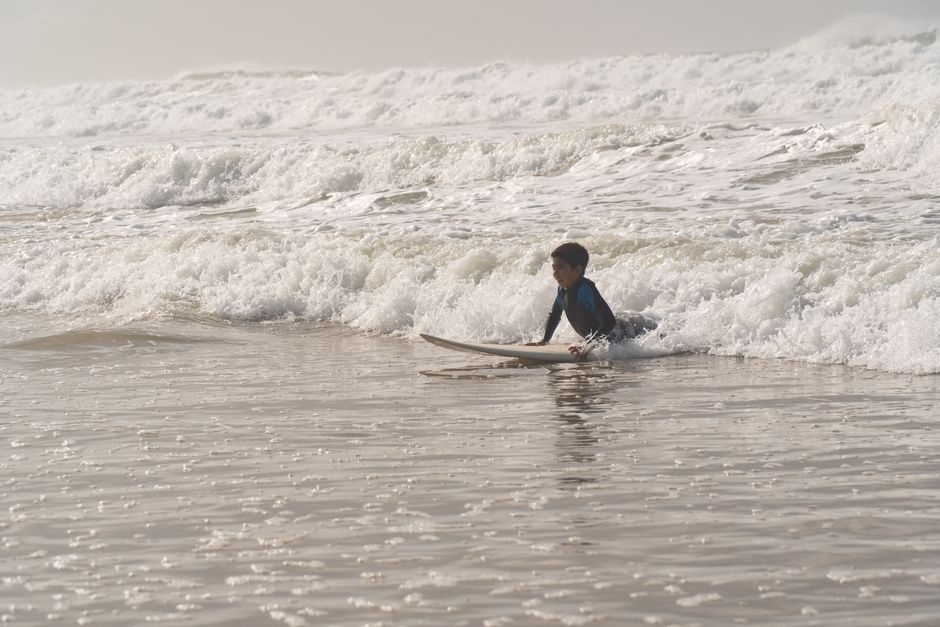
Industry leaders like Learn to Surf LA specify that lessons for younger children should be scheduled during low tide windows because waves and currents affect smaller bodies much more severely than adults. A large tide swing might represent a minor inconvenience for a tall adult, but for a young child, it can make standing up in the surf zone entirely impossible.
Technical misconceptions in coastal surf education
Some schools defend their rigid schedules by claiming that "any waves are good waves for learning." This is a myth that stalls student progress and breeds ocean anxiety.
The whitewash misconception
Many low-quality programs claim that because beginners are only riding the "whitewash" (the broken foam of a wave), the tide does not matter. This ignores the basic physics of the surf zone. While it is true that beginners start in the foam, the quality, speed, and safety of that foam are still entirely dependent on water depth.
Professional surf programs like Odyssey Surf School manually assess tides and waves daily to ensure all beginner lessons occur strictly in waist-to-chest deep water. If the tide is too high, the whitewash disappears and turns into a dangerous backwash that slams against seawalls, cliffs, or rocky shorelines.
Assuming fixed schedules mean professional organization
Some consumers mistake a fixed, unchanging schedule for professional organization. They see a camp that runs from exactly 9:00 AM to 1:00 PM every day and assume it must be a well-oiled machine. At certain beaches, specialized bathymetry allows for this.
For example, Boston Surf Adventures operates its weekend surf camps at Nahant Beach, where the unique shape of the local sandbars allows for highly consistent, safe conditions during specific morning hours. However, for private lessons and specialized coaching, a professional school must remain flexible.
Our founder, Grant Gary, a former school teacher with over 15 years of teaching experience, structured our curriculum to ensure students are never forced into dangerous or unproductive water conditions. As the only ISA Certified surf school in New England, we focus on maximizing your wave count. While a student fighting a high-tide shorebreak on their own might catch only 5 waves all weekend, a coached student in a structured tide window can easily catch 50 to 70 waves. This massive wave count discrepancy is the difference between plateauing and actually progressing.
Booking your next progression session safely
When you are ready to invest your time and money into learning how to surf, do not let a convenient calendar application dictate your safety. Look for programs that respect the ocean's cycles and design their lessons around real-time marine forecasts.
Whether you are looking for local summer programs or international trips like our winter retreats in Rincon, Puerto Rico, ensure your instructors put bathymetry before booking convenience.
If you want to experience the difference that professional scheduling and dedicated ocean safety makes, check out the upcoming dates for our weekend programs. You can secure your spot and start learning the right way by visiting the Boston Surf Adventures surf camps page.