The surf school video audit: technical coaching vs souvenir photos

Claude

Paying $150 for a GoPro video of your first wave looks great on social media, but a three-minute highlight reel does nothing to fix your pop-up mechanics. To help surfers avoid wasting money on passive filming, Boston Surf Adventures developed The surf school video audit: what to check before you book to establish a rigorous standard for technical progression. A high-quality instructional program requires the 100% capture standard—recording every wave in a dedicated session block—paired with immediate, same-day biomechanical feedback from ISA-certified coaches. While many commercial operators sell digital keepsakes, true progression clinics, like those at our winter retreats in Rincon, Puerto Rico, use deliberate video logs to systematically correct stance errors and eliminate the intermediate plateau.
The capture standard: highlight reels vs session logs
When you pay for video coaching at a surf school, you are not paying for a souvenir. You are paying for data. Most commercial surf schools treat videography as a marketing add-on to their standard offerings. They might have an intern with a smartphone standing on the beach for twenty minutes, or a coach carrying an action camera on their wrist. This setup results in a compilation of your best three rides, which is the least useful material for technical improvement.
To actually correct a flawed stance or improve your wave selection, a coach needs to see your mistakes. They need to analyze the waves you fell on, the waves you missed entirely, and the moments where your paddle timing was slightly off. At Boston Surf Adventures, we anchor our advanced training in the 100% capture standard. This protocol means a dedicated camera operator remains on the beach for the entire duration of the coaching block, ensuring that every single wave attempt is recorded in high definition.
If a surf school cannot promise that they will record every wave during a designated coaching window, they are offering a lifestyle photography service rather than a technical coaching program. A true technical progression program logs the entire session.
| Video capture method | Best for | Technical detail | Key tradeoff |
|---|---|---|---|
| Souvenir Package | Vacation memories | Low (raw files, highlights) | Misses failed attempts and early stage paddle setups |
| Automated Beach Camera | Solo tracking | Very low (distant, grainy) | Obscures foot placement and body mechanics |
| 100% Capture Standard | Skill progression | High (4K/60fps close-ups) | Requires dedicated shore-based camera operator |
| Wide-Angle Action Camera | Novelty point-of-view | Medium (distorted proportions) | Alters perspective of body posture and stance width |
Analyzing your errors is how you progress. If you nose-dive, you need to see exactly why it happened. Was your weight too far forward on the deck, or did you hesitate during your final paddles? A coach cannot diagnose these factors if the camera operator stops recording the moment your board pearls.
Camera positioning and what it actually reveals
The equipment used to capture your session directly impacts the quality of the feedback you receive. Many surf schools rely on quick, convenient camera solutions that actually hinder biomechanical analysis. To evaluate a coaching program, you must look at how and where their cameras are positioned.
The GoPro problem
Nose-mounted action cameras are popular because they are cheap and easy to manage. However, wide-angle lenses distort human proportions. On a board-mounted camera, your front leg looks disproportionately large while your rear leg appears tiny. Because the camera angle is looking upward from the nose of the board, your torso is completely out of scale.
This perspective distortion makes it impossible to accurately track your center of gravity. A coach cannot see if your hips are properly rotated or if your weight is centered over the stringer. Additionally, looking at a lens mounted inches from your feet often causes students to stare downward, reinforcing the bad habit of looking at the board rather than looking down the line of the wave.
The automated beach camera blind spot
Automated beach cameras and static tracking systems suffer from a different issue: distance. Because these systems are positioned far from the lineup, the resolution degrades significantly when a coach zooms in to inspect your posture.
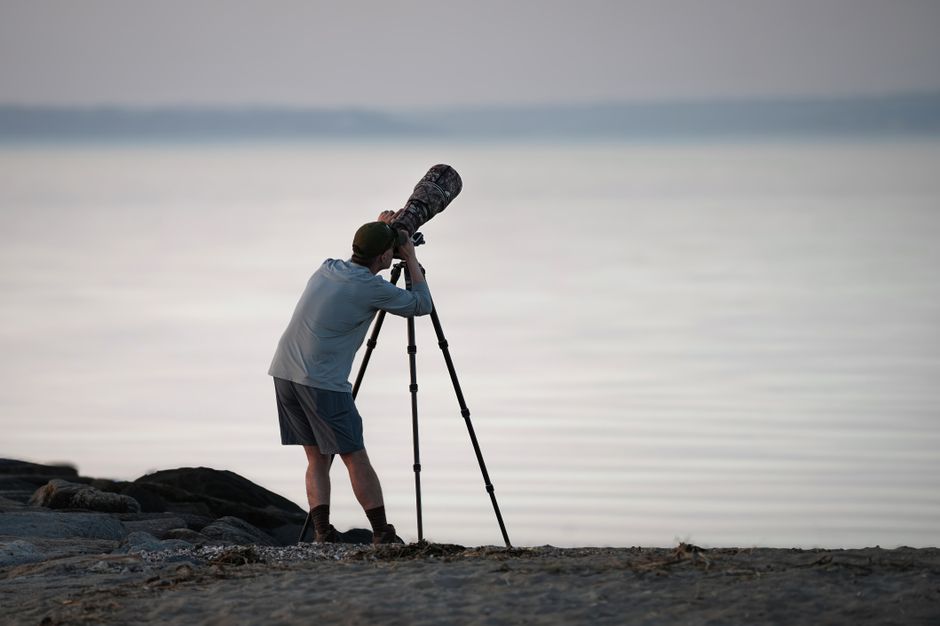
To get a clear picture of your mechanics, you need high-resolution, perpendicular footage shot from the shoreline. This perspective is covered in our guide on how frame-by-frame video analysis fixes the stance errors stalling your progress. At Boston Surf Adventures, we use high-magnification telephoto lenses from beach-based vantage points. This side-on angle clearly reveals hip rotation, back-foot placement, and knee compression, providing the clear visual evidence needed to correct persistent bad habits.
Who is running the review session
Footage is only as valuable as the person interpreting it. Having 4K video of your surf session does nothing if the person analyzing the clips cannot spot the underlying movement patterns causing your mistakes.
Beach interns vs ISA-certified coaches
Many commercial surf operations hand off video review duties to seasonal staff, beach interns, or the nearest available hand. These individuals often point out the obvious. Telling a surfer to bend their knees or stand up faster is not coaching; it is simply describing what happened.
A professional progression program requires coaches certified by the International Surfing Association (ISA), the worldwide governing body for the sport. An ISA-certified coach understands the precise mechanics of the pop-up and the physics of board control. They can look at a single frame and identify how a misplaced hand on the rail or a stiff upper body is disrupting your balance.
Our founder, Grant Gary, is a former school teacher with over 15 years of professional teaching experience. Having taught thousands of students, he structured the Boston Surf Adventures curriculum around proven educational principles. Translating complex visual data into clear, actionable adjustments requires distinct teaching expertise.
When vetting a surf school's video program, look for these specific organizational credentials:
- The head coach or analyst holds a current ISA coaching credential.
- Review sessions are structured with low student-to-coach ratios to guarantee individual focus.
- The school provides a physical or digital progression journal to track technical cues over time.
- Coaches isolate a maximum of two biomechanical focus points per session to avoid cognitive overload.
The timeline: when feedback actually matters
The timing of your video review determines its effectiveness. If you receive your video files days or weeks after your session, the opportunity for rapid physical correction is gone. Your muscle memory has already settled, and you cannot easily connect the visual feedback to the physical sensations you felt in the water.
Same-day analysis vs post-trip downloads
Many surf camps compile your footage and send a download link a week after you return home. While this is a nice way to remember your trip, it is useless for active skill development. For video feedback to work, the review must happen in a tight, continuous loop while your physical memory of the session is still fresh.
At our winter Puerto Rico Retreat — Boston Surf Adventures in Rincon, we structure our daily schedule to maximize this feedback loop. We film every single wave caught during the two-hour morning session. Between our morning and afternoon surf sessions, we hold a structured video analysis run by Grant Gary.
During this mid-day session, we break down your waves and identify exactly two simple mechanical adjustments for you to focus on. You then head right back into the water for the afternoon session with those two cues fresh in your mind. This rapid cycle of action, feedback, and immediate correction is detailed in our breakdown of the surf video analysis audit: what actually improves your stance.
Taking action: making your next session count
If you are planning to invest in your surfing development, do not settle for a basic photo package. Ask the school tough questions before you book your sessions.
Ask if they employ a dedicated camera operator on the beach or if the coaches are trying to film while managing safety in the water. Confirm whether the reviews are led by ISA-certified instructors or if you will simply receive raw files to analyze on your own. Finally, ask when the reviews take place. If they cannot offer same-day, structured feedback sessions, your progression will suffer.
Surfing is a challenging sport, but structured instruction makes it far more accessible. If you want to skip years of frustration and build a solid technical foundation, learn more about our local weekend camps and advanced training programs by visiting the Boston Surf Adventures homepage.

