The surf travel insurance audit: verifying medical, gear, and action-sport coverage

Boston Surf Adventures

Most standard travel insurance plans actively exclude high-risk activities like surfing, leaving you entirely responsible for your medical bills if a reef session goes wrong. To protect our students and prevent catastrophic out-of-pocket expenses, Boston Surf Adventures requires all participants of our international surf retreats in Rincon, Puerto Rico to carry verified action-sport coverage. An effective policy must provide a minimum of $500,000 in primary medical evacuation coverage and a specific rider that explicitly names surfing as a covered activity. By comparing industry standards from specialized providers like World Nomads and auditing your policy's fine print, you can travel with confidence knowing you are fully protected both on land and in the water.
Evaluating medical and evacuation thresholds for Boston Surf Adventures trips
Many travelers assume that any travel insurance plan with a medical benefit will cover them in an emergency. This assumption is a dangerous mistake when planning a surf trip. Standard travel policies are designed for sightseeing, resort stays, and light recreation, meaning they frequently exclude water sports.
If you get injured surfing a shallow reef, the rescue and medical treatment process looks vastly different than if you slip on a hotel walkway. The table below compares the coverage limits and terms of standard travel insurance against policies built for adventure travel.
| Policy type | Evacuation limit | Primary vs secondary | Best for |
|---|---|---|---|
| Standard travel insurance | $10,000 - $50,000 | Secondary (must file domestic first) | Sightseeing, cruise ships, resort vacations |
| Adventure sports plan | $100,000 - $500,000 | Primary or secondary | Hiking, basic snorkeling, recreational kayaking |
| Specialized surf policy | $500,000 - $1,000,000 | Primary | Remote reef breaks, international surf travel, extreme swell |
Setting the medical evacuation benchmark
Data from the 2026 Squaremouth adventure insurance portal shows that premier adventure travel plans offer medical evacuation limits up to $1,000,000. For international surf travel, you should look for a minimum of $500,000 in emergency medical evacuation coverage.
Medical evacuation covers the cost of transporting you from a remote area to the nearest hospital capable of treating your specific injury. If you break a leg or sustain a head injury at a remote point break, a local clinic will not have the trauma equipment needed to treat you. Transporting an injured surfer via helicopter or a private medical flight can quickly exceed $100,000. Without a high-limit evacuation rider, you will have to pay these transportation costs upfront before any rescue company coordinates your flight.
Primary versus secondary medical coverage
When comparing plans, you must determine whether the emergency medical benefit is primary or secondary. Primary medical coverage pays your medical bills immediately, bypassing your domestic health insurance. The insurance company works directly with the treating international hospital to guarantee payment so you can receive immediate care.
Secondary medical coverage forces you to exhaust your domestic health insurance first. Because most domestic health insurance policies do not cover international medical treatment, this requirement adds weeks of administrative delays. You will be forced to pay the hospital bills out of pocket and then submit those foreign receipts to your domestic insurer for a formal denial before your travel insurance pays a dime.
For our New England students, moving from the sandy, forgiving bottom of Nahant Beach to powerful tropical reef breaks introduces new physical demands. To prepare your body for the physical stress of these environments, you can read our guide on training for reef breaks at home.
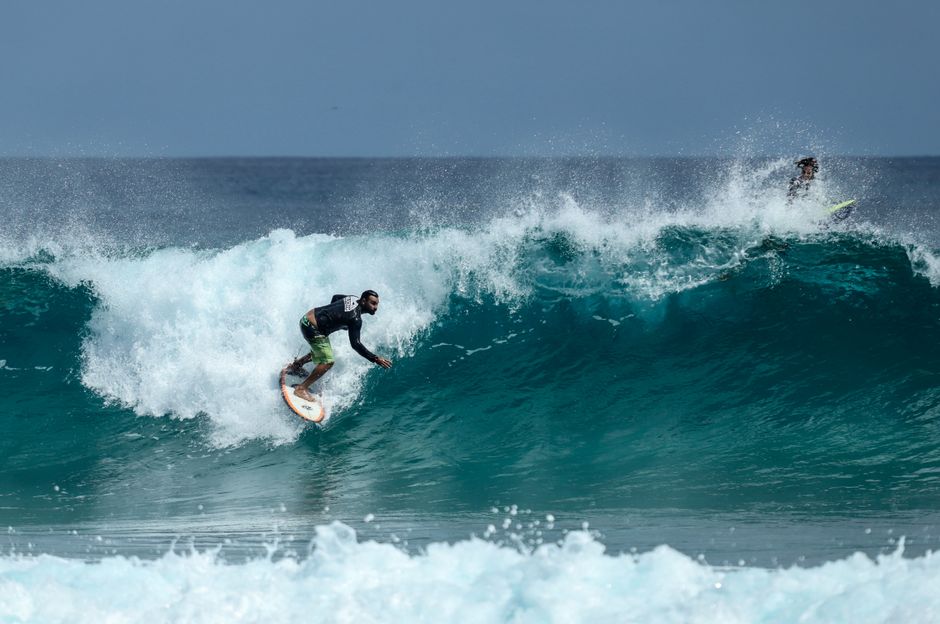
Auditing the action-sport and extreme activity riders
Insurance companies operate on an inclusion-based model for sports and physical activities. This means that if an activity is not explicitly named in the policy documentation as covered, it is excluded. You cannot assume that because a policy does not list surfing in its exclusions, it is covered. You must look for a policy that explicitly states it covers surfing, either in the base plan or through an additional action-sport rider.
Before purchasing a policy, download the full policy certificate and search the terms for specific sport exclusions. A typical policy audit should look for the following limitations:
- Professional-level competitions or events with cash prizes
- Wind-powered water sports such as kite surfing or wing foiling
- Surfing in areas with active government travel advisories or closed beaches
- Unguided sessions in remote locations lacking recognized lifeguard services
Recreational surfing versus professional exclusions
The majority of surf-friendly travel insurance policies, including those from Rise & Shield, are built strictly for recreational surfers. These policies cover personal surf trips, private lessons, and organized camps.
However, they draw a hard line at competitive surfing. If you plan to participate in an amateur competition, a local club contest, or any event with prize money, standard recreational surf insurance is void. If you get hurt during a heat, the insurer will deny your medical claims. At our surf school, all of our travel programs are strictly non-competitive and focus entirely on personal progression, keeping you within the bounds of standard recreational coverage.
The kite surfing and wind-sport upgrade requirement
Many surfers like to diversify their water time by trying other disciplines when the swell is small. If you plan to try wind-powered sports, you must verify your coverage tiers. Insurance companies treat traditional paddle-in surfing and wind-powered sports as entirely different risk categories.
For example, standard coverage from specialized insurers includes traditional surfing, bodyboarding, and stand-up paddleboarding. However, if you want to try kite surfing, you must purchase an upgraded rider, such as the Adventure Plus add-on. Participating in an upgraded sport without the corresponding rider nullifies your medical coverage for that entire day.
Vetting surfboard protection and baggage delay coverage
Airlines are notoriously tough on surfboards, and standard airline liability limits are rarely enough to cover a damaged quiver. Under international travel regulations, airlines cap their baggage liability at a rate that rarely covers the cost of a custom surfboard, fins, and a high-quality board bag.
Specialized travel insurance policies cover your surf gear under their baggage and personal effects benefits. However, you must carefully read the per-item limits in the policy jacket. If a policy has a total baggage limit of $3,000 but caps the payout for any single item at $500, you will only receive $500 for a creased $1,200 board.
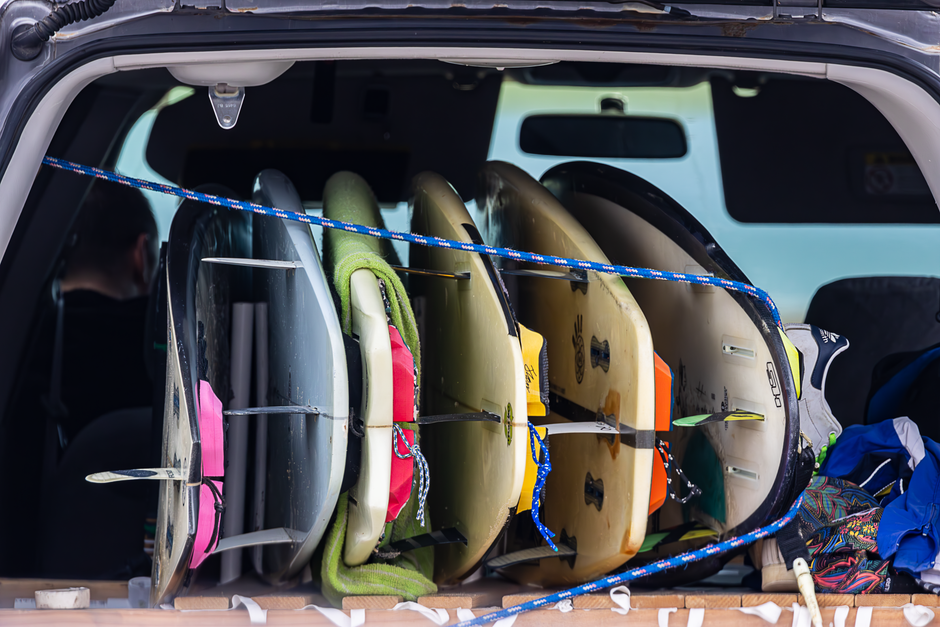
To secure a payout for damaged or lost gear, you must establish a clear paper trail before you leave home. We recommend taking time-stamped photos of your surfboards both outside and inside your travel bag before you head to the airport. This photo evidence proves the board was undamaged when you handed it to the airline.
If your board bag arrives damaged, you must file a Property Irregularity Report (PIR) at the airline's baggage service desk before leaving the airport terminal. Insurance companies will deny any gear damage claims if you do not have a formal report from the airline proving the damage occurred while the bag was in their possession. Keep your original purchase receipts for your boards, fins, and bags, as insurers will require them to calculate depreciation and final payouts.
For local surfers who want to learn how we maintain high safety standards and protect our gear closer to home, you can read our guide on New England surf school safety standards.
Understanding trip interruption triggers for international surf travel
Trip cancellation and trip interruption coverages are designed to protect your financial investment when unexpected events prevent you from traveling. However, these coverages only apply to specific, documented emergencies and do not cover disappointments related to surf conditions.
A lack of swell, bad wind directions, or poor wave quality are never valid reasons for a trip cancellation claim. If you book a trip to Rincon and the ocean goes completely flat, your travel insurance will not refund your flights, lodging, or coaching fees.
To trigger a valid trip cancellation or interruption claim, you must document a covered reason. These reasons typically include:
- A sudden, severe illness or injury that forces a licensed physician to declare you unfit to travel
- A natural disaster or severe weather event that makes your destination uninhabitable or halts airline operations
- A government-mandated travel restriction or evacuation order at your destination
If you must cancel your trip due to illness, you must obtain a signed medical statement from a doctor on the day of the diagnosis. Delaying your medical visit or attempting to self-diagnose will result in a denied claim.
Do not wait until you are packing your board bag to audit your travel insurance policy. Pull up your current travel coverage today, search for the words "surfing," "extreme sports," or "sports equipment," and verify your medical evacuation limits. If your current policy has gaps, contact a specialized provider to secure the necessary action-sport rider. Once your coverage is verified, you can focus on preparing for your next surf adventure. You can explore our upcoming trips and local coaching sessions by visiting the Boston Surf Adventures homepage.

