Paddling out in 80-degree tropical water feels amazing until you realize your trusted cold-water surfboard suddenly feels sluggish, heavy, and prone to sinking. When Boston Surf Adventures students travel from New England to our winter retreats in Rincon, Puerto Rico, they often experience "warm-water buoyancy shock"—a phenomenon where warm water's lower molecular density causes a familiar surfboard to sit lower in the water. To fix this sudden loss of flotation, surfers need to increase their board volume and shift their paddling weight slightly further back. This sluggish feeling happens because 80-degree tropical water is physically less dense than the frigid Atlantic, stripping away the natural buoyancy that cold water provides and forcing you to rely entirely on your board and technique.
The sluggish realities of tropical paddling
When you pack your favorite shortboard or hybrid shape for a trip to the tropics, you expect to fly through the water. You are shedding a heavy wetsuit, gloves, and booties, which should make you feel lighter and faster. Instead, you paddle out into the warm, inviting water and notice a series of frustrating symptoms:
- The nose of your board constantly catches water, even when you lie in your normal paddling position.
- Your shoulders and upper back burn within ten minutes of paddling, far faster than they do in cold water.
- You sit noticeably deeper in the water while waiting for a wave, with the water line creeping up toward your chest.
- You miss waves that you are perfectly positioned to catch, sliding off the back of the wave as it passes.
This physical friction is a common point of confusion for surfers making the trek from New England to warmer climates. For those used to the cold, dense waves of Nahant Beach, the transition to tropical surf reveals a stark difference in how a surfboard behaves. Your board is not broken, and your physical fitness did not disappear on the flight. You are experiencing a fundamental shift in fluid dynamics that alters how much weight your surfboard can support.
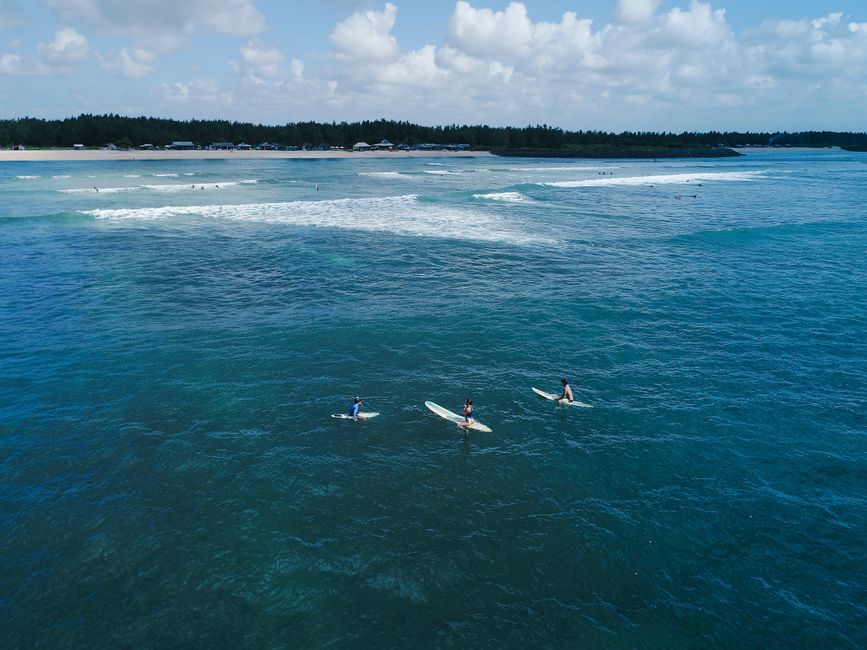
The molecular diagnosis behind Boston Surf Adventures coaching
To fix a drop in board performance, you must first understand the physics of the medium you are riding. Ocean water is not a static substance; its physical properties shift dramatically based on temperature and salinity. When the team at Boston Surf Adventures prepares students for tropical travel, we break down these changes into two main physical factors.
The physics of water temperature
The primary driver of this buoyancy shift is water temperature. Water molecules behave differently depending on how much heat energy they contain. In the cold, winter waters off New England, the molecules are packed closely together. As noted by oceanographer Tony Butt in an analysis of wave weight on Yahoo Sports, cold water is physically denser and heavier because these tightly packed molecules create a highly concentrated medium.
This dense, heavy water exerts a greater upward force on any object floating within it. When your surfboard rests on cold water, the dense liquid pushes back against the board, forcing it to sit higher on the surface. Conversely, warm tropical water causes water molecules to spread out. This thermal expansion makes warm water less dense. According to a guide on water temperature by Shun Xin Industrial, this drop in density means the water provides less buoyancy, causing your board to sit deeper and offer less stability.
The missing wetsuit factor
The second factor is the sudden removal of your cold-water gear. When surfing in Massachusetts, you are likely wearing a thick neoprene wetsuit—often a 4/3mm or 5/4mm suit depending on the season. Neoprene is a synthetic rubber filled with thousands of microscopic, trapped nitrogen gas bubbles. These gas bubbles do more than keep you warm; they act as a highly effective flotation device.
When you shed this thick suit to surf in a rash guard or boardshorts, you lose a massive amount of artificial buoyancy. You sink deeper into the water, which shifts your center of gravity and changes how your weight is distributed across the deck of your surfboard. Without the flotation of the neoprene, your board must do all the heavy lifting. If the board's volume is tailored precisely to your wetsuit-clad sessions, it will feel dangerously under-volumed in warm tropical waters.
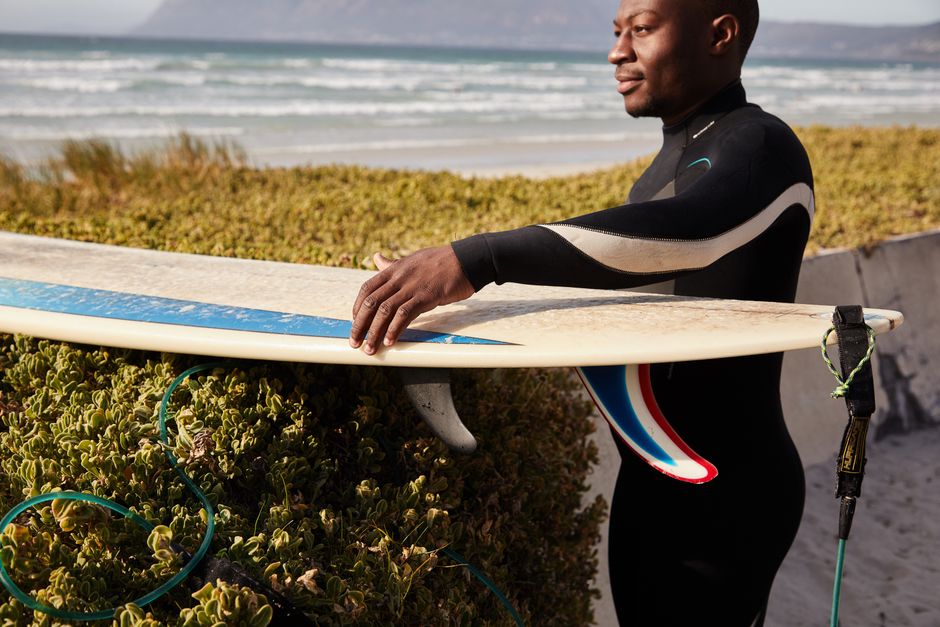
How our New England surf school solves the buoyancy drop
Solving warm-water buoyancy shock requires a combination of equipment adjustment and technical correction. You cannot change the physics of the ocean, but you can change how you interact with it. At our New England surf school, we train students to approach this problem with a clear, systematic plan rather than guessing on the beach.
Calculate your warm-water volume buffer
To maintain the same paddle power and wave-catching ability in warm water, you need to compensate for the lower water density by increasing your surfboard's volume. While some online volume charts ignore temperature, experienced shapers understand that a small volume adjustment makes a massive difference in tropical performance.
We recommend adding a volume buffer of 1 to 2 liters when selecting a board for tropical travel. This added volume replaces the lift you lose from both the less dense water and your missing wetsuit.
| Surfer Weight | Cold-Water Volume (Nahant Beach) | Recommended Tropical Volume (Rincon, PR) | Expected Benefit |
|---|---|---|---|
| 60 kg (132 lbs) | 32L Hybrid | 33.5L to 34L | Earlier entry, reduced shoulder fatigue |
| 75 kg (165 lbs) | 38L Funboard | 39.5L to 40L | Better glide through slow sections |
| 90 kg (198 lbs) | 48L Longboard | 50L to 51L | Stable pop-up, consistent trim speed |
If you are looking to understand how these volume dynamics interact with your specific body weight and skill level, you can explore the principles of matching foam to your environment in our guide on matching board volume to wetsuits.
Recalibrate your paddle positioning
If you cannot change your board, you must adjust your physical positioning on the deck. Because the water is less dense, the sweet spot on your board—the exact millimeter where you get maximum glide without the nose dipping—shifts slightly backward.
If you lie in your standard cold-water paddling position, the nose of the board will plow water, creating immense drag. To correct this, slide your body back on the board by roughly one to two inches. Lift your chest higher off the deck and arch your back slightly more than usual. This posture shifts your weight toward your hips and thighs, keeping the nose of the board free of the water line while allowing the flat section of the board's bottom to glide smoothly.
Use video analysis to spot drag
It is incredibly difficult to feel where your board is dragging when you are in the water. That is why Boston Surf Adventures relies on professional feedback. During our winter retreats in Rincon, Puerto Rico, founder Grant Gary uses detailed video analysis sessions to isolate these silent performance killers.
By filming every wave in the morning and analyzing the footage before the afternoon session, we can point out exactly when your board is plowing or sitting too low. Having an instructor with over 15 years of teaching experience review your trim line allows you to make instant adjustments, saving you days of frustrating trial and error.
When under-volume is more serious than a minor drag
Operating with the wrong volume is not just a minor annoyance; it can completely derail your surf progression. When a board sits too deep in the water, it triggers a chain reaction of poor biomechanics and bad habits. If you are struggling with a board that lacks sufficient buoyancy, you will notice several distinct warning signs:
First, your takeoffs will become consistently late. In cold, dense water, the wave lifts the tail of the board easily, helping you match the wave's speed. In warm water, an under-volumed board stays bogged down in the face of the wave. You will find yourself paddling frantically, only to have the wave pass you by, or worse, you will get caught in the lip and pearl straight into the flats.
Second, you will begin to compensate for the lack of glide by rushing your pop-up. This hurried motion often leads to poor foot placement, with your front foot landing too far forward or off-center. We teach our students that institutional surf integrity relies on building a consistent, repeatable technique. Rushing your movements to make up for a poorly floating board is the fastest way to develop bad habits that take months to correct.

Preventing the warm-water plunge with Boston Surf Adventures
The best way to handle warm-water buoyancy shock is to prepare for it before your feet ever touch tropical sand. We encourage all our students to use the BSA Progression Journal to log their sessions. Keep a detailed record of the boards you ride at Nahant Beach, noting the volume, construction material, and how the board felt during paddling and wave entry.
When preparing for your next trip, use this data to select your rental board. Do not simply grab a board of the same length and width; look specifically at the volume in liters and the foam density. If you ride a standard polyurethane (PU) board in New England, consider trying an expanded polystyrene (EPS) board for your tropical travels, as EPS foam is inherently lighter and more buoyant, helping to offset the density drop of warm water.
By understanding the physics of water density and preparing your equipment and technique accordingly, you can ensure that your next warm-water adventure is filled with high wave counts and rapid skill progression. If you are ready to dial in your warm-water technique under the guidance of expert coaches, visit the Boston Surf Adventures website to learn more about our local coaching options and our winter surf retreats.