Training for Rincon reef breaks at a New England beach
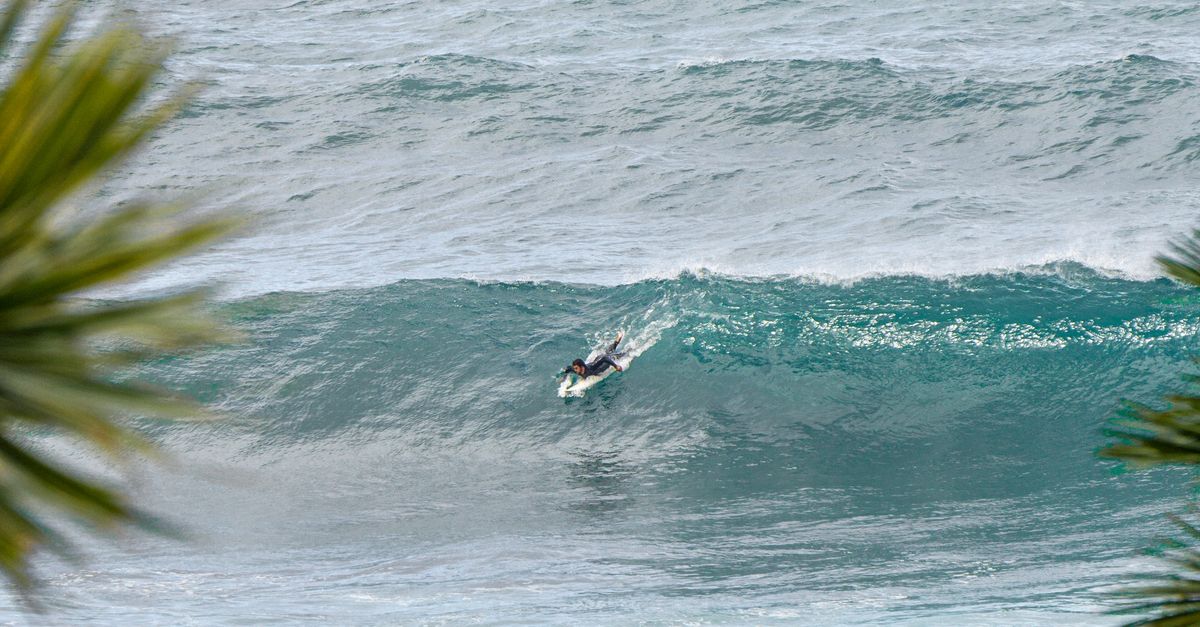
To survive the steep drop and explosive speed of a Caribbean wave, you do not need to book an emergency flight to Hawaii; you need to dial in your mechanics on home turf. Boston Surf Adventures prepares Northeast surfers for tropical reef breaks by using the shifting sandbars of Nahant Beach to drill rapid pop-ups and unassisted wave entry. The recommendation is straightforward: master five foundational milestones in small, forgiving local conditions before paddling out over shallow coral in Rincon, Puerto Rico. Getting your timing automated in cold water prevents the hesitation that causes wipeouts on fast, hollow reef walls.
The physical reality of a reef takeoff
The primary challenge of your first winter surf trip south is not the transition from a 5mm wetsuit to boardshorts. It is the immediate, unforgiving steepness of the wave face.
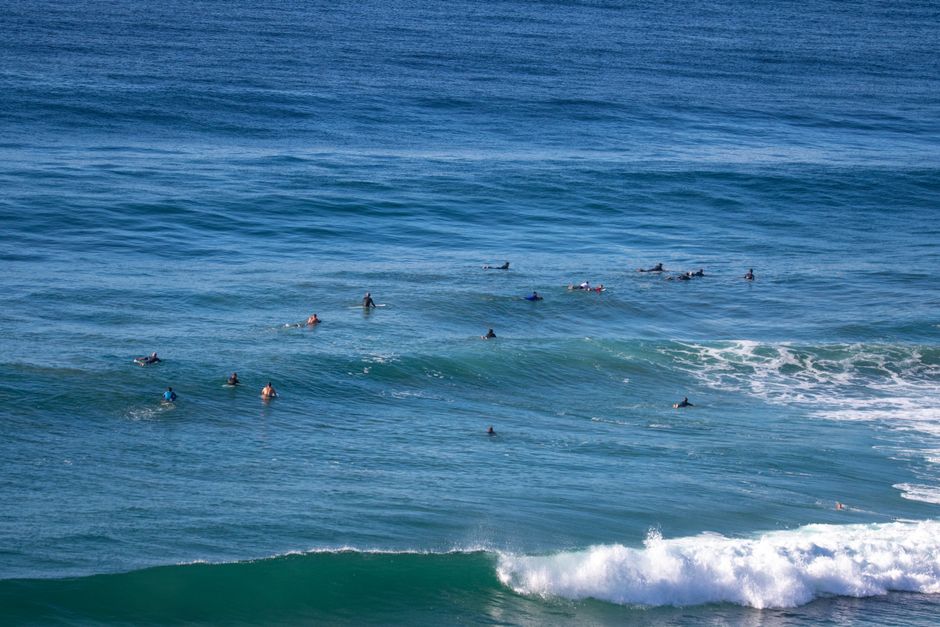
At a beach break like Nahant, waves trip over sloping, shifting sandbars. The bottom contours are constantly reshaped by tidal swings and seasonal storms. Because the sand creates a gradual ramp, deep-water swell energy steps up slowly. You get a broad takeoff zone, a softer lip, and a generous window of time to adjust your hands, set your rails, and stand up.
Tropical reefs behave according to entirely different bathymetry. In Rincon, long-period winter swells travel across deep open ocean until they smash directly into an abrupt shelf of volcanic rock or living coral. The seafloor does not slope gently; it rises like a wall. Wave energy cannot bleed off gradually, so it jacks upward almost instantly.
Beach Break (Nahant Beach):
Deep Water ───> Gradual Sand Slope ───> Rolling Takeoff Zone (Soft lip, wide window)

Reef Break (Rincon, PR):
Deep Water ───> Abrupt Rock/Coral Shelf ───> Vertical Wall (Fast suck-out, narrow window)
This sudden compression creates a mechanical shelf effect. The wave breaks in almost the exact same spot on every set, creating a fast, peeling line. It also creates a severe mental block for visiting surfers.
As you paddle into position, you look down through crystalline water and watch the sea floor rapidly pull upward. The wave actively sucks water off the reef to feed its crest, making the bottom look inches away. That visual shock makes most surfers hesitate for a split second. On a sand-bottom wave, hesitating means you miss the shoulder. On a reef, hesitating gets you pitched over the falls.
| Wave dynamic | Beach break (Nahant Beach) | Reef break (Rincon, Puerto Rico) |
|---|---|---|
| Seafloor structure | Shifting sandbars and temporary gutters | Permanent volcanic rock and coral shelf |
| Takeoff zone | Broad, shifting, and forgiving | Concentrated, steep, and mechanical |
| Water depth at drop | Deeper water over sand | Shallow water with rapid bottom draw |
| Pop-up margin for error | Multi-second transition window | Single explosive beat |
| Wipeout surface | Soft sand bottom | Hard rock, requiring flat impacts |
Shedding the push-in lesson crutch
Most traditional beginner surf coaching relies on an instructor standing waist-deep in the surf zone, physically shoving you into broken whitewater. While that push gets you upright on day one, it creates an artificial foundation that falls apart the moment you travel.
A push-in lesson bypasses ocean reading entirely. When an instructor handles your speed, points your board, and decides when you jump up, you never learn how to match the speed of the ocean with your own upper body. You remain a passive passenger on a piece of foam rather than an independent waterman.
Relying on physical pushes is a dead end if you intend to travel to tropical destinations. There are no coaches standing on a shallow coral reef in six feet of water to push you into sets. You have to generate all your own forward momentum through clean paddling, read the approaching horizon line, and set your own angle.
We explore the breakdown of this dynamic in our breakdown of push-in lessons vs independent wave-reading, showing why independent wave entry is mandatory for anyone looking to travel safely. Learning to trim your board independently on a local sandbar is the only way to build real ocean competency.
The five local milestones to hit before you travel
Before students graduate to our international trips, Boston Surf Adventures uses a specific operational benchmark. Founder Grant Gary, a former professional educator with more than 15 years of teaching experience, built this framework around five specific competencies. As the only ISA (International Surfing Association) Certified Surf School in New England, we require surfers to prove self-sufficiency in local water first.
Here are the five mandatory skills detailed in the Nahant surf checklist:
- Catching waves unassisted: Paddling into unbroken swell lines without physical assistance from an instructor.
- Instant pop-up execution: Moving from a prone paddle directly to your feet in one motion, with zero knee-dragging.
- Early wave assessment: Reading the horizon to tell whether a wave will peel cleanly or dump as a closeout.
- Controlled pull-offs: Safely driving your board over the back or kicking out before hitting shallow water.
- Set management in three-foot surf: Navigating real, unbroken waves waist-to-chest high without panic.
Generating your own momentum
Paddling into waves on your own requires millimeter-level awareness of your board trim. At our Massachusetts clinics, coaches teach surfers to find the exact sweet spot along the stringer where the nose sits roughly an inch above the water.
If your chest is two inches too far back, the tail drags water, acting like a sea anchor that kills your speed. If you lie two inches too far forward, the nose pearls directly into the sand. You must learn to arch your thoracic spine, keep your chin level, and deliver deep, deliberate strokes that pull water under the board rather than splashing at the surface.
Matching wave speed in cold water with a thick rubber suit is difficult. If you can consistently generate enough glide to catch three-foot sandbar peelers at Nahant, catching waves in warm water without rubber will feel effortless.
Automating the pop-up
Steep reef waves do not give you time to think through your footwork. Your pop-up must become an automated neuromuscular reflex. If you look down at your hands, pause on your knees, or crawl your back foot forward, the lip will throw you down the face.
You drill this timing on small waves by removing all hesitation between your final paddle stroke and your stance. Your hands plant flat on the deck under your lower ribs, your hips snap upward, and your feet land directly on the stringer in a low, athletic stance with bent knees.
Practicing this movement repeatedly on soft, forgiving beach breaks builds the muscle memory you need. When you eventually look down a steep Puerto Rican reef face, your body will drop and set an edge automatically, leaving your mind free to navigate the line.
Why wave count matters more than wave size
A common mistake Northeast surfers make when prepping for the tropics is hunting massive, stormy swells at heavy breaks. They drive around chasing double-overhead hurricane swells, paddle out into freezing, chaotic chop, and get caught inside for two hours.
Hunting large surf to prepare for a trip kills your progression for two clear reasons:
- Heavy, crowded breaks severely limit your reps: When thirty surfers are scrapping for three peaks, you spend your session sitting on your board shivering. You might paddle for two waves, blow the drop on one, and go home with zero usable repetitions.
- Large waves induce survival reactions instead of technical adjustments: When conditions are dangerously heavy, your body reverts to panic reflexes. You cannot tweak your foot placement or diagnose an early rail grab when you are fighting simply to stay above water.
The fastest way to prepare for hollow tropical surf is logging massive wave counts in clean waves measuring three feet and under. Within 45 minutes of Boston, the coastline offers over 20 surf breaks that feature gentle waves and low crowds. Nahant Beach provides an ideal training lab where you can catch wave after wave without pressure.
Consider the mathematics of coached water time. If you paddle out alone at a crowded break over a two-day period, you will realistically catch five or six waves. In our small-group camps, structured positioning and real-time guidance allow students to easily catch 50 to 70 waves over a single weekend. That massive volume creates the repetitive muscle memory needed to handle fast drops.
Translating cold water fundamentals to tropical reefs
Once your fundamentals are dialed in cold water, transitioning to Rincon's reef breaks becomes exhilarating rather than terrifying. Rincon sits on the western tip of Puerto Rico, where trade winds blow consistently from December through April. These conditions produce clean, offshore-groomed surf every single morning until at least 10 AM.
Because reefs provide a static takeoff spot, you do not have to chase shifting sand peaks. You sit in the lineup, identify the boil or marker where the swell bends across the shelf, and wait for your wave. Our Puerto Rico coaching teams are Rincon locals who have surfed these breaks their entire lives. They know how tides influence depth across specific reefs, allowing our groups to surf uncrowded peaks roughly 70 percent of the time.
When you paddle into a clean Caribbean wall, the unassisted paddle power and rapid pop-up you drilled at Nahant take over. You paddle hard, feel the tail lift, snap to your feet before the wave goes vertical, and look down a blue, peeling shoulder. The sandbars of New England gave you the reps; the reef gives you the ride.
If you are ready to prepare for your warm-water travels, review the structured instruction available in our weekend surf camps. You can also explore our full schedule of Puerto Rico retreats to see where your progression can take you. To build your foundation locally or reserve your training dates, visit the Boston Surf Adventures website and lock in your preparation before the swell arrives.
Filed under