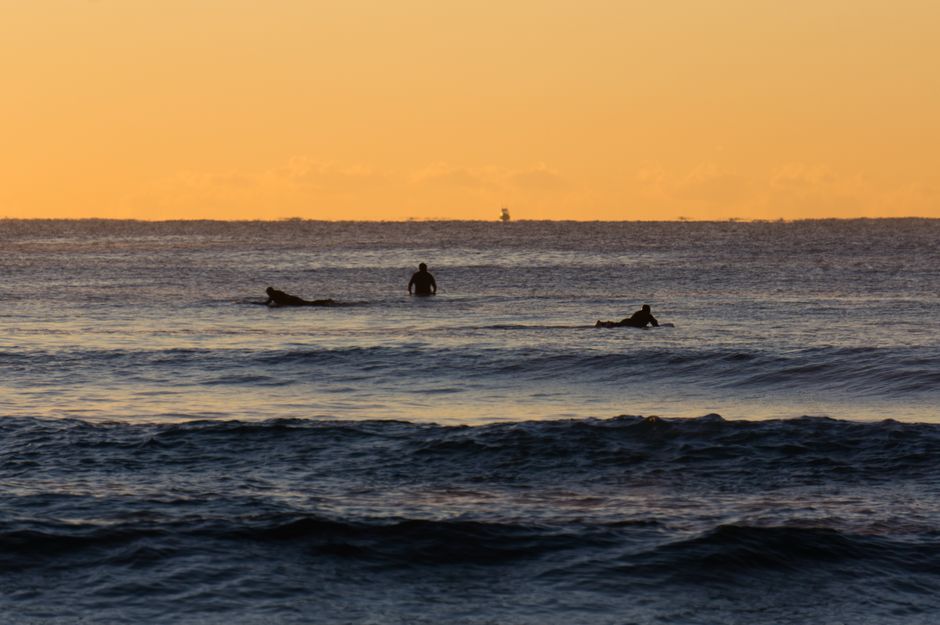
Paddling out into a warm tropical lineup sounds relaxing until your arms turn to lead 20 minutes into your first session. To prevent rapid upper body fatigue on your next winter getaway, Boston Surf Adventures recommends a structured 6-week physical preparation sequence rather than generic gym cardio. By combining land-based thoracic spine mobility protocols with wave-entry simulations at Nahant Beach, this program prepares Northeast surfers to handle the high wave counts of a professional coaching retreat in Rincon, Puerto Rico. Developed with insights from founder Grant Gary, this progression builds the specific joint durability and paddle stamina required to make the most of every warm-water session.
Fix the turtle posture before adding strength
Desk work and long commutes create structural changes in the body that directly undermine paddling efficiency. When you sit hunched over a screen, your upper back stiffens into a forward curve, your shoulders round inward, and your chest muscles tighten.
Before you can build the strength to paddle for hours, you must address these three postural limitations:
- A stiff upper back prevents you from lifting your chest off the deck of the board.
- Internally rotated shoulders pinch the rotator cuff during the recovery phase of your stroke.
- A weak lower back forces your neck to overextend, causing rapid fatigue and neck strain.
At the Boston Surf Adventures surf school, instructors notice these exact limitations during the first paddle out at Nahant Beach. Opening up these joints is the first step toward a functional paddle stroke.
The trap of generic gym cardio
Many surfers prepare for a tropical trip by running on a treadmill or riding a stationary bike. While general aerobic fitness has some value, it does not prepare your upper back and shoulders for the unique demands of prone paddling. Running keeps your spine vertical and your shoulders relatively quiet, which does not translate to the water.
Paddling requires your spine to stay extended while your arms perform high-repetition, open-chain pulling movements. Hydrostatic pressure from the water also chest-compresses your lungs, shifting your breathing mechanics in a way that stationary gym equipment cannot replicate. If your shoulder joint runs out of functional range, your heart and lungs will not save you from fatigue.
Relying on generic workouts often leads to what we call the "turtle posture" in the lineup. This position is characterized by a chest that stays glued to the board while the head strains upward. To lift your chest and look toward the horizon without pinching your neck, you must free your upper back first.
Land-based mobility protocols
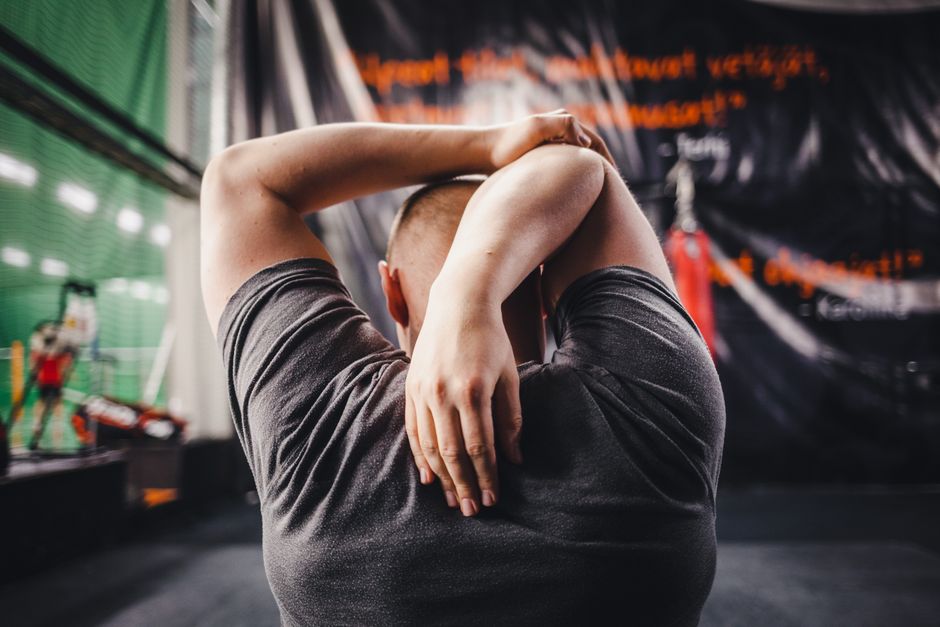
To restore the extension needed for an efficient paddle stroke, you must commit to a daily thoracic mobility routine. A highly effective movement is the foam roller extension, where you lie on your back with a roller positioned under your upper back and gently drape your spine over it. Keep your hips on the floor and support your head with your hands to isolate the upper back joints.
Pair this passive extension with quadruped rotations to restore rotational capacity to your ribcage. Kneeling on all fours, place one hand behind your head and rotate your elbow up toward the ceiling, keeping your hips square. This movement frees the rib cage, allowing your shoulders to rotate without dragging your lower back into hyper-extension.
A 6-week surf-trip preparation program focuses heavily on this joint durability before introducing heavy resistance. If your joints cannot move freely, any strength you add will only reinforce bad habits and increase your risk of impingement. When you free your upper back, your arms can rotate through a complete, uninhibited path, maximizing the water you displace with each stroke.
Build open-chain paddle endurance
Paddling is a highly repetitive, low-resistance movement that requires your muscles to work continuously over several hours. Traditional weightlifting exercises like heavy pull-ups or static lat pulldowns build maximum strength, but they do not train the slow-twitch muscle fibers required for a three-hour session.
To build a paddling gas-tank that lasts, your training must match the specific biomechanical demands of the ocean:
- Your hands must move independently through an open-chain path without the stability of a fixed bar.
- Your core and glutes must remain active to keep your lower body stable on the board.
- Your cardiovascular system must recover quickly between short bursts of maximum effort.
Understanding these physical requirements is the difference between surfing all day and sitting on the beach with sore shoulders.
Replicating the paddle stroke
To train your shoulders for open-chain movement, incorporate resistance band swimming simulations and stability ball paddling. Lie face down on a stability ball to engage your entire posterior chain, holding light resistance bands anchored in front of you. This setup forces your glutes and lower back to work together to keep you balanced, replicating the positioning of a surfboard.
Pull your hands back in a high-elbow, circular path that mimics the entry, pull, and release of a real paddle stroke. Focus on keeping your shoulder blades pulled down and back, away from your ears, to avoid impinging the rotator cuff. Perform these movements for time rather than repetitions, aiming for three-minute intervals to build muscular endurance.
This training is critical for cold-water surfers transitioning to warm water. During New England winters, the biomechanical cost of a heavy 6/5mm hooded wetsuit, 7mm boots, and thick mittens is immense. This heavy rubber adds water-saturated weight and restricts your joints, forcing you to use brute force just to move your arms. When you shed this neoprene for a tropical trip, your naked shoulders will feel incredibly light, but only if you have built the underlying endurance to handle the sudden increase in stroke speed.
Timing intervals for reef conditions
Surfing is not a steady-state cardio activity; it is a series of low-intensity paddles punctuated by explosive sprints. To prepare for this, structure your endurance sessions around high-intensity intervals. If you use a swimming pool, swim 50 meters at a moderate pace, sprint the last 15 meters to simulate catching a wave, and then rest for 30 seconds. Repeat this sequence 10 to 12 times to train your anaerobic system to clear lactic acid quickly.
If you are training on land, use battle ropes or light dumbbells to perform interval training. Alternating high-intensity work with brief recovery periods teaches your heart rate to drop quickly after a heavy sprint. This cardiovascular recovery is what keeps you from gasping for air after paddling through a heavy set.
This conditioning is what allows you to handle the high volume of waves on a structured trip. During a standard weekend surf camp with Boston Surf Adventures, coached students can expect to catch 50 to 70 waves in a single weekend, compared to the five waves someone might catch struggling on their own. You can verify this progression rate on the Boston Surf Adventures surf camps page. To maintain proper form across dozens of rides, your muscles must be conditioned to recover in the short moments between paddling back out and turning for the next set.
Simulate the steep drop at local beach breaks
The physical transition from New England beach breaks to tropical reefs can be highly intimidating for intermediate surfers. To avoid getting caught inside or taking severe wipeouts on a shallow reef, you must adapt your take-off mechanics to match the speed of the wave.
Before you travel, you should understand how these two wave types differ:
- Reef breaks rise quickly over a permanent shelf, creating a steep, localized take-off zone.
- Beach breaks shift constantly with the sand, creating wider, more gradual peaks.
- Reef waves move faster because they travel through deeper water before hitting the shelf.
Practicing these adjustments locally ensures you do not waste the first few days of your trip adjusting to the speed of the ocean.
Understanding reef physics
In a tropical destination like Rincon, Puerto Rico, the underwater topography is made of solid rock or coral reef. When an open-ocean swell hits this permanent barrier, the energy is forced upward almost instantly, turning a flat swell into a steep mechanical wall. This predictable bathymetry means the wave breaks in the exact same spot every time, which allows you to position yourself with extreme precision.
However, it also means the transition from paddling to standing is incredibly fast, leaving no room for a delayed or sloppy pop-up. For New Englanders, this is a massive shift from the shifting sandbars of beaches like Nahant Beach, where waves roll in more gradually over gentle slopes of sand. To ride reef waves successfully, you cannot rely on a slow, multi-step pop-up.
You must read the wave entry speed and commit to a rapid, explosive transition. For detailed drills on identifying these entry zones, you can review our guide on how to practice tropical reef take-offs at New England beach breaks.
Adapting beach break mechanics
You do not need to wait until you land in Puerto Rico to practice these high-speed take-offs. During local sessions, search for the steepest, quickest peaks along the beach rather than riding the soft, rolling shoulders. At Nahant Beach, certain tide stages cause the waves to close out or wall up quickly over the shallow inner sandbars. Use these fast, steep sections to practice your pop-up timing, focusing on keeping your center of mass low and centered over the stringer.
The physical restriction of winter rubber often masks mechanical flaws. A thick wetsuit forces you to muscle through a slow pop-up, which works fine on slow beach breaks but fails on a fast reef. To break this habit, focus on a clean, single-motion pop-up during your summer and autumn sessions.
By practicing on the shifting peaks of New England, you build the rapid reaction times and precise foot placement needed to handle a steeper drop with confidence. If you want to refine these mechanics under direct supervision, the Boston Surf Adventures surf camps provide targeted, small-group instruction that focuses on the physics of the pop-up.
Prep your mind and body for the tropics
Building joint durability, thoracic extension, and paddling stamina takes time. You have exactly six weeks to wire these specific movement patterns before your feet touch the warm sand of Rincon. Neglecting this physical preparation means spending your trip recovering from sore muscles rather than progressing your skills in the water.
To guarantee you are ready for the speed of tropical reefs, consider booking a professional coaching session to isolate your mechanical habits. At Boston Surf Adventures, the only ISA Certified Surf School in New England, coaches use direct feedback to correct the physical flaws that hold intermediate surfers back.
For those looking to escape the cold entirely, our winter retreats in Rincon, Puerto Rico, operating during the prime swell season from December through April, combine warm-water waves with daily video analysis sessions. These retreats offer offshore winds guaranteed every morning until 10AM and localized coaching, ensuring your physical preparation translates directly into the ride of your life. Learn more about booking your warm-water progression on our Puerto Rico Retreat — Boston Surf Adventures page.