The biggest shock of your first surf trip to Puerto Rico will not be the water temperature—it will be the speed and steepness of the wave face. Reef breaks demand a faster, more committed drop than the shifting sandbars of the Northeast. But you do not need a coral reef to build the right muscle memory. Boston Surf Adventures instructors use our weekend surf camps at Nahant Beach to teach urbanites how to simulate steep take-offs. By targeting specific sandbar conditions and adjusting your pop-up timing, you can lock in the mechanics you need before you ever book that winter flight to Rincon.
Understanding the physics of a reef break take-off with Boston Surf Adventures
Reef breaks are highly predictable because the ocean floor is permanent. When open-ocean swell hits a shallow shelf of rock or coral, the wave energy is forced upward rapidly, standing the wave up into a steep, mechanical wall. According to Padang Padang Surf Camp, this permanent structure creates a wave machine effect where the wave breaks in the exact same spot every single time.
In contrast, New England beaches like Nahant Beach rely on shifting sandbars that change with every storm. This makes beach breaks highly variable, but it also means the takeoff zone is wider and the drops are generally more gradual. When preparing for tropical locations like Rincon, Puerto Rico, you must learn to handle a wave that transitions from flat water to a vertical wall in a fraction of a second.
The sheer power of a reef break comes from this abrupt ocean bottom. In places like Rincon, the trade winds blow offshore every morning until at least 10 AM, holding the wave face open and making the drop even steeper. At our Boston surf school, we train your eyes and body to recognize this steepening process early so you do not freeze when the ocean floor drops out from under your board.
| Wave Feature | Beach Breaks (e.g., Nahant Beach) | Reef Breaks (e.g., Rincon, PR) |
|---|---|---|
| Ocean Floor | Shifting sandbars and channels | Permanent coral reef or volcanic rock |
| Takeoff Zone | Shifting, unpredictable, and wide | Fixed, concentrated, and highly predictable |
| Wipeout Safety | Soft sand bottom, highly forgiving | Hard reef or rock, requires shallow-water awareness |
| Wave Shape | Variable, prone to closeouts | Consistent, clean, and mechanical |
| Paddle-out Path | Battling through constant whitewater | Defined channels and deep-water pathways |
Finding the right training waves near Boston
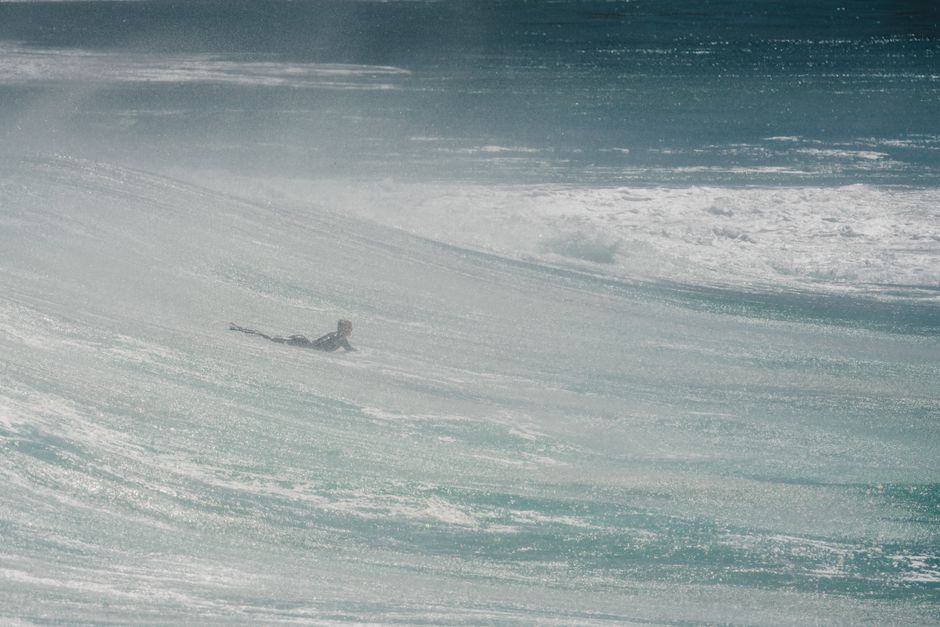
You do not need to fly to the tropics to find steep, fast waves. The coastline around Greater Boston holds an incredible variety of setups if you know where and when to look. In fact, there are over 20 surf breaks within 45 minutes of the city, allowing local surfers to find empty peaks to practice high-repetition take-offs.
To simulate the sudden, steep drop of a tropical reef, you must look for specific environmental factors in our local waters. By hunting for waves that mimic the fast rise of a coral shelf, you can build the muscle memory required for reef breaks.
Targeting low-tide conditions
Low tide is the secret weapon for New England surfers preparing for reef trips. As the water drains off the sandbars at places like Nahant Beach, the shallow water forces incoming waves to stand up and break much faster than they do at high tide. This low-water environment creates a shorter, punchier wave face that closely mimics the pitch of a tropical reef break.
Surfing these low-tide peaks requires quick reflexes. The wave will stand up and break over a very short distance, leaving no room for a slow, lazy pop-up. Taking off on a low-tide sandbar forces you to commit to the drop immediately, training your brain to handle the visual sensation of a steep wall of water.
Using short-period wind swell
While long-period groundswells are highly prized by experienced surfers, short-period wind swells are incredibly useful for technical training. Short-period waves are stacked close together, meaning they have less energy underneath them but break rapidly when they hit the shallows.
This rapid-fire wave action forces you to make split-second decisions. You must paddle harder, read the wave face faster, and execute your pop-up with absolute precision. This high-tempo environment is perfect for replicating the quick thinking required when paddling into a fast-moving reef break lineup in the Caribbean.
Adjusting your pop-up mechanics at our Nahant Beach camp
To master the fast drop of a reef break, your standard beach-break pop-up must undergo a mechanical tune-up. If you hesitate or use a slow, multi-stage standing motion, you will get caught by the lip and thrown forward.
- Angle your board relative to the beach before you pop up.
- Keep your weight centered forward over the nose of the board.
- Keep your eyes focused down the line, never at your feet.
- Execute your pop-up in one explosive, fluid movement.
The angled take-off
On a standard, rolling beach break, paddling straight toward the beach is the most common way to catch a wave. On a steep reef break, however, paddling straight down the face will often cause the nose of your board to dive underwater or leave you free-falling down the face.
According to guide resources on Honest Surf, the angled take-off is the primary technique used to bypass this issue. By pointing the nose of your board at a 30-to-45-degree angle toward the direction the wave is breaking, you reduce the effective steepness of the drop. You slide across the face of the wave as it stands up, rather than dropping straight down the vertical peak.
At Boston Surf Adventures, we focus heavily on this angled entry during our weekend sessions. We teach you to use your paddle strokes to guide your board onto the shoulder, allowing you to establish your line before you have even stood up.
Committing your weight forward
The natural human reaction to a steep wave is fear. When the wave stands up behind you, the instinct is to lean back and pull away from the drop. This is the single biggest mistake you can make on a reef break. Leaning back lifts the nose of your board, stalling your momentum and causing the wave to sweep you up and throw you over the falls.
You must fight this instinct and actively commit your weight forward. Keep your chest pressed close to the deck of your board, and use your final paddle strokes to push your chest down, loading weight onto the nose. This nose-weight ensures your board catches the momentum of the wave, sliding you down the face smoothly.
Founder Grant Gary, a former school teacher with over 15 years of teaching experience, designed the BSA Progression Pyramid to systematically short-circuit these bad surfing habits before they lock in. By understanding the biomechanics of the forward-weighted entry, our students learn to trust the drop. This systematic approach is detailed in our guide on the methodology of accelerated surf progression.

Reading the channel instead of battling the New England whitewater
One of the greatest structural differences between beach breaks and reef breaks is how you return to the lineup. At beach breaks, you must paddle directly through the impact zone, fighting through endless lines of broken whitewater. Reef breaks, however, offer a cleaner design if you know how to read the ocean.
Understanding this spatial layout is critical for saving energy and staying safe. According to Rise Up Surf Retreats, the fixed nature of reef systems almost always creates a defined channel—a deep-water highway where waves do not break.
Identifying the treadmill
At Nahant Beach, we teach our students how to spot the treadmill—the channels where water that has been pushed onto the beach rushes back out to sea. This rip current or channel behaves exactly like the deep-water channels found at major reef breaks.
By learning to identify these darker, calmer lanes of water, you can paddle out with minimal effort. Instead of exhausting your shoulders against breaking waves, you let the current pull you out to the lineup. This is the exact skill you will use to paddle out at premier reef spots in Rincon without taking a single wave on the head.
Paddling wide
When surfing over a hard reef, you must never paddle straight back through the peak where other surfers are riding. If a set comes, you will find yourself directly in the impact zone over shallow rock.
We teach our local students to always paddle wide around the breaking zone. At our Nahant camps, we practice paddling out along the shoulder and entering the lineup from the side. This simple habit keeps you safe, keeps you out of the way of other surfers, and matches the strict etiquette of tropical reef lineups. To understand how this fits into your long-term skill development, you can review The New Englander’s manual for winter surf travel and technical progression.
Accelerating your mechanics with Boston Surf Adventures
The absolute key to preparing for a tropical surf trip is volume. You cannot fix mechanical errors in your pop-up if you are only catching three or four waves a session. This is why our training weekends are so powerful.
When you went out on your own over two days, you might successfully catch five waves. With a coach, you can easily catch 50 or 70 waves in one weekend. This high-frequency repetition is the core philosophy behind our weekend surf camps.
Our students frequently highlight how this structured, high-volume coaching environment builds their confidence. For example, former student Teresa Chappel noted that the focus on self-sufficiency helped her cohort make immediate progress and continue surfing together long after camp ended. Another student, Olivia Oksenhorn, shared that our coaches meet you where you are, pushing you just enough to guarantee you learn the basics in a matter of days.
By taking advantage of our small-group format—limited to just six spots per weekend—you get the personalized attention and direct video analysis required to dial in your stance. This prepares you perfectly to transition from the sandy, forgiving bottom of Nahant Beach to the perfect, mechanical reef breaks of Rincon.
Do not wait until you are staring down a fast reef break in Rincon to realize your pop-up mechanics are rusty. Book a weekend surf camp at Nahant Beach with Boston Surf Adventures to dial in your take-offs, master wave reading, and build the physical foundation you need. When winter arrives, you will be ready to join us on our Puerto Rico Retreat to surf perfect, offshore-groomed waves with total confidence.