Boston Surf Adventures hosts immersive winter surf retreats in Rincon, Puerto Rico, designed to massively accelerate your family wave-riding progression. Transitioning from cold New England beach breaks to tropical waves requires specific physical and logistical preparation to maximize your time in the water and minimize stress. This 15-point framework covers exactly how to handle flight logistics, build paddle stamina, manage travel documents, and pack the right gear before you leave the Northeast. By following these steps, you ensure that your week in the Caribbean is spent catching waves rather than managing preventable travel headaches.
Surfing in 80-degree tropical water with your kids sounds idyllic, but an underprepared family surf trip usually ends in sunburns, reef scrapes, and immediate exhaustion in the lineup. Most families accustomed to the sandy, predictable bottom of Nahant Beach or the North Shore find that tropical reefs and the increased intensity of Caribbean swells demand a different level of readiness. The gap between a frustrating vacation and a breakthrough performance in the water lies in the three weeks leading up to your departure from Logan International Airport.
As the only ISA Certified Surf School in New England, our coaching methodology at Boston Surf Adventures is grounded in over 15 years of professional education experience. Founder Grant Gary and our local coaching staff have taught thousands of students how to read waves, pop up efficiently, and manage ocean safety. We know exactly what causes families to struggle on their first international surf trip, and we built this framework to ensure you spend your week actually catching waves instead of managing avoidable headaches.
Flight logistics and destination vetting
The success of a family surf retreat is often determined before you even board the plane. For families based in the Greater Boston area, Puerto Rico is the most accessible high-quality surf destination, typically requiring less than four hours of flight time. This proximity is a major factor in reducing travel fatigue, which is a primary contributor to Day 1 injuries in the water. When vetting your destination, the focus should be on "surfable" windows—times of day when the wind and swell cooperate to create clean, manageable faces for beginners and intermediates.
Booking direct access from the East Coast
The logistical burden of a surf trip doubles when you add kids and gear into the mix. We recommend families prioritize direct flights to Aguadilla (BQN) or San Juan (SJU). Minimizing layovers reduces the risk of lost luggage and ensures your family arrives with enough energy to participate in the first sunset session. Once you land, the transition to Rincon is straightforward, but it requires a reliable ground transport plan that can accommodate the boards and gear we provide.
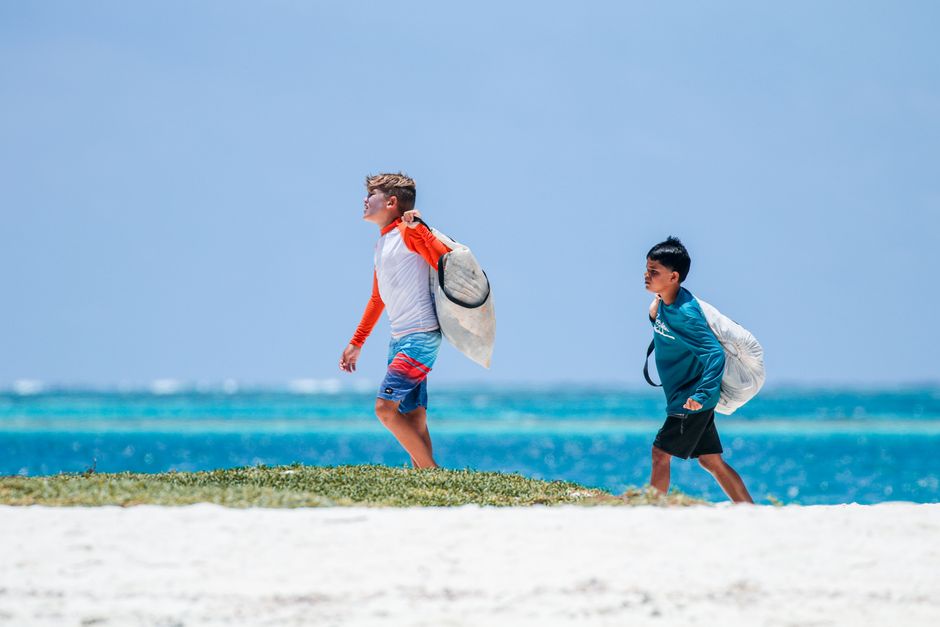
Vetting the wind and crowd conditions
Crowd management is a safety issue, not just a matter of preference. Learning on crowded breaks is dangerous for everyone involved, especially for children who are still developing their spatial awareness in the water. In Rincon, the trade winds provide consistent winter swell from December through April. However, the specific geography of the "Puntas" and "Domes" areas means offshore winds blow every morning until at least 10 AM, keeping the wave faces clean.
Our Boston Surf Adventures local coaches are lifelong residents of Rincon who have surfed these breaks since they were toddlers. This local knowledge allows us to find spots where our groups surf alone approximately 70% of the time. When researching any international retreat, ask specifically about "crowd density" and whether the school has access to private or lesser-known breaks. A school that drags 15 students into a crowded lineup is not prioritizing your family's safety or progression.
Physical preparation and paddle stamina
Paddling is 90% of surfing. Most adult beginners from the Northeast have the leg strength for the sport but lack the specific upper-body endurance required for three-hour sessions in the tropics. Because the water is warmer and the waves more consistent than in New England, you will find yourself paddling five times more than you do on a typical day at Nahant. If your shoulders give out on Tuesday, the rest of your week is effectively over.
Building shoulder endurance
To prepare, you must begin a conditioning routine at least three weeks prior to travel. Swimming is the best cross-training available, as it mimics the rhythmic, low-impact nature of the paddle stroke. If you cannot get to a pool, resistance band work focusing on the posterior deltoids and lats is a mandatory substitute. According to industry standards for preparing for tropical surf trips, building this "surf shape" before you arrive prevents the common "Day 3 slump" where muscle fatigue leads to poor form and potential injury.
Core stability for the pop-up
The transition from prone to standing—the pop-up—is where most technical errors occur. In our New England camps, we emphasize a biomechanical pop-up framework that relies on core stability rather than raw explosive power. At home, families should practice "surf burpees" and planks to ensure their midsection can support the rapid weight transfer required on a moving wave.
At Boston Surf Adventures, we find that students who spend 10 minutes a day on core stability in the weeks before a retreat catch significantly more waves. This isn't about being an athlete; it's about ensuring your body can execute the "two simple changes" our coaches will suggest during your daily video analysis sessions.

Travel documents and medical requirements
International surf travel carries risks that standard domestic vacations do not. Beyond the usual passport checks, families must account for the specific nature of "adventure travel." This includes understanding that standard health insurance rarely covers international emergency medical evacuation, which is a high-cost reality if a serious injury occurs at a remote break.
Mandatory travel insurance
We maintain a strict policy that travel insurance is a non-negotiable requirement for our international participants. A dedicated policy from a provider like World Nomads, which is frequently cited in international surf retreat checklists, should specifically cover "surfing" as a listed activity. Check your policy to ensure it includes coverage for:
- Emergency medical evacuation (helicopter or private plane)
- Trip cancellation due to weather or injury
- Theft or damage of high-value equipment
First aid essentials
While our coaches carry comprehensive medical kits and are all certified lifeguards, every family should have their own "surf first aid" kit in their day bag. Tropical water is full of bacteria that thrive in the warmth. A minor reef scrape that would be a non-event in the cold Atlantic can become a serious infection in the Caribbean within 24 hours. Your kit should include:
- Betadine or Hibiclens for deep cleaning cuts
- Antibiotic ointment (Neosporin or Bacitracin)
- Water-resistant surgical tape (to keep bandages on in the surf)
- Electrolyte powder (dehydration is the #1 cause of fatigue in the tropics)
Water safety and tropical gear packing
Tropical surfing requires a different gear strategy than surfing in the Northeast. While you might be used to the buoyancy of a 5/4mm wetsuit at Nahant, the 80-degree water in Rincon means you are surfing in board shorts or a thin rash guard. This change in buoyancy can actually make the pop-up feel different, and the increased sun exposure requires physical barriers rather than just "sport" sunscreens.
Sun protection systems
The Caribbean sun is relentless, and the reflection off the water doubles your UV exposure. Four hours a day in the Rincon sun will burn through standard sunscreen in less than an hour. We recommend a "layered" approach to sun protection:
- Base Layer: A high-quality, UV-rated long-sleeve rash guard.
- Face: Zinc-based physical blocks (like Zinka or Vertra) that do not run into your eyes and sting.
- Head: A surf hat with a chin strap. It looks dorky until you realize you're the only one without a headache at lunch.
What we provide vs. what you bring
One of the biggest mistakes families make is trying to haul their own boards from Boston to Puerto Rico. Airlines are notoriously rough on surfboards, and the fees can exceed $200 each way. At Boston Surf Adventures, we provide a full quiver of boards tailored to the specific conditions of the day. This includes high-volume longboards for the morning mellow sessions and more refined shapes as you progress.
We also handle all the video analysis equipment. Before you book any retreat, it is vital to perform a surf school video audit to ensure the school is actually using professional-grade cameras and providing structured feedback. Our coaches film every wave in the morning and review the footage with you between sessions, allowing for rapid technical adjustments that are impossible to make without visual confirmation.

Managing the transition to tropical reefs
The final point of preparation is mental. Most Boston surfers are used to "beach breaks" where the bottom is sand. Rincon features "reef breaks" and "point breaks" where the bottom is rock or coral. This means the waves break in the same spot every time, which makes the lineup more predictable but the "wipeout" more consequential.
The trap for many families is assuming that warm water means easy surfing. Failing to bring proper protection or ignoring local knowledge about tides can turn a dream session into a medical hazard. This is why we rely on local Rincon coaches who have lived there their entire lives. They know exactly where the submerged rocks are and how the tide affects the current.
Our "no one eats alone" rule extends to the water—we operate as a tight-knit community where safety and support are the primary objectives. By following this 15-point framework and deferring to the expertise of the Boston Surf Adventures team, your family can move past the "beginner" label and start truly experiencing the transformative power of tropical surf culture.
Review the available dates for our upcoming winter retreats in Rincon and secure your family's spot at Boston Surf Adventures before the season fully books out.