In Massachusetts, not every summer program operating on a beach is legally classified or regulated as a licensed recreational camp for children. Boston Surf Adventures designed this vetting guide to help parents audit local water programs before trusting them with their children. To ensure youth safety, parents must verify mandatory Criminal Offender Record Information (CORI) and Sex Offender Registry Information (SORI) background checks under 105 CMR 430.00, demand proof of local Board of Health licensure, and confirm ocean-specific safety certifications. For families seeking youth instruction near Nahant Beach and the North Shore, requiring proof of these regulatory filings and International Surfing Association (ISA) certification is the non-negotiable baseline for enrollment.
Boston Surf Adventures is the only ISA Certified Surf School in New England. Founded by Grant Gary, a former professional educator with over 15 years of teaching experience, our team operates under strict compliance with Massachusetts Department of Public Health camp regulations. All of our coaches are certified lifeguards trained in custom rescue techniques, and all on-land staff maintain active CPR certifications.
How Boston Surf Adventures separates licensed camps from casual programs
Many parents assume that any summer program operating on a Massachusetts beach is subject to strict state oversight. This is not the case. Under state law, a program must meet specific criteria regarding the number of children served and the operating duration to be legally classified as a recreational camp.
Under Massachusetts 105 CMR 430.000, a program is defined as a recreational camp if it operates for at least five days, serves children under 18 years of age, and promotes recreational activities. If a beach program operates for fewer than five days or does not meet the legal threshold of a camp, it may bypass the licensing process entirely. These unclassified operations often run as informal clinics or drop-in lessons. Consequently, they escape the rigorous annual sanitary and safety inspections mandated by the state.
The local Board of Health license requirement
To operate legally as a recreational camp for children in Massachusetts, a program must secure an annual license from the local Board of Health. For programs based at Nahant Beach, this means the town health officials must review the camp's operational plans, staff files, and safety protocols before the season begins.
This licensing process is not a formality. It requires the submission of written procedures for medical emergencies, lost camper protocols, and traffic control. Parents can, and should, request to see a copy of the current Board of Health permit before enrolling their child in any summer surf camp.
Why the distinction matters for water sports
When a program is not licensed as a camp, there is no regulatory body auditing its emergency plan or staff qualifications. In high-risk environments like the ocean, this lack of oversight introduces unnecessary risk.
Licensed camps must submit a written waterfront safety plan that details exact rescue strategies and staff-to-camper ratios. At Boston Surf Adventures, we believe that transparency in these safety filings is the foundation of trust. Without a Board of Health license, a program has no legal obligation to maintain these strict safety standards.
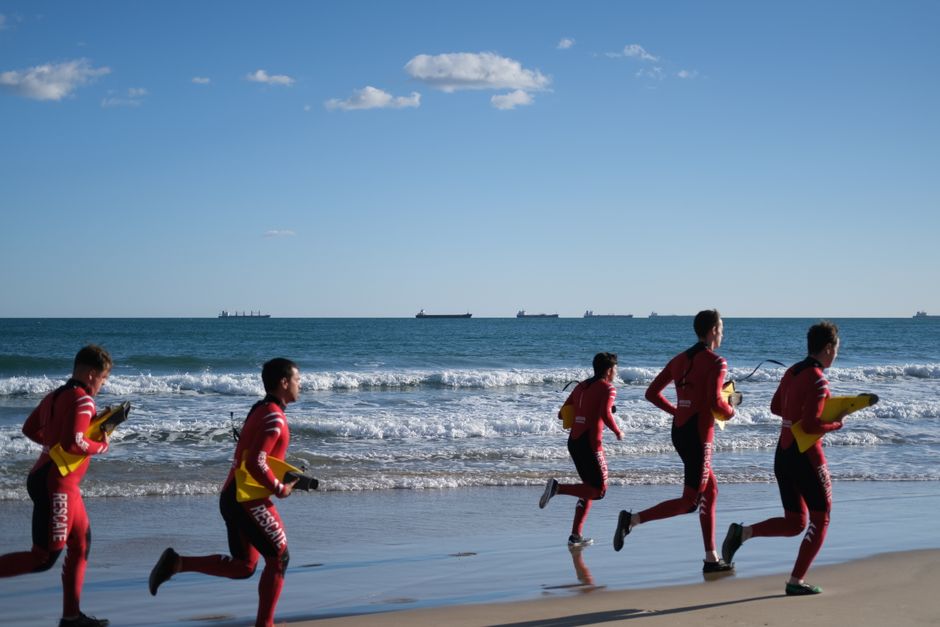
The mandatory background check protocol at our Nahant surf school
Under Massachusetts law, every licensed camp must execute a multi-layered screening process for all staff and volunteers. According to the state's official Background information checks policy, this process must be fully completed before any staff member has unsupervised contact with a child.
To comply with state regulations, a licensed camp must obtain and review the following records:
- A CORI check from the Massachusetts Department of Criminal Justice Information Services.
- A review of juvenile report data found in the court activity record.
- A SORI check from the Massachusetts Sex Offender Registry Board.
- A comprehensive prior work history covering the previous five years, including contact details for previous employers.
- Three positive reference checks from individuals who are not related to the applicant.
This protocol applies to all staff members, including instructors, assistants, and on-land support teams. Returning permanent staff must have these checks renewed every three years if there is no break in service. If a coach takes even a single summer off, the entire screening process must be repeated from scratch.
At Boston Surf Adventures, we complete these filings months before our summer sessions begin. We maintain secure, written documentation of these background evaluations for a minimum of three years as required by Massachusetts General Laws Chapter 149, Section 52C. This ensures that every individual coaching your child has been thoroughly vetted and cleared.
Auditing water safety and ocean rescue credentials at Boston Surf Adventures
Standard lifeguarding certifications are designed for flat, predictable swimming pools. The ocean demands a completely different tier of training due to moving tides, rip currents, and shifting sandbars. Parents must verify that a camp's coaching staff holds open-water certifications rather than basic pool credentials.
| Safety Standard | Minimum Requirement | The BSA Standard | Key Tradeoff |
|---|---|---|---|
| Waterfront Supervision | 1 lifeguard per 25 swimmers | 1 lifeguard-certified coach per 5 campers | Higher operational cost but immediate rescue response |
| Ocean Rescue Training | Standard pool CPR | Custom open-ocean rescue training | Requires extensive prep time but ensures deep-water safety |
| On-Land Support | No specific CPR mandate | All on-land staff CPR-certified | Restricts hiring pool to highly qualified educators |
| Staff Training | General camp orientation | Custom drills led by a veteran educator | Demands rigorous prep but guarantees coordinated action |
Under Christian's Law, Massachusetts recreational camps must determine the swimming ability of all campers. If a child does not pass the required swim test, the camp must provide an approved personal flotation device. At our Nahant Beach camp, we require all participants to swim at a Red Cross Level 3 or YMCA Minnow level before camp begins to ensure basic comfort in open water.
Furthermore, specialized high-risk activities like surfing require direct supervision by coaches with documented ocean experience. Standard youth sports instructors lack the training to read incoming swell and identify rip currents. You can learn more about verifying these specific safety requirements in our guide on how to audit a Northeast surf school's ocean safety protocols.

Verifying instruction density and coaching ratios with Boston Surf Adventures
A major safety trap in summer camps is the manipulation of staff-to-camper ratios. Some programs advertise a low overall camp ratio by counting administrative staff, on-land coordinators, and volunteers. However, the only metric that matters for your child's safety is the active, in-water coaching ratio.
- Overall Camp Ratio: Includes all registered employees, even those who never enter the water or touch a surfboard.
- In-Water Ratio: The actual number of active campers assigned to a single certified coach in the ocean.
- Safety Buffer: The distance a coach can maintain from their furthest student while still offering immediate assistance.
- Progression Rate: The frequency of direct feedback a student receives during a single session.
While state regulations allow larger groups, Boston Surf Adventures maintains a strict limit of five or fewer campers per coach. This high instruction density ensures that an instructor is always within arm's reach of every student in their group. It also dramatically increases the number of waves a child can safely catch.
In a crowded, high-ratio surf class, children spend most of their time waiting on the beach or floating unassisted in the impact zone. Low ratios keep campers active, engaged, and constantly supervised. For a deeper breakdown of how these ratios translate into accelerated skill development, read the surf school instruction density audit: verifying your feedback rate.
Common misconceptions about North Shore beach safety
Parents often make assumptions about summer water programs based on the athletic reputation of the instructors or the public nature of the beach. These assumptions can lead to enrolling children in programs that lack proper safety infrastructure.
Trusting surf skills over professional education experience
It is a common mistake to assume that an excellent surfer will automatically make a safe and capable youth coach. Surf skills do not translate to classroom management, risk mitigation, or child psychology. Managing a group of eight-year-olds in moving whitewater requires the skills of a trained educator, not just a professional athlete.
This is why Boston Surf Adventures is built differently. Our founder, Grant Gary, is a former school teacher with over 15 years of professional classroom experience. Having taught thousands of students, Grant designs our programs using structured, game-based learning models. This approach ensures that lessons are clear, progressive, and tailored to how children actually process instructions.
Assuming public beaches guarantee safety vetting
Another frequent misconception is that programs operating on public spots like Nahant Beach are automatically vetted by state or municipal authorities. Municipalities issue commercial use permits for parking and beach access, but they do not audit a business's internal safety procedures. A permit to park surf vans is not a safety endorsement.
Only a licensed recreational camp undergoes the rigorous health board inspections required by 105 CMR 430.000. Casual surf schools, private lessons, and daily clinics often operate in a regulatory gray area. These non-camp entities are not legally required to run CORI or SORI checks on their instructors. If a program cannot produce a local Board of Health license, it has likely bypassed these critical background checks entirely.
Securing a licensed summer experience
Before booking any summer beach program, ask the director for their local Board of Health permit number and a copy of their staff screening policy. A professional program will readily provide this documentation.
If you are looking for a fully compliant, educator-led surf camp near Boston, secure a spot in the Boston Surf Adventures Kids Camp. Our weekly sessions run throughout the summer at Nahant Beach, offering parents peace of mind and children a safe, confidence-building experience in the ocean.