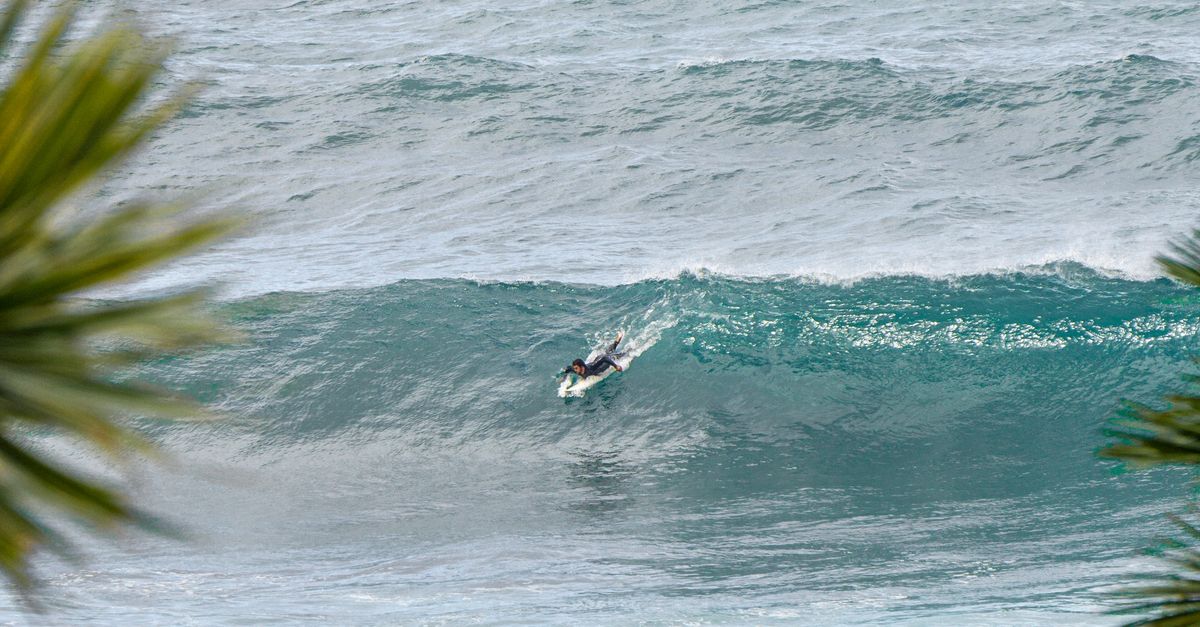
How to audit a surf school's shorebreak safety protocols
Boston Surf Adventures breaks down how to properly evaluate a surf school's shorebreak safety and entry protocols before you ever book a lesson or paddle out. Whether you are learning to surf at Nahant Beach or vetting a tropical retreat in Rincon, Puerto Rico, this guide details how to verify that instructors conduct physical ocean bed audits and enforce strict depth limits. The safest path to independent surfing relies on choosing a program that prioritizes sandbar assessment, strict student-to-coach ratios, and controlled prone dismounts over rushing straight into the whitewater.
As the only International Surfing Association (ISA) Certified Surf School in New England, founded by a former school teacher with over 15 years of professional teaching experience and thousands of students taught, we treat the sea floor like a classroom floor. After coaching students through the coastal waters of the Greater Boston area, we know exactly where safety protocols typically fail. Use this framework to evaluate any surf school before putting your health or your family at risk.
The physics of the shallow shorebreak
Beginners often imagine that surfing hazards live exclusively outside the impact zone, where open-ocean waves look massive and intimidating. In practice, the shallow zone within ten feet of the sand produces the vast majority of traumatic beginner injuries. This narrow band of water represents a rapid transition from deep water to dry sand, turning ordinary swell into a concentrated wall of downward force.

Data compiled by the Hawaii Ocean Safety program indicates that the average wave height during a surfing-related spinal cord injury is just three feet. A three-foot wave does not look threatening to a newcomer, but the underlying fluid mechanics tell a different story. As open-ocean energy moves out of deeper water and meets an abrupt incline, the base of the wave stalls while the crest pitches forward. Instead of dissipating gradually across a sloping shelf, that entire mass of moving water breaks directly onto the ocean floor.
When a standing surfer loses balance in this transition zone, that downward hydraulic pressure drives the body straight down. In waist-deep or knee-deep water, there is insufficient depth to absorb the impact. Falling feet-first can hyperextend knee joints or shatter an ankle against hard sand, while falling head-first or rolling uncontrolled creates direct axial loading on the cervical spine.
Understanding these mechanics is why our coaches approach the surf zone with strict operational boundaries, as detailed in our guide on how to audit a surf school's shorebreak safety and entry protocols. If an operation treats the first ten feet of ocean as a casual wading pool rather than an active impact zone, their safety framework is broken from the start.
Vetting a program's ocean bed audits
A surf school cannot maintain a safe lesson zone from behind a desk or from a dry perch on the sand. Sea floors are dynamic environments shaped by tides, offshore storms, and shifting currents. A safe sandbar at 8:00 AM can become an exposed hazard by midday as the tide drains.
Before any student touches a board, instructors must conduct a physical ocean bed audit. This means an instructor wades out into the exact section of the surf zone designated for instruction, physically mapping the contour of the bottom underfoot. They must locate:
- Hidden cobblestone deposits or mobile rock fields buried under thin sand
- Sudden drop-offs that take novice swimmers unexpectedly past their chest height
- Shallow sandbars where waves dump kinetic energy into twelve inches of water
- Localized rip currents pulling sideways along coastal groins or points
Our coaches treat the sea floor as a physical classroom floor, an approach expanded upon in our guide on how to vet a surf school's lesson area for underwater hazards. A classroom teacher clears trip hazards and broken fixtures before letting students enter the room. A professional surf coach does the exact same thing by physically wading the break zone to check depth and footing.
At Nahant Beach, fine, compacted sand generally offers a forgiving surface for beginner footwork, but tidal swings in Massachusetts regularly exceed nine feet. That massive volume of moving water constantly shifts underwater troughs and uncovers static structures. In tropical coaching environments like Rincon, Puerto Rico, the bottom topography can include flat rock ledges that require precise lateral boundary management. Ask any prospective surf school whether their coaches run a physical wading audit before each session. If they only look at a regional surf forecast app, they are guessing about the hazards under your feet.
Comparing instructor ratios and positioning
Supervising surfers in breaking water requires immediate physical proximity. When a beginner catches a whitewater wave, they travel rapidly toward shallow water, often losing control of their speed and direction. If a coach is managing too many students at once, they become an idle observer rather than an active safety barrier.
Acceptable student-to-coach ratios
Standard commercial operations frequently overload their rosters to maximize booking revenue. While generic guidelines, such as the Sunshine Coast Surf Schools risk assessment, identify an eight-to-one ratio as a baseline threshold for supervised group recreation, that density leaves dangerous supervision gaps during active sets.
Professional surf coaching demands much tighter limits to keep every student in direct sight and immediate reach.
| Lesson Type | Standard Commercial Ratio | Boston Surf Adventures Ratio | Primary Safety Benefit |
|---|---|---|---|
| Kids Summer Camps | Up to 1:8 | 1:5 maximum | Direct line-of-sight and immediate physical intervention for light swimmers |
| Adult Weekend Camps | 1:6 to 1:8 | 1:3 per water cohort | Rapid board correction and controlled space between paddlers |
| Semi-Private Lessons | 1:4 | 1:3 | Continuous coach proximity in dynamic sandbar conditions |
| Private Lessons | 1:1 | 1:1 | Absolute hands-on management of board angle, entry, and dismount |
For our youth programs at Nahant Beach, documented on our surf camps in Boston and New England page, we cap groups at five students per coach. All in-water coaches are certified lifeguards trained in custom extraction techniques developed by our founder. Limiting numbers ensures that an instructor never has to turn their back on three students to assist one who has taken a hard fall.
Active physical blocking in the lesson zone
A low ratio is useless if the coach stands on dry sand with a megaphone. In a professional setup, instructors use a method called active physical blocking.
The coach positions their body in waist-deep water on the inside edge of the student zone. As the student catches a wave and rides toward shore, the coach acts as an anchor and a physical boundary marker. If the student veers toward a shallow sand shelf or drifts toward another group, the coach steps in to arrest the board, redirect the path, or signal an immediate dismount before the rider reaches knee-deep water.
Coaches must also space students staggered along the swell line rather than lined up shoulder to shoulder. When two beginners drop into the same reform wave, unmanaged soft-top boards easily collide, creating sudden impact injuries in the shallowest water. Strict spacing combined with active in-water positioning eliminates that risk entirely.
Safe entry and dismount techniques
Most beginner instruction focuses entirely on popping up and standing tall. While standing is the visible goal, knowing how to stop and get off the board safely dictates whether you finish the session uninjured. A surf school must drill dismount mechanics on dry land before allowing anyone to step into the shorebreak.
The mandatory prone dismount
The most dangerous instinct a beginner has is stepping off a moving surfboard like stepping off a sidewalk curb. When a student steps abruptly off a board moving at ten miles per hour into eighteen inches of churning water, the lead foot catches the sand while the torso keeps moving. The result is severe knee torque, ankle sprains, or face-first falls into hard sandbars.
We teach and enforce the mandatory prone dismount:
- Drop the hips down and compress your knees before the wave enters the shallow sand zone.
- Place both palms flat on the deck near the rails, lowering your center of gravity beneath the whitewater force.
- Slide back into a flat prone position on top of the deck, holding the rails firmly.
- Let the board absorb the friction of the shallow sand while your entire body stays protected on top of the foam.
- If falling off the board is unavoidable, fall flat like a pancake on the surface of the water with arms protecting the head; never jump feet-first or dive head-first.
Falling flat spreads your body weight across the surface tension of the water, preventing deep penetration into shallow hazards. A student should never attempt to jump off a board until the board has completely lost forward momentum and the water depth has been visually confirmed.
Managing the whitewater push
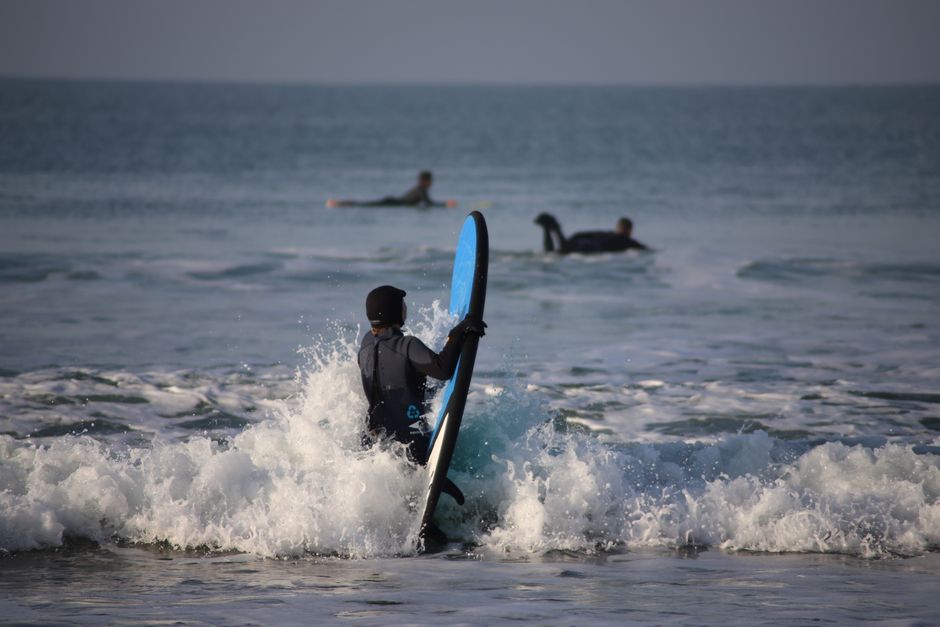
Entering the water demands equal discipline. Beginners frequently carry their surfboards horizontally between themselves and incoming waves. When a waist-high wall of whitewater hits an eight-foot foam board held sideways, the board acts as a massive battering ram, launching straight back into the student's chest, face, or knees.
Instructors must teach students to keep the nose of the surfboard pointed directly into oncoming waves at all times. When wading through the shallow zone, hold the board by the tail or keep it positioned on the down-current side of your body. When an aggressive broken wave approaches in knee-deep water, students must never dive head-first through it. Instead, plant your feet firmly, turn sideways to reduce surface area, and duck under the whitewater energy while keeping a firm hand on the board handle or rail.
Teaching these self-management protocols transforms an anxious beginner into an independent ocean user who respects shallow-water physics.
What most people get wrong
The single most common mistake beginners make is equating wave size with physical danger. Because a two-to-three-foot day at Nahant Beach looks approachable, students assume ground school safety briefings are mere formalities. They want to grab their boards and rush straight past the shoreline without paying attention to the sea floor or the entry path.
This false sense of security leads to the second major error: treating whitewater entry as an unsupervised free-for-all. When students scatter across the shoreline without coach coordination, instructors lose the ability to manage drift. A slight longshore current can move a student fifty yards down the beach within ten minutes, pushing them directly over submerged obstacles or into conflicting swim zones.
A legitimate surf school does not treat ocean entry as casual play. They run structured, systematic entries where the coach enters the water first, establishes the physical boundaries, and supervises each student through the shorebreak individually.
Before committing to any surf lesson or camp, ask the school direct questions:
- What is your exact student-to-instructor ratio in the water?
- Do your coaches physically wade and audit the sea floor before lessons begin?
- Do you mandate prone dismounts, or do you let students jump off in shallow water?
If an operator hesitates to answer or brushes off shorebreak mechanics as unnecessary technicalities, look elsewhere. Your safety in the ocean begins in the first ten feet of water. Visit Boston Surf Adventures to learn how professional coaching, certified lifeguards, and structured curricula build capable surfers from their very first wave.
Filed under