How to choose a local surf camp that prepares you for tropical waves

Claude

If you fly to Costa Rica having never paddled a surfboard, you will spend the first three days of your expensive tropical vacation fighting white water instead of riding green waves. Boston Surf Adventures recommends mastering surf fundamentals in local, forgiving conditions before committing to an international surf retreat. The most effective strategy is to complete a local training package that prioritizes high wave counts, small student-to-coach ratios, and video analysis to lock in your pop-up muscle memory. By securing these mechanics in predictable, three-foot New England surf, you arrive at high-performance destinations like Nosara or Rincon prepared to focus on wave reading and turns, rather than basic survival.
The math of muscle memory: why local volume beats tropical size
Many travelers assume the best place to learn to surf is under a tropical sun. This is a common error. When you try to learn in powerful, unfamiliar reef breaks, fear and exhaustion take over. You spend your energy battling currents instead of practicing your stance.
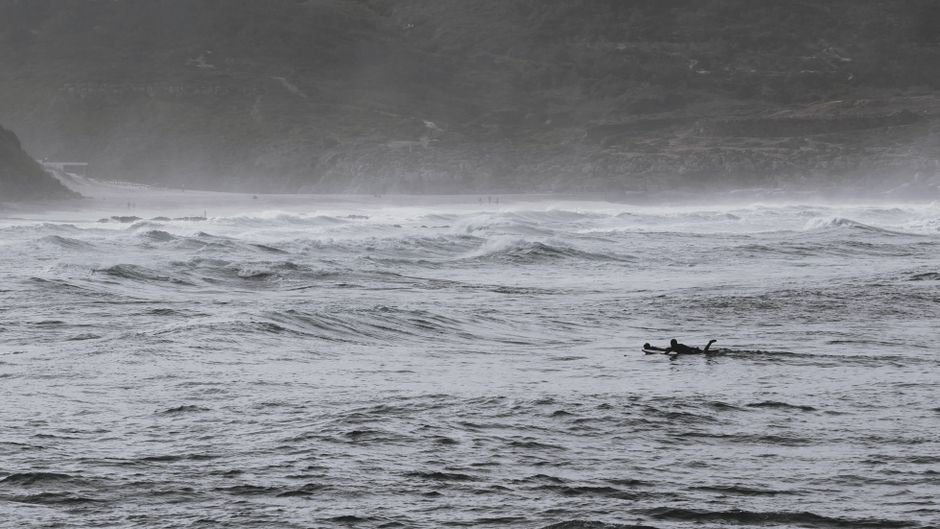
A local surf camp provides a controlled environment where you can build muscle memory without the stress of heavy ocean swells. In New England, places like Nahant Beach offer gentle, predictable waves that are ideal for practicing the basic mechanics of the sport. You want to practice where the consequences of a fall are low.
When looking at local options, consider the sheer volume of practice you will get. Trying to teach yourself is highly inefficient. In fact, what most people get wrong when learning on their own is assuming that struggle equals progress.
If you go out by yourself over a weekend, you might successfully catch five waves. Most of your time is spent paddling aimlessly or recovering from bad wipeouts. With a dedicated coach at a structured school like Boston Surf Adventures, you can easily catch 50 to 70 waves in a single weekend.
This difference in volume is where muscle memory is built. Your body needs dozens of repetitions of a proper pop-up to make the movement automatic. When you finally stand on a faster wave in Central America, your feet must find their marks without you thinking about it.
What a legitimate local prep curriculum looks like
A quality local preparation program must offer more than just a surfboard rental and a superficial safety talk. You need a structured progression system designed to build real independence in the water.
- ISA Certification: Ensures the school adheres to international standards set by the worldwide governing body.
- Low coaching ratios: Ratios of 5:1 or fewer allow coaches to offer immediate, individualized adjustments.
- Video analysis: Recording your waves provides the objective visual proof needed to break bad habits.
The certification baseline
The quality of instruction varies widely among regional surf schools. Many operations rely on seasonal employees who surf well but have no formal training in pedagogy. To avoid this, seek out programs certified by the International Surfing Association (ISA).
Choosing an ISA certified school ensures that your instructors are trained in specific safety protocols and teaching methodologies. Boston Surf Adventures is currently the only ISA Certified Surf School in New England. This standard means your lessons follow a globally recognized progression curriculum.
The school is led by Grant Gary, a former school teacher with over 15 years of classroom education experience. Gary has taught thousands of students how to transition from land-based drills to catching waves. His background in professional education means the curriculum is built around how human beings actually acquire physical skills.
Why video feedback is mandatory
You cannot correct a mistake that you do not know you are making. Most beginners believe they are standing up straight when they are actually hunched over. Video analysis provides the immediate visual evidence needed to correct your posture.
At high-performance camps, coaches film every single wave during the morning session. This footage is reviewed in detail before you head back into the water. Boston Surf Adventures uses this exact method to fast-track progression.
By reviewing your posture, stance, and pop-up timing on a screen, you can make immediate changes. This feedback loop short-circuits the development of bad habits. It is far easier to build a clean technique from day one than to unlearn months of poor mechanics.

The fitness gap: paddling and ocean safety in New England
Surfing is primarily a paddling sport. Most beginners do not realize that they will spend roughly 90 percent of their time in the water paddling. If your upper body and core are not prepared, you will exhaust yourself within the first thirty minutes of a session.
A local surf camp helps you build the specific aerobic endurance required to survive a multi-day trip. Paddling utilizes small stabilizer muscles in your shoulders and lower back that gym workouts rarely target. The only way to train these muscles is by spending consecutive hours on a board in the water.
A complete training package should address this physical demand before you travel. For example, the weekend program at Nahant Beach includes access to the Swim to Surf Fitness Program. This training focuses on the specific swimming and paddling mechanics you need to stay active in the surf zone.
If you plan to attend an advanced destination like the Surf Dojo in Central Costa Rica, the physical demands are high. High-end programs often incorporate land-based tools like surf skates and advanced pool-based breath work. Without a solid local foundation, you will be too tired to benefit from these technical sessions.
Ocean safety is the other half of the fitness equation. You must learn how to read rip currents, manage your energy, and navigate a crowded lineup. A quality local program teaches you how to stay calm and make smart decisions when a set of larger waves approaches.

Matching your local progress to the right global destination
Once you have built your foundation at Nahant Beach, you can begin planning your international travel. The key is matching your actual skill level to the mechanics of the destination. Booking a trip to a heavy reef break before you can turn a board will only lead to frustration and injury.
| Destination | Wave Type | Ideal Skill Level | Core Requirement |
|---|---|---|---|
| Nahant Beach, MA | Sand bottom beach break | Beginner to Intermediate | Basic pop-up and paddling |
| Nosara, Costa Rica | Forgiving beach break | Advanced Beginner to Intermediate | Consistent paddling and wave selection |
| Rincon, Puerto Rico | Point and reef breaks | Intermediate to Advanced | Confidence in three-foot-plus waves and basic turning |
Decoding retreat skill levels
Many travel operators label their programs as beginner-friendly, but their definitions vary. A tropical beach break with a fast wave can easily overwhelm someone who has only surfed twice. You must look past the marketing photos and examine the actual wave mechanics.
For example, if you are comfortably catching three-foot waves on your own, look for consistent, sand-bottom beach breaks. The 7-kilometer beach at Playa Guiones in Nosara, hosted by Barefoot Surf, is an excellent choice. The waves there are slow-moving and provide a long ride to practice your turns.
If you want a winter escape with highly reliable conditions, a structured program like the Puerto Rico Retreat is ideal. Operating in Rincon, Puerto Rico, from December through April, these trips utilize consistent offshore trade winds. This environment allows you to apply your local training in warmer water under the guidance of experienced local coaches.
Sand breaks vs. reef breaks
Understanding what lies beneath the surface is vital for your safety. Sand-bottom beach breaks are the safest environment for learning. A fall onto sand is forgiving, which allows you to push your limits without fear.
Reef breaks require a higher level of precision. Falling in shallow water over sharp coral or volcanic rock can result in serious cuts. Local training teaches you how to fall flat and protect your head when surfing over hard bottoms.
Mastering these safety techniques in New England prepares you for the physical realities of tropical waves. You will enter the water with confidence, knowing exactly how your board behaves in different zones. This preparation turns an exhausting trip into a successful surf adventure.
Do not wait until you arrive in the tropics to begin your surfing journey. Build your foundation locally where you can focus entirely on your form and paddling technique. Book a weekend surf camp at Boston Surf Adventures to start training today.

