The surf school tide audit: how to spot convenience-based scheduling

Claude

You show up for a 2:00 PM beginner surf lesson only to find blown-out onshore winds and a high tide backing off the waves, leaving you exhausted from paddling with zero rides to show for it. Boston Surf Adventures breaks down how to audit a surf school's scheduling practices before you hand over your credit card. This guide explains why local bathymetry and daily tide windows dictate wave quality for beginners, and how to spot operators who run rigid, convenience-based schedules at the expense of your progress. For the best learning environment, verify if a school matches their daily curriculum to real-time marine forecasts rather than forcing a pop-up lesson into an un-surfable high tide.
The mechanical relationship between tides, bathymetry, and beginner waves
To understand why scheduling is the most critical element of a successful surf lesson, you must understand the physics of how a wave breaks. Waves are not just moving water; they are pulses of energy traveling through the ocean. When this energy moves from deep water into shallow water, the bottom of the wave slows down due to friction with the seafloor, while the top of the wave continues forward at its original speed. This speed differential causes the wave to crest, destabilize, and eventually break.
The exact depth at which a wave breaks is determined by bathymetry, which refers to the underwater topography of the ocean floor. At beach breaks, this topography is composed of shifting sandbars. Because tide levels in the Greater Boston area can swing by over nine feet in a single six-hour cycle, the depth of the water over these sandbars is constantly shifting. A sandbar that produces gentle, rolling three-foot waves at mid-tide can become completely flat at high tide because the water is too deep for the wave energy to touch the bottom.
Conversely, when the tide drops to dead low, the water over that same sandbar may become too shallow. Instead of rolling gently, the incoming wave energy hits the shallow sand suddenly, causing the wave to break all at once in a heavy, dumping wall of water known as a closeout. For beginner surfers, these low-tide closeouts are frustrating and dangerous, leading to rapid fatigue and potential impact injuries.
This depth variance changes the safety and coaching protocols of your lesson. For example, the Big Wave Dave Surf & Coffee FAQ notes that their lesson locations can range from waist-deep to just above the knee depending entirely on the shifting tide and student height. This variance means that a coach cannot use a single, static lesson plan for every hour of the day. They must adjust their safety positioning, board selection, and physical feedback based on how much water is over the sandbar at that exact moment.
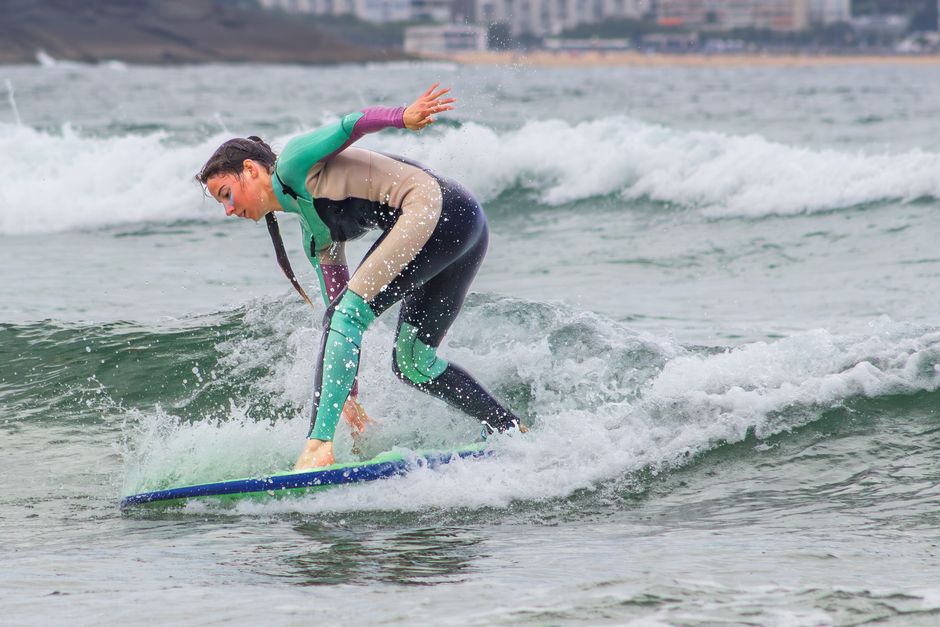
Red flags of a convenience-based surf schedule
Many commercial surf schools prioritize administrative simplicity over student progression. Operating a school around the shifting tide is logistically difficult, so some operators choose to run a static, clock-based schedule that remains identical day after day. Before you book a lesson, look out for these warning signs of a convenience-based operation:
- Guaranteed midday lessons scheduled during peak onshore wind hours
- No mention of tide windows or marine forecasting in their booking policies
- Refusal to adjust or adapt the daily lesson curriculum when ocean conditions deteriorate
- A rigid booking calendar that allows you to schedule any lesson type at any hour of the day
Rigid midday booking slots
Most online booking platforms are designed for static service industries like hair salons or auto repair shops, where a 1:00 PM appointment is identical to a 9:00 AM appointment. However, because the tide cycle shifts forward by approximately 50 minutes each day, the optimal window for learning to surf shifts as well. According to surf school logistics data published by Viking Bookings, true tide-dependent scheduling requires advanced software systems that block out un-surfable hours and only display active, safe ocean windows to customers.
When an operator ignores this reality and allows you to book a beginner group lesson at 1:00 PM every single day of the summer, they are making a conscious choice to prioritize volume over safety and instruction quality. They are banking on the fact that as a beginner, you will not know the difference between a bad wave and a bad lesson until you are already in the water. For more advice on spotting programs that prioritize volume over instruction, read our analysis on how to spot repackaged youth lessons.
Ignoring the onshore wind effect
Another major red flag is a school that schedules intensive beginner lessons during peak afternoon hours without any adjustment for wind quality. During the summer, coastal temperatures rise throughout the morning, causing warm air over the land to rise. This draws in cool, damp air from the ocean, creating strong onshore sea breezes by early afternoon. These onshore winds chop up the water surface, creating messy, unpredictable waves and strong lateral currents.
A quality program will actively warn you about afternoon chop or restrict their beginner lessons to the cleaner morning hours. If a school treats a choppy, wind-blown 2:00 PM session with the same marketing enthusiasm as a pristine 8:00 AM session, they are ignoring basic surf science. They are asking you to fight against severe wind currents and disorganized white water, which dramatically reduces your chances of standing up on your board.

How top-tier operators handle forecasting and flexibility
The best surf instructors do not fight the ocean; they adapt their operations to work with it. Highly rated programs build their entire business structure around marine flexibility, ensuring that every student is matched with the right equipment, location, and curriculum for the day's specific forecast.
| Scheduling Approach | Convenience-Based Schools | Tide-Aware Professional Schools |
|---|---|---|
| Booking Slots | Fixed hourly intervals daily | Shifting windows mapped to tide cycles |
| Location Selection | Single fixed beach regardless of swell | Multi-spot access to chase ideal breaks |
| Curriculum Flow | Rigid hourly progression steps | Fluid blocks adjusted for water depth |
| Equipment Protocol | Same boards assigned to all sessions | Volume matched to student weight and tide draft |
Location and equipment flexibility
Professional operations often maintain the ability to change teaching locations based on the daily tide. For example, Ride The Tide Surf School Barbados operates a hybrid model where they are based at a reliable beginner break, but retain full mobility to relocate lessons to alternative beaches when tide, swell, or wind directions are not ideal. This mobility ensures that students are always placed in a safe, constructive wave environment rather than being forced to surf poor waves out of geographical convenience.
Furthermore, the equipment provided must match the water depth. In shallow, lower-tide conditions, a high-volume softboard can bottom out easily, requiring coaches to transition students to boards with slightly less draft or adjust the safety parameters of where students are allowed to dismount. A quality school will have a diverse fleet of boards and wetsuits ready to match both the student's physical build and the tide height.
Curriculum adaptation for the tide
In some regions, the tide is so dominant that schools must delay booking confirmations entirely. For instance, Glide Surf School in the United Kingdom requires students to wait until three days before their scheduled date so instructors can forecast marine conditions and determine whether the ocean is suitable for a surf lesson or a flat-water stand-up paddleboard session. This prevents students from paying for a surf lesson only to find themselves stuck on a flat, waveless ocean.
At Boston Surf Adventures, we operate our weekend surf camps on a fixed schedule (Saturdays and Sundays from 9:00 AM to 1:00 PM) at Nahant Beach to accommodate our clients' weekend availability. Because these hours are set, our founder Grant Gary—who has over 15 years of teaching experience—designed our curriculum to be highly flexible. If the 9:00 AM start coincides with an unfavorable tide that makes wave-catching nearly impossible, our coaches do not force students into frustrating, useless drills.
Instead, we adapt the block. We use the high-water window to focus on foundational ocean skills: paddling mechanics, board management, and safety protocols. Once the tide shifts into the optimal window, we transition immediately to wave selection, pop-up timing, and riding. This curriculum adaptation ensures that every minute of your surf camp experience is highly productive, targeting comfortable progression in waves 3 feet and under without wasting precious energy.

The wind window: why mornings dominate surf scheduling
Understanding the diurnal wind cycle is the final step in auditing a surf school's scheduling practices. Offshore winds—which blow from the land out to the sea—are the holy grail of surfing. These winds blow against the front of incoming waves, holding them up and preventing them from spilling over prematurely. This clean, groomed wave face gives beginners a highly predictable, smooth surface, which is critical for mastering the timing of the pop-up.
Because land cools down faster than water overnight, the air over the coast becomes dense and cool, flowing out toward the warmer ocean of the Greater Boston area during the early morning hours. This is why morning sessions are almost universally superior to afternoon sessions. By mid-afternoon, the reverse occurs: the sun bakes the land, warm air rises, and strong onshore winds blow toward the coast, destroying wave shape and turning the ocean into a chaotic mess of chop.
This wind pattern is so reliable that the world's most famous surf destinations build their daily schedules entirely around the morning wind window. For example, our winter Puerto Rico surf retreats in Rincon are structured strictly around this meteorological window. Rincon offers some of the most consistent beginner and intermediate waves on earth, but the clean offshore winds are only guaranteed until approximately 10:00 AM daily.
By getting our students into the water early, we ensure they experience pristine, glass-like conditions before the afternoon onshore winds arrive. This scheduling precision is why our guests can surf without crowds 70% of the time, maximizing their wave count and accelerating their progression in a stress-free environment. When you audit a local program, look closely at whether they respect these natural wind windows or if they are simply trying to fill afternoon slots to maximize their daily revenue.
Checking the policies before you book
Before booking your next session, ask the school how they handle changing tides and wind conditions. A reputable school will explain exactly which tide stage works best for their specific beach and will have a clear policy for adapting the lesson plan when conditions turn poor. If you are looking for highly structured, professional surf education in New England, consider booking a weekend camp with Boston Surf Adventures. Our ISA-certified curriculum is built specifically to work with the unique coastal bathymetry of Nahant Beach, ensuring your time in the water is safe, structured, and highly productive.

