Every summer, thousands of parents scrutinize camp counselor ratios and water safety protocols, yet completely overlook the most statistically dangerous part of the day: the 45 minutes their kids spend in a passenger van on the highway. This Boston Surf Adventures guide breaks down exactly how to audit a youth program's transportation safety protocols before handing over your deposit. We cover the strict Massachusetts 7D vehicle standards, mandatory driver credentialing, and the specific in-transit supervision requirements dictated by state law. The most reliable indicator of a summer camp's operational integrity is how rigorously they manage the drive to the beach.
The baseline requirement: 7D vehicle certification and inspection
- Standard passenger vans designed for 12 to 15 passengers cannot legally transport pupils in Massachusetts without active school pupil plates.
- A valid, yellow 7D pupil transport sticker must be displayed on the front windshield, proving the vehicle has passed state-mandated safety checks.
- The vehicle must conspicuously display the operating company name, city, and state in lettering at least two inches high on both sides of the exterior.
- Seating capacity is strictly limited to a maximum of ten passengers in addition to the driver, and seats cannot be removed to bypass this rule.
When a youth camp transports children on a fixed route during the summer, the vehicle they use is legally classified as a school pupil transport vehicle under Massachusetts General Laws Chapter 90, Section 7D. This classification applies to any organized summer camp program or daycare service operating in the Commonwealth. Many programs attempt to cut costs by using standard, un-stickered commercial vans rented from national fleets. This practice is illegal and leaves children unprotected by specialized transport insurance.
Standard multi-passenger vans are prone to rollover accidents when fully loaded with children and heavy gear. The Massachusetts Registry of Motor Vehicles requires any vehicle used for fixed-route pupil transport to register specifically as a 7D vehicle. This registration subjects the vehicle to heightened mechanical standards, ensuring it is equipped to protect young passengers in a collision.
As a premier New England surf education program operating in Nahant, MA, Boston Surf Adventures does not operate its own transit lines for summer sessions. Instead, parents drop off and pick up their children directly at Nahant Beach. This setup eliminates transportation risks entirely. However, we believe parents must know how to inspect other regional day camps and sports programs that do provide daily transit.
The semi-annual RMV inspection
To maintain a active registration, school pupil transport vehicles must undergo strict semi-annual safety inspections. These inspections must occur at a licensed safety inspection station in accordance with 540 CMR 21.00. Inspectors review the vehicle's identification numbers, check the physical integrity of all passenger seats, and verify that the Gross Vehicle Weight Rating is 10,000 pounds or less.
If an operator has removed seats to try and bypass the ten-passenger limit, the vehicle is immediately rejected. The semi-annual inspection also confirms that the vehicle's braking system, suspension, and steering components are in perfect working order. Any camp operator who cannot produce the official 7D vehicle inspection report form for their fleet is operating outside of Massachusetts safety regulations.
Seatbelt and capacity limits
Under state sanitary and transit codes, every camper, monitor, and driver must use a designated seatbelt. Massachusetts law does not allow children to share seatbelts, sit on the floor, or stand in the aisles while the vehicle is in motion.
Furthermore, when the vehicle is loaded with passengers and gear, the total weight must never exceed the manufacturer's specified Gross Vehicle Weight Rating. This is a critical safety failure for sports camps that pack heavy training equipment, luggage, and water coolers into the rear of a passenger van. Overloading a vehicle alters its center of gravity, making highway travel highly unstable.

In-transit supervision and the "driver doesn't count" rule
Supervision on the highway requires the same strict attention as supervision on the water or the playing field. Many camps operate under the assumption that a driver can simultaneously manage ten energetic campers. Massachusetts public health regulations reject this assumption completely.
Under the state's recreational camp standards, specifically 105 CMR, § 430.251 - Transportation Safety, a minimum of at least one staff person or volunteer must accompany and monitor campers during any bus or van transport. The driver’s attention must remain entirely on the road, meaning they cannot act as the sole chaperone.
| Transport Scenario | Staff Configuration | Legal Status | Practical Safety Margin |
|---|---|---|---|
| Sole Operator | One driver, zero monitors in the cabin | Illegal under 105 CMR 430.251(E) | Dangerous; driver is distracted by passenger behavior and cannot respond to emergencies. |
| Minimum Compliance | One driver, one designated staff monitor | Legal for standard operations | Acceptable; the monitor manages camper behavior while the driver focuses on the road. |
| High-Safety Operation | One driver, multiple lifeguard-certified coaches | Exceeds Law (Recommended standard) | Excellent; multiple qualified professionals can manage medical issues or behavioral needs in transit. |
If a program operates with only a driver in the vehicle, they are violating state law and exposing your child to significant risk. When children are in transit, unexpected events occur. Campers may experience heat exhaustion, sudden asthma attacks, or interpersonal conflicts that require immediate physical intervention.
If a driver has to look in the rearview mirror to manage passenger behavior, their reaction time to highway hazards drops to near zero. A dedicated monitor ensures the driver is insulated from cabin distractions, keeping the vehicle safe on busy Massachusetts highways like Route 1A and Interstate 95.

Driver credentialing and medical awareness
A standard Massachusetts Class D driver's license is not sufficient to transport campers. To legally operate a school pupil transport vehicle, the operator must hold an active 7D operator certificate issued by the Registry of Motor Vehicles.
At Boston Surf Adventures, safety is an active discipline. Founder Grant Gary, a former school teacher with 15+ years of teaching experience, has structured our programs around strict educator standards. We advise parents to apply this same level of scrutiny to any camp's transport team.
CORI/SORI and 7D certificates
The screening process to obtain a 7D certificate is intensive. According to the Commonwealth's Guide to School Pupil Transport Vehicles (7D), an applicant must meet the following criteria before they are permitted to transport children:
- Must be at least 21 years of age.
- Must have held a active driver's license for three continuous years immediately prior to application.
- Must pass an annual Criminal Offender Record Information check and a Sex Offender Registry Information check.
- Must present a satisfactory driving record with no history of serious traffic violations.
- Must pass a comprehensive physical exam, an eye exam, and a written safety knowledge test.
When you audit a camp's operations, verify that every driver has a valid 7D certificate on their person. You can read more about how transit audits fit into broader camp safety structures in our guide on verifying background checks and water safety.
Mandatory medical and allergy briefings
Supervision does not stop with a background check. Under Massachusetts law, the camp operator must communicate any specific camper needs or medical problems to the driver before the trip begins. This requirement includes documenting tendencies toward motion sickness, severe asthma, seizure risks, or life-threatening food allergies.
A driver must know if a camper in the third row carries an EpiPen and how to administer it in an emergency. If a camp director cannot show you a clear protocol for how medical information is transferred from the camper registration files directly to the transport staff, their safety chain is broken.
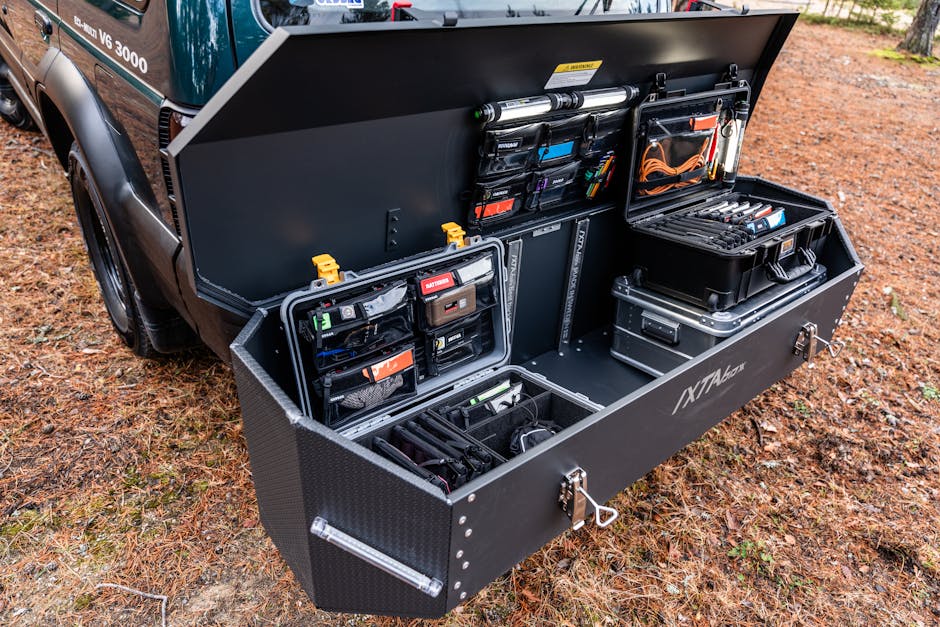
Equipment and gear storage safety inside the vehicle
For specialized athletic programs, such as a youth surf school or a sports camp, gear storage is a major safety concern. Surfboards, skateboards, baseball bats, and heavy gear bags can easily become dangerous projectiles in a sudden stop.
Massachusetts law address this risk directly. Under 105 CMR, § 430.251(F), sharp, heavy, or potentially dangerous objects must be safely secured. They are not permitted to sit loose in the passenger compartment of the vehicle.
If a camp is transporting children to Nahant Beach, all surfboards and wetsuits must be securely fastened outside the passenger cabin. This is typically achieved using a closed utility trailer or a specialized roof rack system with heavy-duty tie-down straps. Loose boards stacked in the back of a passenger van are a clear sign of a negligent operation.
At Boston Surf Adventures, all wetsuits, foam surfboards, and ocean safety equipment remain secured on-site in our beach storage or are transported in dedicated, sealed gear trailers that are completely separate from the campers. If you are vetting a camp that packs sports equipment into the passenger rows to save space, look elsewhere.
How parents can conduct a transit safety audit
Before signing a waiver and paying for a summer session, ask the camp director these direct questions about their transportation practices:
- "Can you show me the active 7D registrations and semi-annual inspection certificates for your transport vehicles?"
A legitimate operator will have these documents readily available. - "What is your in-transit staff-to-camper ratio, and who acts as the dedicated monitor in the vehicle?"
If the director answers that the driver manages the kids, they are violating state law. - "Are all of your drivers and transit monitors registered in the EEC Professional Qualifications Registry?"
State compliance requires this registration for subsidized programs, and it represents a gold standard for all youth organizations. - "How do you secure heavy sports gear and surfboards during transit?"
Ensure they use external trailers or physical barriers that separate cargo from passenger seating.
The answers to these questions will reveal whether a camp prioritizes student safety or treats it as an afterthought.
If you want to skip the worry of camp transit altogether, consider our localized youth programs. At Boston Surf Adventures, we run our youth surf sessions directly on the sand at Nahant Beach. Because parents manage drop-offs and pick-ups directly, our lifeguard-certified coaching staff can focus 100% of their energy on ocean safety and professional instruction. You can learn more about our small-group format and safety-first philosophy by viewing our Surf Camps in Boston and New England — Boston Surf Adventures details. Secure planning and strict compliance are what keep our community safe every single summer.